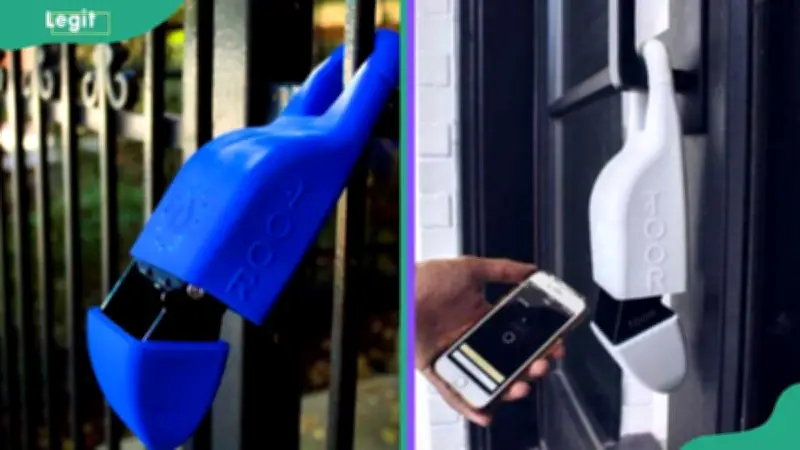
Toor, a smart lockbox concept introduced on Shark Tank's eighth season in 2016, aimed to revolutionize property showings by allowing buyers to tour homes without an agent present. Despite securing investments from Barbara Corcoran and Kevin O'Leary, the company is now defunct, with lifetime sales of only $9,000. The app has not been updated since 2019, and the website has been unresponsive since late 2023.
Key Takeaways
- Toor is no longer in business, with lifetime sales of just $9,000 and an unresponsive website since late 2023.
- Despite a Shark Tank deal, the company never cracked a market dominated by Supra and SentriLock.
- Junior Desinor, Toor's creator, has since moved on, building new ventures across real estate, wellness, and hospitality.
Was Toor Successful After Shark Tank?
Toor's early post-Shark Tank moves were encouraging. The company partnered with Touch of Modern, a members-only e-commerce platform, making the lockboxes available for sale in 2018. The product was also listed on Inman, a widely-read real estate news publisher. A Canadian agency, Umber Realty, signed on as a client. Toor also brought in an identity verification partner to address concerns about unaccompanied property access. However, the momentum did not last. More competitors entered the smart lockbox space, some with deeper pockets and existing real estate partnerships. By 2020, Toor's creator, Junior Desinor, had opened a CBD store in Dallas with his wife. The Toor app had not received an update since 2019.
What Is Toor?
Toor is a smart lockbox that appeared on Season 8 of Shark Tank. It was built to solve a specific frustration in real estate: the scheduling delays between buyers who want to view a property and agents who need to arrange access. The lockbox attaches to the door of a listed property. A potential buyer who spots a home they want to view requests access through a companion mobile app. The request alerts the property owner, who can then grant access remotely using Bluetooth and cellular technology. Toor addressed security concerns by building an option into the app to alert a nearby realtor when one was needed.

Toor Shark Tank Pitch
Junior Desinor walked into the Tank valuing Toor at $5 million. He asked the Sharks for $500,000 in exchange for 10% equity. To demonstrate the product, he walked Barbara Corcoran through the app's functionality live on stage. He highlighted the security features, including an alert system that notified the homeowner if a viewer failed to return the key. The Sharks pushed back when Desinor revealed he had not yet made any direct lockbox sales. But his Kickstarter campaign had raised over $100,000, and 800 lockboxes had already been pre-ordered.
Who Invested in Toor?
Barbara Corcoran and Kevin O'Leary were the two Sharks who invested. They offered $200,000 upfront for 10% equity and a $300,000 loan. Junior accepted. Both Sharks praised him warmly, with Kevin calling him one of the best salesmen he had ever seen on the show.
Who Is the Owner of Toor?
Toor was founded by Junior Desinor, a Dallas-based real estate broker and entrepreneur. He studied real estate finance at Texas Tech University and launched his first business at eighteen. By 23, he had obtained his real estate license, making him one of the youngest brokers in Texas. Toor grew directly out of his experience in real estate, built on frustrations he had witnessed firsthand in the property showing process.
Toor's Challenges in Context
Toor did not simply fail due to poor execution. It ran into structural walls that would have challenged even a well-funded company. Many real estate professionals are accustomed to traditional methods and remain hesitant to embrace new technologies.
The MLS Problem
Toor's biggest obstacle never featured in the Shark Tank pitch. The real estate lockbox industry is dominated by Supra and SentriLock, the only two systems that integrate directly with local MLS databases and verify the credentials of every person who approaches a property. Supra alone enables over 70% of all listing accesses, recording more than 32 million accesses annually. Breaking into that ecosystem would have required negotiating with hundreds of separate MLS boards. Toor had neither the capital nor the relationships to do that.

The Hardware Trap
Software startups can pivot overnight. Hardware startups cannot. Toor's product required manufacturing, distribution, and ongoing maintenance. When sales stalled, there was no low-cost route to survival.
The ROI Problem
Even a genuinely better product does not guarantee adoption. Toor never demonstrated a clear return to agents who already had functional alternatives. It also had no strategy for working alongside the MLS systems that controlled the market.
How Is Toor Doing Today?
As of June 2026, Toor still has a LinkedIn page. However, there haven't been any posts on the page, and the company only lists the founder under employees. The product is no longer available for purchase anywhere.
What Is Toor Worth Today?
Toor is no longer operating. The estimated net worth of Toor is $0 as of 2026. The Shark Tank deal never fully materialized. Without the institutional partnerships needed to compete with Supra and SentriLock, the company had no path to the revenue that would have justified its $5 million valuation.
What Happened to Junior Desinor?
Junior Desinor's story did not end with Toor. He has remained active across several industries since the lockbox failed. By 2020, he had co-founded City Naturals, a premium CBD and wellness business with his wife. He also invested in Balloon Therapy, a balloon garland company. His most ambitious post-Toor venture is Good Capital Partners, a boutique investment group focused on the hotel market. Most recently, Desinor launched Desinor Custom Homes and broke ground on a luxury equestrian development in Lucas, Texas. He also holds three US patents from his work on Toor.
Facts About Toor
- Toor was founded by Junior Desinor, a Dallas-based real estate broker with over two decades of industry experience.
- The company raised over $100,000 on Kickstarter in 2016, securing 800 pre-orders before appearing on Shark Tank.
- Each lockbox cost $50 to manufacture and retailed at $199.
- Barbara Corcoran and Kevin O'Leary invested $200,000 for 10% equity and provided a $300,000 loan at 18% interest.
- The Toor app was last updated in 2019, and the website has been unresponsive since late 2023.
- Toor reported only $9,000 in lifetime sales.
Toor's story is a reminder that a great pitch and a great product are not the same thing. The real estate industry has its own rules. It rewards those who work within its structures, not those who try to replace them. Junior Desinor remains one of Shark Tank's most compelling founders. The lockbox may be gone, but his entrepreneurial journey clearly is not.