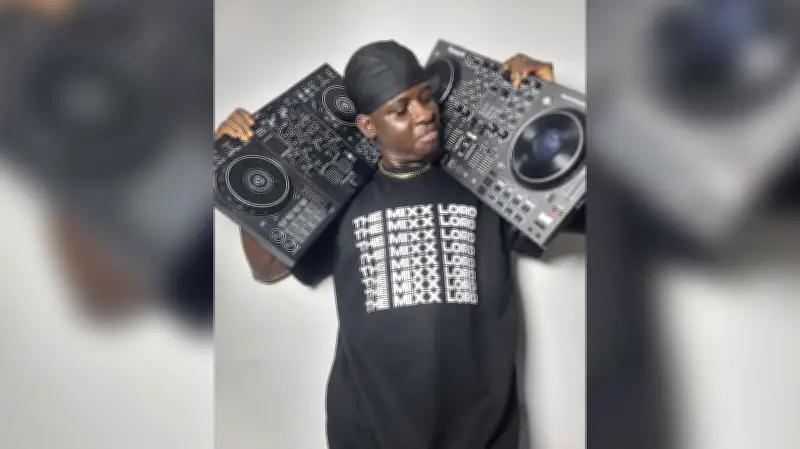
Within Nigeria's party circuits, street dance music has held a prominent place for decades. In recent years, new street dance tunes blending Western EDM elements with indigenous rhythms have emerged as the Nigerian response to a global EDM takeover in party culture. Following the successes of DJ YK Mule's 'Cruise Beats', with its comic audios and raspy, uptempo percussion, another electronic street dance tune called 'Mara' rose to prominence.
The charismatic dance tune, invented by Nigerian producer-DJ DJ Khalipha, has become a staple soundtrack to youth parties across the country since its rise around 2023. Last year, Mara music experienced its most pivotal growth moments. From Insert Nights to Mainland Block Party, Planet Utopia, Monochroma, Detty Rave, and other youth-facing parties across Lagos, Mara began moving from street corners and TikTok dance clips into the main body of Nigeria's urban nightlife. At these events, the sound evolved from social media viral tunes to a highlight of nightlife, arriving with its own dance language, energy, and claim to Nigerian electronic music.
Institutional Recognition and Archival Exhibition
Institutional recognition came with Mara Mania, an exhibition and live showcase supported by the Embassy of France in Nigeria, Alliance Française Lagos, Creation Africa Nigeria, WeTalkSound, Kadima, and Improv. The exhibition documented the rise of Mara through archival material, interactive installations, visual art, documentary screening, and live performance. It was a rare moment where this fast-moving street movement was archived in real time.

For DJ Khalipha, born Habeeb Lawal Kola, the attention has only clarified his vision. 'I feel very happy and more motivated to do more and invest more into elevating the sound,' he told Guardian Music. 'I am focused on making sure that the sound can compete internationally. Most importantly, I want people to officially recognize Mara as a style of music in Africa.'
The Birth of Mara: From Experiment to Movement
Interestingly, Mara itself was born out of sheer curiosity and experiment. Khalipha revealed that he first made the beat with his DJ software without treating it as anything serious. 'I love to create something out of nothing, and I like listening to a lot of emotional songs,' he said. 'I made the first Mara beat with my DJ software; it was nothing serious. I was just playing around initially, but when I saw that it sounded great, I mashed it up into a full song.'
That instinct became the foundation for a sound that blends Nigerian street pop, electronic house, moody lo-fi piano chords, and sometimes samples from other cultures. On his breakout track, 'Mara Pass Mara Beat', he leaned into melancholic Chinese Guoyue textures, while records such as 'Mara Drill', 'Violin Mara Dance Beat', 'Mara Lati India', and 'Marapiano Street Beat' borrowed from other climes.
Still, Khalipha insists that the dream was never to make a sound only for the streets. 'The Nigerian audience has been the one reacting positively to the sound, and they have been the ones making its momentum meaningful,' he says. 'I started this as an experiment, but they took it. I was happy that it happened because, at first, everyone thought it was just another sound for the streets. However, I was trying to merge the streets and the elites, whereby everyone can dance to one single sound, regardless of their status.'
Mara's Evolution: From Instrumental to Vocal Tracks
Mara's journey becomes more interesting with its evolution. Its first life was as instrumental dance music, spread largely through TikTok, legwork videos, street DJs, and party sets. Its new life is beginning to stretch into recorded songs, syncing opportunities, international DJ sets, and cross-border collaborations. Just last week, CKay released Mara's latest stamp of legitimacy with a bubbly tune titled 'African Girls' featuring Kidd Carder, with production credits including Bola BMH, DJ Khalipha, and Cixxx. This evidence shows Mara ascending beyond instrumental music and mash-ups into full recorded vocal tracks, a feat that will help it resonate better with music audiences.

For a genre often consumed in quick bursts on dance floors and TikTok feeds, this shift means more replay value and a better chance of traveling beyond borders. Khalipha reveals this as part of the bigger plan. 'I want to make the sound a general sound, something unique that everyone across the world can listen to,' he says. 'I want it to be our own Made-in-Nigeria electronic music. I want the style of music to go beyond just beats; it should be used by artistes in songs, in TV shows, games, among others. The vision is beyond just attracting listenership. I want it to grow to the point where you consume Mara in different circuits. It should serve different purposes beyond dancing and listening.'
Streaming Success and International Demand
The streaming numbers already show that the audience is not passive. On Spotify, 'Mara Pass Mara Beat' has crossed 3.5 million streams, while 'Obirin', his collaboration-linked breakout moment with Poco Lee, has crossed 1.3 million. For an electronic street sound still building its formal industry structure, these numbers reveal a listener base that has moved beyond curiosity to full acceptance.
Mara's expansion does not stop there. Across the international community, there is even a larger demand for this iconic homegrown EDM sound. At Nyege Nyege Festival in Uganda, Khalipha watched foreign audiences respond to Mara with the kind of openness that affirmed the sound's export potential. 'I like the foreign audience,' he says. 'At the Nyege Nyege festival, last year, the audience there were able to relate with the sound. It resonated strongly among them. They understand the elements in the music better. They accept new sounds without over criticising; they first try to digest the sound and find a way to connect with it.'
Now, that moment has spilled into more international attention. Khalipha says he has seen DJs like Skrillex and James Blake play the music at gigs, add it to playlists, or recommend the music, while French radio has also helped push the sound. 'There have been different cultural shocks so far; like seeing international DJs like Skrillex, Blake, among others, playing the music at shows, adding it to playlists and recommending it to everyone,' he says. 'It is a big deal for me, especially in the international scene. Also, French radio has been pushing the sound heavily too, and it has been helpful in building that cross continental bridge for Mara.'
Global Expansion: European Bookings and Festivals
This summer, Mara is set to climb even more European bridges, with Khalipha confirming bookings in Spain and Berlin, including a May 31 set at Contra Kraftwerk Berlin and a June 5 set at Primavera Sound in Barcelona. Mara is now moving from algorithmic discovery and diaspora curiosity to proper global live circuits.
From an experiment that began on a DJ software to global bookings in under three years, DJ Khalipha and Mara music represent an outstanding growth story that ultimately points to the reign of indigenous textures in global dance music. As Mara continues to have its moment in the sun, it is a direct marker that Nigerians are still very much in the business of inventing globally accepted music. From Afrobeat to Afrobeats, from Shoki to Zanku, from Cruise beats to Mara, Nigerian artistes and producers have always created new sounds strong enough to gain the world's attention.
'I want Mara to be something that will be known in Nigeria and will be accepted all over the world,' DJ Khalipha quips, while reflecting on the future of Mara. 'The way we have Afrobeats or Amapiano, I want us to listen to Mara around the world that way.' For now, Mara is still raw, restless, and in development. And it is already moving fast — from the trenches to the elite circles, from Insert Nights to NyegeNyege, and from local curiosity to global acceptance. It is proving its mettle one spin at a time.