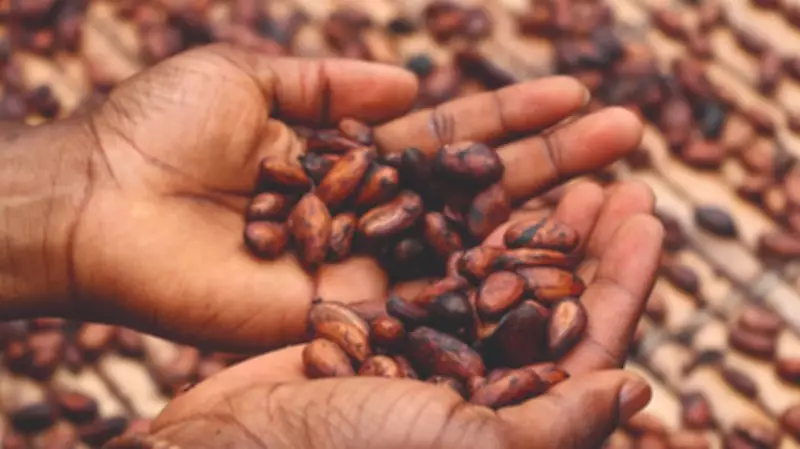
The global cocoa and chocolate market, valued at $169.12 billion in 2025, is projected to reach $245.97 billion by 2031, registering a compound annual growth rate of 6.44 percent. This expansion is driven by rising demand for dark chocolate due to its heart health benefits, the growth of Europe's dominant market, and the emergence of a cocoa lifestyle culture in Asia, alongside steady expansion in India's cocoa production and domestic chocolate consumption.
Global Coffee Market Parallels
Similarly, the global coffee market is expected to grow from $284.8 billion to approximately $486.2 billion by 2035. This growth is fueled by the rapid expansion of coffee culture and a surge in ready-to-drink options. As climate change threatens Arabica yields, the industry is shifting toward Fine Robusta and heat-resistant varieties, creating a strategic opening for African producers who cultivate these resilient beans.
Hardship on the Ground
Despite the robust growth reported in boardrooms, the reality for farmers in West, East, and Central Africa is one of systemic hardship. African cocoa and coffee farmers are operating as economic shock absorbers for global appetite. When global prices fall below production costs, farmers absorb the losses, leading to skipped meals, children withdrawn from school, and inability to afford basic healthcare. For many families, cocoa and coffee are not mere commodities but their only lifeline.

Volatile market prices prevent farmers from affording fertilizers, inputs, labor, or climate-resilient seedlings needed to protect their crops, resulting in a cycle of declining yields and deepening debt. As temperatures rise, smallholder farmers are forced to move to higher altitudes or abandon ancestral lands, often without financial safety nets from global brands that profit from their harvest.
Supply Chain Consequences
According to the Cocoa and Coffee Farmers Alliance Association of Africa (COCEFAAA), farmer poverty affects the entire supply chain. The Global President of COCEFAAA, Comrade Adeola Adegoke, stated that when a farmer cannot maintain their land, the quality and quantity of global supply suffer, threatening the growth the industry predicts. “A drop in prices does not merely hurt households; it threatens the resilience of the entire global supply chain,” he said.
Strategic Pillars for Africa
Adegoke identified three strategic pillars to capture a larger share of the growing value: research and development to safeguard Africa's crops; domestic roasting, processing, and value addition; and regional block collaboration and collective bargaining.
Research and Development
Africa must urgently prioritize agricultural R&D focused on developing drought-, pest-, and disease-resistant crop varieties; creating early-maturing crops to shorten investment returns for smallholders; and supporting sustainable practices that meet global environmental standards.
Domestic Processing and Value Addition
The vast majority of the $245 billion cocoa and $486.2 billion coffee valuations are captured at processing, roasting, and retail stages, not at the farm. Africa must establish domestic roasting facilities and processing plants to transform raw beans into derivatives, retaining added value within the continent.
Regional Collaboration
Price volatility remains a systemic threat to African farmers. By deepening regional collaboration among West, East, and Central African origin countries, the continent can harmonize pricing strategies and develop collective bargaining power. This unified approach is essential to cushion farmer livelihoods when global prices fall.
Alternative Markets and Structural Changes
COCEFAAA is advocating conversations around emerging markets like India and broader Asia, calling on global exporters to move beyond short-term spot-market logic and implement structural changes. Adegoke urged manufacturers to transition toward long-term purchasing agreements that guarantee a living income for farmers, regardless of market fluctuations. “Price volatility must no longer be a burden borne exclusively by the producer,” he said.

There is an urgent need for increased investment in farmer technical assistance, training, and subsidized access to inputs such as pesticides, fertilizers, and irrigation infrastructure. Global partners must co-fund African-led research into drought-resistant and early-maturing varieties to safeguard projections against climate change.
Market Diversification
The expanding middle class in Asia and deepening trade ties with India present a massive frontier for market diversification. By aligning African production with Asian consumption trends, the continent can stabilize its future against traditional market volatility. The projections for 2031 and 2035 are unambiguous: there is a fortune to be made in cocoa and coffee. The challenge is to ensure equitable sharing with the farmers who plant the seeds, tend the trees, and carry the harvest.
Adegoke stressed, “We cannot talk about a $245 billion cocoa market or a $486.2 billion coffee market while the people growing the beans are struggling to put food on their own tables. If the world wants Africa to contribute to the 2031 and 2035 projections, the world must first invest in the dignity and survival of the African farmer.” The success of COCEFAAA's initiatives depends on global manufacturers treating farmer livelihoods as the foundation of the supply chain. The time for structural reform is now.