Bayelsa Communities End 60-Year Isolation as New Roads Connect Riverine Areas
After six decades of complete dependence on water transportation, riverine communities in Bayelsa State's Southern Ijaw Local Government Area have finally gained road access to the outside world. This historic development marks the end of an era where residents could only travel by boat through challenging waterways.
Presidential Inauguration of Critical Infrastructure
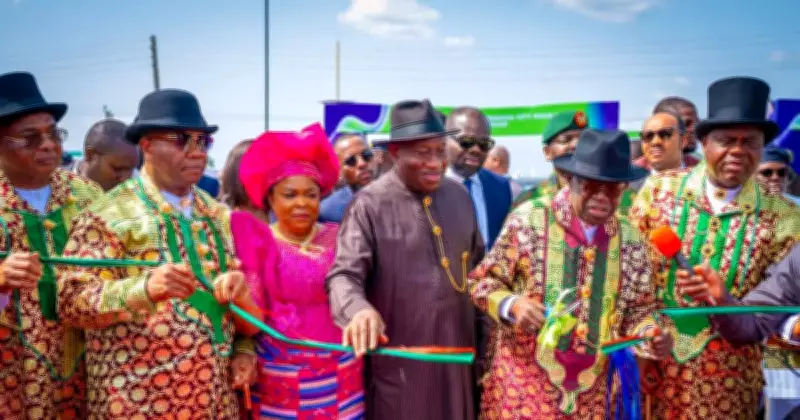
President Bola Ahmed Tinubu officially inaugurated the Yenagoa–Oporoma Road on Friday while virtually commissioning the Sagbama–Ekeremor Road in a ceremony that celebrated long-awaited connectivity. These two major infrastructure projects now provide direct land routes between remote riverine settlements and Yenagoa, the state capital.
The newly opened highways are expected to revolutionize transportation in the region, making travel significantly easier, safer, and more affordable for thousands of residents who previously faced expensive and sometimes dangerous boat journeys.

A Project Decades in the Making
The road connection initiative has roots dating back to the 1960s when initial plans were developed to open up oil- and gas-rich communities throughout the Niger Delta region. Despite these early intentions, the projects remained abandoned for decades, leaving communities isolated even as Bayelsa State was created from Rivers State in 1996.
Construction efforts were revived and pushed forward in recent years under the leadership of Bayelsa State Governor Douye Diri, who committed substantial state resources to developing the challenging swampy terrain that had previously made road construction impractical.
Engineering Details of the New Roads
The Yenagoa–Oporoma road features a significant 630-meter bridge spanning the Nun River, creating a vital connection between Oporoma—the administrative headquarters of Southern Ijaw LGA—and the state capital. Meanwhile, the Sagbama–Ekeremor road opens access to several previously isolated coastal communities including Peretorugbene, Aghoro, and Agge, areas that were virtually unreachable by land transportation before this development.
Community Reactions and Expected Impact
Residents have described the road connections as genuinely life-changing infrastructure. For the first time in living memory, community members can travel directly from Yenagoa to their home areas by car rather than relying exclusively on boats that made transportation slow, costly, and hazardous.
Community leaders and stakeholders have praised the project's completion, highlighting multiple expected benefits:
- Enhanced economic activity through improved access to markets
- Better living standards with easier access to services
- Reduced accidents on previously dangerous waterways
- Increased connectivity to healthcare and educational facilities
Southern Ijaw represents one of Nigeria's most resource-rich areas, particularly in oil and gas reserves, yet it has remained among the least developed regions in terms of basic infrastructure. The new roads are anticipated to transform this reality by linking long-isolated communities to broader economic networks throughout Bayelsa State and beyond.
The infrastructure development comes as a significant milestone for residents who have waited generations for reliable land transportation options, promising to reshape daily life and economic opportunities in these previously remote riverine communities.