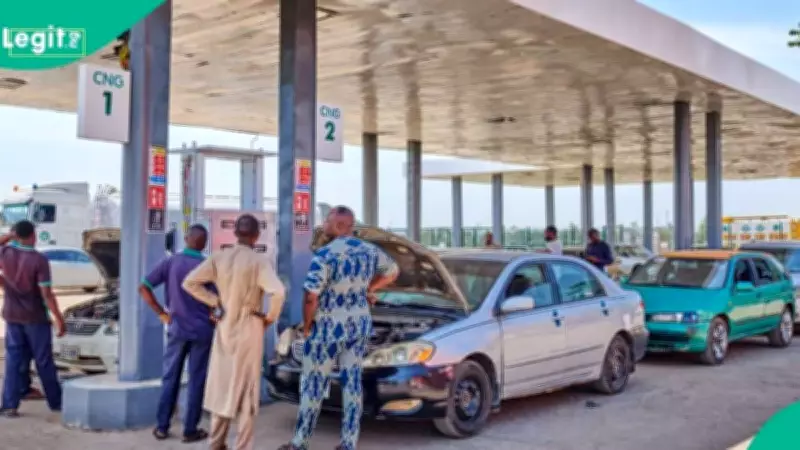
The federal government has intensified efforts to reduce transportation costs by promoting compressed natural gas (CNG) as a cheaper alternative to petrol. CNG is currently sold at N200 per litre, compared to over N1,200 per litre for petrol. The initiative, led by the Presidential Compressed Natural Gas Initiative (Pi-CNG), aims to lower transport expenses for millions of low-income operators across Nigeria.
Credit Scheme for Transport Workers
To achieve its objective, Pi-CNG has partnered with financial institutions to expand access to affordable credit for vehicle conversion to CNG. Speaking at the flag-off ceremony in Abuja on Wednesday, April 22, Ismaeel Ahmed, the Chief Executive Officer of the initiative, stated that affordability remains the biggest obstacle to CNG uptake. The partnership includes the Presidential Compressed Natural Gas Initiative and Electric Vehicles, Moniepoint Microfinance Bank Limited, Nigerian Consumer Credit Corporation, and National Credit Guarantee Company Limited.
Ahmed emphasized that the program is designed to eliminate the upfront cost barrier that has slowed adoption of alternative energy vehicles. He said: "This is a very significant partnership. The barrier is the cost of the conversion kit and installation. We are reducing that barrier. The kits are being supplied at cost, with no profit margin, because the goal is mass adoption."

How the CNG Credit Scheme Will Work
Under the new framework, motorists will be able to spread the cost of CNG conversion over several months through structured credit facilities, instead of paying upfront. Ahmed noted that repayment flexibility would vary depending on borrowers' capacity. He explained: "Instead of paying, for example, N100,000 upfront, you can now spread it over one month, six months or shorter periods depending on agreement. That flexibility makes adoption easier for everyday Nigerians."
He added that the shift to CNG is expected to significantly reduce transport expenses for commercial operators such as tricycle and taxi drivers. According to him, a typical keke rider could cut fuel expenses by 60 to 70 percent, while maintenance costs could also fall sharply. Ahmed said: "If a rider spends about N50,000 weekly on petrol and maintenance, CNG could reduce that drastically. Fuel costs drop significantly, and maintenance reduces from weekly to monthly spending."
Additionally, the Managing Director of the Nigerian Consumer Credit Corporation, Uzoma Nwagba, stated that the program will translate macroeconomic reforms into tangible relief for ordinary Nigerians. Nwagba said: "When this administration began, reforms such as exchange rate unification and subsidy removal improved the macroeconomic environment. The question has been how those gains reach people at the bottom. This initiative is part of that answer."
NNPC Releases Locations of CNG Filling Stations
According to the Nigerian National Petroleum Company Limited (NNPC), motorists in Lagos can now access premium CNG fuel at the following retail outlets: Fola Agoro, Amuwo Odofin, Marina, Agege By Pass, Lakowe, and Odogunyan. In Abuja, CNG is available at Gaduwa, Olusegun Obasanjo Way, Gudu, Dei Dei, Gwagwalada, and Ushafa.
Earlier, Legit.ng reported that NNPC retail outlets have reduced the cost of petrol. The changes came just three days after the Dangote Refinery reduced its petrol gantry price by N85 to N1,200 per litre from N1,285. Petrol was now selling at N1,255 per litre, down from N1,330, representing a reduction of N75.