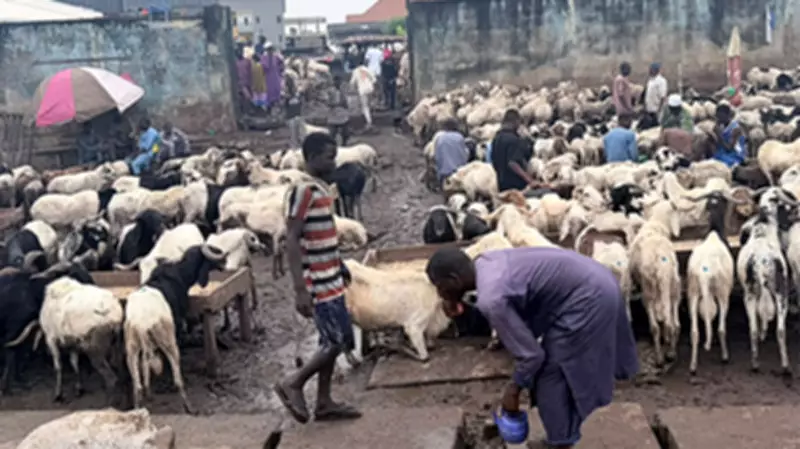
Commuters along the Lagos-Ibadan Expressway endured hours of traffic on Tuesday as a result of Eid-el-Kabir trading activities around the Kara Cattle Market. Ram traders blocked sections of the busy expressway early in the morning while moving livestock across the road. The gridlock, which began last weekend, worsened as Muslim faithful made last-minute purchases ahead of the celebration.
Traffic chaos and response
The congestion was recorded between Fatgbems Bus Stop and Kara Bridge, with ram sellers displaying livestock along the edge of the expressway and buyers parking indiscriminately, occupying one lane. Traffic spanned both sides of the expressway, trapping travelers from Mowe-Ibafo-Magboro axis from Mikano on the Long Bridge to the Kara market area. Officials from the Nigeria Police Force, LASTMA, FRSC, and Ogun State TRACE were deployed to manage the situation. However, the congestion extended to the 7Up axis for motorists from Lagos, leading to a surge in transport fares. Commuters traveling from Mowe to Berger paid between N1,500 and N2,000, compared to the usual N700 to N800.
Commuters express frustration
Monday Odeh, a resident of Mowe, blamed the Ogun State government for failing to relocate the Kara market despite several deadlines. He noted that the gridlock caused missed appointments and health issues. Kingsley Nnanna urged the government to fulfill its promises to prevent a recurrence next year. Commercial driver Tayo Amao told The Guardian that prolonged traffic increased fuel consumption, forcing transporters to raise fares.

Ram prices triple amid low patronage
Ram prices have tripled, with sellers reporting low patronage. Abubakar Langa, President of the Ram Sellers Association in Gbagada, complained of poor sales, attributing the price hike to rising fuel costs and expensive ram feed. Idowu Aminu, a buyer, linked high prices to soaring inflation and insecurity in the North, particularly Boko Haram attacks on farmers affecting livestock supply. He noted that a ram now costs between N700,000 and N800,000, compared to N70,000 to N100,000 previously. Babatunde Akorede described this year's prices as unbearable, recounting how a seller demanded an additional N150,000 after he paid for a ram, increasing the price from N300,000 to N400,000. Olohunnishola Lateef said the economic situation has reduced patronage, with no ram sold for N100,000 anymore; prices have tripled, and many cannot afford three meals daily. He advised celebrating within means and urged government officials to visit markets to understand the hardship.