Lagos Waterfront Relocation Plan Sparks Debate on Equity and Urban Strategy
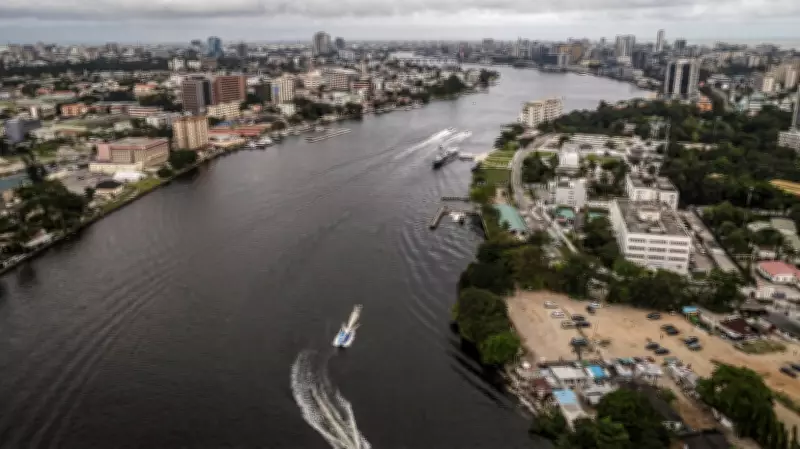
The proposal by the Lagos State House of Assembly to relocate residents of Makoko, Oko-Agbon, and Sogunro to Agbowa and Epe has ignited urgent discussions that extend far beyond mere urban planning. At its heart, this initiative serves as a litmus test for Lagos's dedication to principles of equity, inclusion, and sustainable development in one of Africa's largest cities.
Questioning the Relocation Narrative
While official statements frame the relocation as a compassionate response to displacement, a deeper analysis reveals a policy direction fraught with risks. This approach could potentially exacerbate poverty, undermine livelihoods, and heighten urban insecurity across Lagos. On the surface, moving displaced residents to low-cost housing estates might seem progressive, but it hinges on a flawed assumption that habitation is defined solely by physical structures.
Communities such as Makoko are not just informal housing clusters; they represent vibrant economic and cultural systems that have developed over decades. Residents, primarily fishers, traders, and artisans, rely heavily on their proximity to water for daily survival. Their location is not accidental but fundamental to their economic existence, making relocation to inland areas like Agbowa highly problematic.

Feasibility and Economic Realities
The suggestion that affected residents can continue traditional fishing activities from distant inland settlements exposes a significant disconnect between policy formulation and on-ground realities. Fishing is not a flexible occupation that can be easily transferred; it demands immediate access to water bodies, established trade routes, and networks of buyers and processors. Uprooting these communities dismantles their livelihoods, leading to severe income loss or abandonment of resettlement schemes.
Historical precedents show that when relocation fails to align with economic needs, beneficiaries often return to city centers, creating new informal settlements in more precarious conditions. This cycle transforms state-led efforts to organize urban space into reproductions of disorder in increasingly complex forms.
Alternative Approaches: Regeneration Over Relocation
Lagos appears to be pursuing peripheral relocation, which prioritizes clearing high-value urban land while shifting low-income populations to the outskirts, often justified by environmental management or urban renewal. However, this approach can result in spatial segregation, pushing the urban poor out of sight without tackling the root causes of informality.
In contrast, in-situ regeneration offers a globally accepted, more sustainable, and humane alternative. This model involves upgrading existing communities by improving infrastructure, sanitation, drainage, housing quality, and tenure security without displacing residents. It recognizes informal settlements as realities to be enhanced rather than anomalies to be erased, preserving social networks and economic systems to bolster resilience and maintain the city's economic fabric.
For Lagos, regeneration is not just idealistic but pragmatic. Waterfront communities could be redesigned into climate-resilient, environmentally sustainable neighborhoods through collaborative planning with residents, government agencies, and urban experts. This aligns with broader climate adaptation goals in a coastal megacity increasingly vulnerable to flooding and sea-level rise.
Trust and Governance Concerns
Beyond planning models, trust remains a critical issue. The relationship between Lagos residents and government authorities has been marred by a history of demolitions with limited consultation and inconsistent resettlement promises. From waterfront evictions to inner-city clearances, many affected populations have been left to fend for themselves, casting a shadow over the current proposal.
Residents of Makoko, Oko-Agbon, and Sogunro are likely to view promises of low-cost housing in Agbowa with skepticism. Without clear legal guarantees, transparent funding frameworks, and defined timelines, such assurances may be seen as aspirational rather than actionable. Trust must be earned through consistent and verifiable actions, not demanded.

The sequencing of events further complicates matters. When demolitions precede comprehensive resettlement plans, it signals a governance approach that prioritizes land recovery over human welfare, eroding public confidence and heightening social tensions.
Compensation and Social Impact
Compensation is equally vital, as homes for many residents are not just shelters but economic assets supporting small businesses, storage, and community life. Demolition represents both physical and economic loss, necessitating a just compensation framework that accounts for the full value of destroyed structures, including informal investments, and provides pathways for livelihood restoration.
Simply offering alternative housing in economically disconnected locations fails to address broader displacement impacts. Support systems must extend to education, healthcare access, and transportation to prevent long-term marginalization. Inadequate compensation can fuel cycles of urban poverty, as displaced residents return to cities, expanding informal settlements and perpetuating challenges.
Urban Insecurity and Social Cohesion
Forced relocation also links to urban insecurity by disrupting social fabrics and weakening community structures that provide informal order. This creates landscapes of uncertainty where survival becomes paramount, particularly affecting young people who, stripped of stable livelihoods and support networks, may turn to criminal activities or social unrest.
Insecurity often stems from exclusion, inequality, and lack of opportunity, requiring inclusive policies that integrate all societal segments into the urban economy. Relocation strategies that isolate the poor on the periphery contradict this objective, potentially destabilizing the city.
Strategic and Moral Imperatives
Lagos, as Africa's largest city and economic hub, has a unique opportunity to redefine urban development by balancing growth with inclusion. Advocating regeneration over relocation reflects a broader shift in urban thinking, recognizing that sustainability cannot be achieved by displacing vulnerable residents.
The choice before the state is both moral and strategic. Pursuing relocation without addressing its flaws risks entrenching inequality and undermining social cohesion, while embracing regeneration offers a pathway to a more inclusive and resilient urban future. Relocating waterfront communities to Agbowa may meet immediate political and developmental goals but falls short of addressing Lagos's complex urban realities without credible guarantees, robust compensation, and livelihood preservation strategies.
Urban development must be measured by its impact on people, especially those at the margins. For Lagos to evolve into a world-class city, it must recognize that strength lies in inclusion, not exclusion. In this instance, regeneration, not relocation, provides that possibility, ensuring a more equitable and sustainable urban landscape for all residents.