Unpacking the Makoko Demolition Debate: Beyond Misleading Narratives
In recent weeks, public discourse surrounding the Makoko community in Lagos State has intensified, fueled by discussions across traditional and new media. The Lagos State government has been portrayed by some as pursuing a "land grabbing" agenda driven by selfish motives rather than public interest. This narrative gained traction during a national television program featuring a septuagenarian resident and NGO representatives, presenting an emotionally compelling but potentially distorted view of a complex reality.
While civil society engagement is crucial for protecting vulnerable communities in any democracy, activism must be exercised with responsibility and nuance. When advocacy evolves into agitation that dismisses complexity, amplifies distrust, and frames every state intervention as predatory, it risks harming the very people it aims to defend. In sensitive environments like Makoko, such narratives can inflame tensions and hinder constructive engagement.
The Reality of Makoko: A Community at Risk
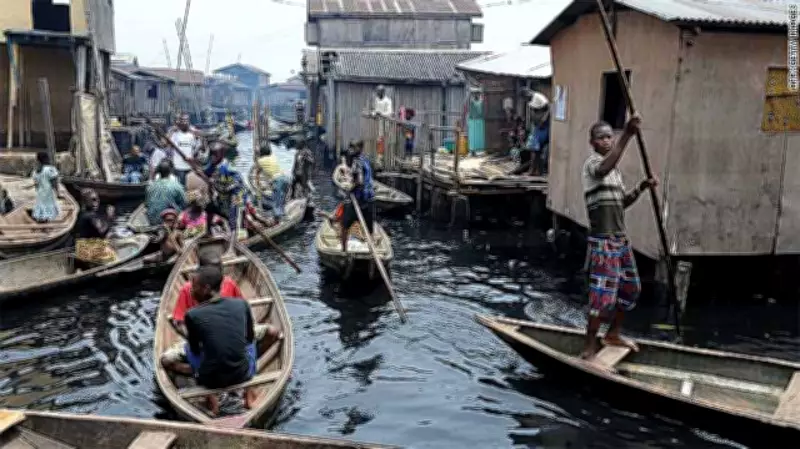
Makoko, a densely populated waterfront community in Lagos, has grown organically over decades outside formal urban planning frameworks. What began as a modest fishing settlement is now defined by its resilience but also by significant infrastructure deficiencies. Beneath the iconic imagery of stilt houses and canoes lies a precarious living environment characterized by overcrowding, high crime rates, poor sanitation, environmental degradation, and heightened vulnerability to fire outbreaks and flooding. These are not theoretical concerns but lived experiences posing immediate risks to residents.

Lagos, as one of Africa's fastest-growing urban centers, requires deliberate planning and regulation for sustainability. The state government's engagement with Makoko is part of a broader ambition to position Lagos as a 21st-century megacity capable of supporting its expanding population. Urban renewal in this context is not about aesthetics or elite preferences but about safety, functionality, and long-term viability. Settlements like Makoko, built without structural integrity approvals, environmental impact assessments, or access to essential services, cannot be sustained indefinitely without consequences.
Relocation as a Strategy: Learning from Precedents
Relocation emerges not as an arbitrary policy choice but as part of a continuum of urban management strategies aimed at improving living conditions and reducing systemic risks. The proposal to move residents to areas such as Agbowa has faced resistance, particularly from fishermen who require proximity to water for their livelihoods. While this concern is legitimate, it is not insurmountable. With proper planning, infrastructure in Agbowa and surrounding coastal areas can be developed to support fishing and related economic activities.
Lagos has precedents for managing such transitions. For example, the relocation of sawmill operators from Oko Baba, initially met with skepticism, ultimately resulted in structured workspaces and improved living conditions for affected individuals. Similarly, redevelopment efforts in Agboyi-Ketu by the Ministry of Physical Planning and Urban Development have transformed disorganized settlements into more regulated and habitable environments. These examples underscore a consistent policy direction: replacing hazardous, unplanned communities with safer, sustainable alternatives.
Balancing Culture, Livelihoods, and Safety
To insist that Makoko must remain untouched in its current form is to romanticize a condition fraught with risk. While preserving culture and livelihoods is important, it must be balanced against the imperative of ensuring safety, dignity, and access to basic services. No responsible government can ignore the warning signs in settlements lacking fundamental infrastructure.
This does not absolve the state of its responsibility to act with transparency, empathy, and inclusivity. Engagement with affected communities must be genuine, and relocation plans must include clear guarantees regarding housing, livelihoods, and social services. Trust is built through consistent and demonstrable action. However, advocates must ensure their interventions are guided by facts rather than sentiment and by long-term outcomes rather than immediate optics.

Towards Constructive Dialogue and Urban Reform
The Makoko debate reflects the growing pains of a city in transition, testing Lagos's ability to balance compassion with pragmatism and society's capacity for honest, constructive dialogue. Misleading narratives, no matter how well-presented, do little to advance this cause. What is required is a shared commitment to truth, responsibility, and the collective good. By clarifying the issues, the goal is not to silence dissent but to ensure it is informed, measured, and aligned with on-ground realities. Only then can Lagos move forward in a manner that truly serves all its residents, both present and future.