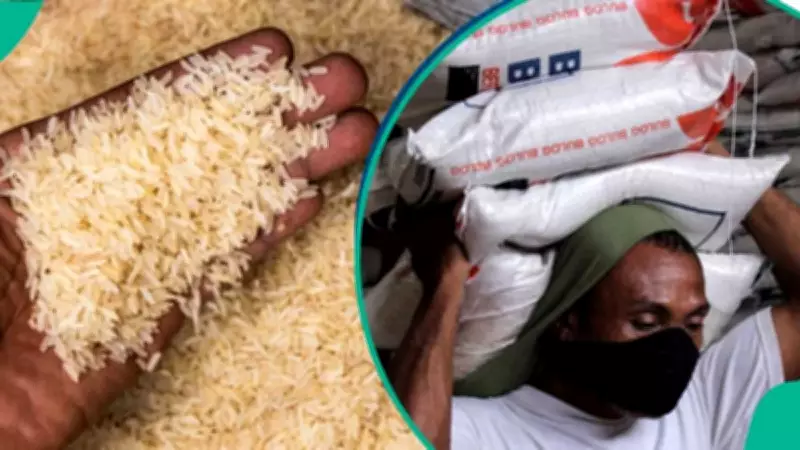
Rice Price Crash Forces Nigerian Farmers to Scale Back Production as Imports Surge
The price of a 50kg bag of rice is experiencing a significant decline across Nigeria, driven by a surge in cheaper imported grains that is reshaping the market. This development is compelling local farmers to reduce their production ahead of the 2026 planting season, raising alarms about the future of domestic agriculture and food security.
Steep Decline in Paddy Prices
At the core of this crisis is a dramatic fall in paddy prices. The cost of a ton of paddy has plummeted by 51 percent to approximately N350,800, down from a peak of N720,000 in 2025. This sharp drop, largely fueled by increasing imports and smuggling activities, has left numerous farmers struggling to achieve profitability. For a nation where rice serves as a staple food for millions of households, this situation offers temporary relief for consumers but deepens distress for producers.
Farmers Retreat in Key Producing States
The impact is already evident in major rice-producing regions. In Kebbi State, recognized as Nigeria's leading rice hub, fewer than 30 percent of over 500,000 farmers cultivated rice during the recently concluded 2026 dry season. Industry sources indicate that many farmers are reconsidering their involvement in the upcoming wet season due to weak demand and unsold stock from previous harvests.

"They are pulling back," stated Muhammed Augie, a former leader of the Rice Farmers Association in Kebbi, noting that numerous producers are still holding onto unsold paddy because of a shrinking local market. Consequently, farmers are increasingly diversifying into alternative crops such as sorghum, soybean, and sesame, which currently provide better financial returns.
Production Decline and Mill Closures
The slowdown is expected to persist into the next farming cycle. A March 2026 report by the United States Department of Agriculture projects that Nigeria's rice cultivation area will drop by seven percent to 4.2 million hectares in the 2026/2027 season, down from 4.5 million hectares. The report attributes this decline to falling prices, rising production costs, and ongoing insecurity in key farming regions.
For many farmers, the economics have become unsustainable. Musa Idris, a rice farmer in Jigawa State, reported that he has drastically reduced his cultivation from 50 hectares to just five. "It is getting costlier to produce and sell at a profit," he explained, adding that the two mills he previously supplied have shut down since 2024. The collapse of rice mills is becoming widespread, with industry stakeholders estimating that over 60 mills have ceased operations, unable to compete with the influx of cheaper imported rice.
Structural Challenges for Local Rice
Nigeria's rice industry faces structural challenges that hinder its ability to rival foreign competitors. Producers in countries like India, Thailand, and Vietnam benefit from economies of scale, integrated production systems, and government-backed infrastructure. In contrast, Nigerian millers operate in a high-cost environment, where they must provide their own power, water, logistics, and security.
Peter Dama, national chairman of the Rice Millers Association of Nigeria, emphasized these disadvantages. "We generate everything ourselves, while foreign competitors get these at little or no cost," he said. "It makes competition extremely difficult."
Surge in Imports and Smuggling
The pressure has intensified with a renewed surge in rice imports. Nigeria imported over 60,000 metric tons of rice from Thailand in the first five months of 2025, the highest level in nearly a decade. Market surveys across Lagos reveal a growing presence of foreign parboiled rice on traders' shelves, often preferred for its perceived quality and lower price.
Experts link this trend to multiple factors, including porous borders, strong consumer preference for imported varieties, and government policies aimed at easing food inflation. Recent fiscal measures have reduced import duties on bulk rice to 47.5 percent from 70 percent, while duties on broken rice were cut to 30 percent. Analysts warn that these changes could further accelerate the influx of cheaper imports.

Food Security at Risk
While falling rice prices may offer short-term relief for consumers, the long-term implications are concerning. Nigeria still faces a significant supply gap, with annual demand estimated at 7 million metric tons of milled rice, compared to local production of roughly 4.6 million metric tons. As farmers retreat and mills shut down, the country risks becoming increasingly dependent on imports, undermining years of investment in domestic production.
For policymakers, the challenge is clear: balance the need for affordable food with the urgent task of sustaining local agriculture before the industry slips into deeper decline. This situation highlights a paradox in Nigeria's food system, where despite growing consumption, low profitability continues to discourage farmers from expanding production.