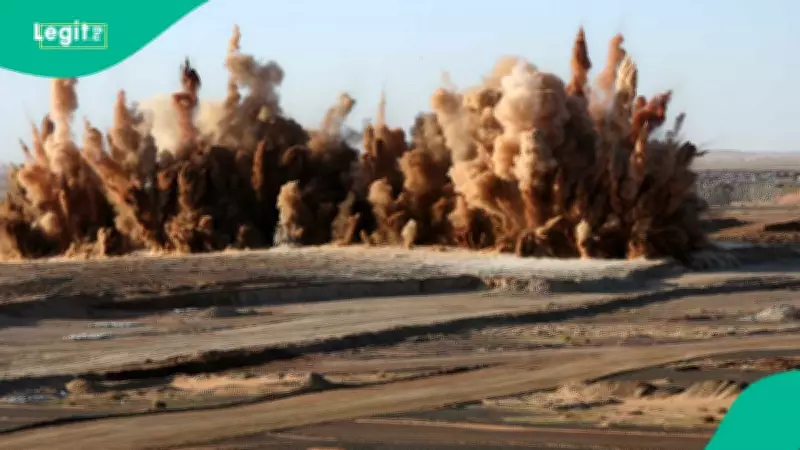
A tragic coal mine explosion in Colombia's Cundinamarca province has claimed nine lives and left six workers injured. The blast occurred on Monday, May 4, 2026, at a legally operated mine in Sutatausa, approximately 72 kilometers (45 miles) north of Bogota. According to the National Mining Agency, the explosion was caused by a buildup of gases.
Mine Safety Concerns Raised
The mine, operated by Carbonera Los Pinos, had previously been flagged for safety risks. On April 9, inspectors from the National Mining Agency recommended stronger safety measures after detecting dangerous gases, including methane. The agency stated: "As the ANM has warned during its inspection visits, coal deposits can present accumulations of gases such as methane, as well as concentrations of coal dust."
Governor Jorge Emilio Rey reported on X that the explosion was "apparently due to a buildup of gases." He initially indicated that 12 miners were trapped, with three managing to escape. Rescue teams arrived at the site, assessing gas levels before entering the mine. Six miners were rescued alive and taken to a local hospital for treatment.

Official Condolences
Governor Rey expressed solidarity with the victims' families, stating: "We deeply regret this tragedy and send a message of condolence, solidarity, and support to their families." The National Mining Agency also shared its condolences, highlighting the importance of timely rescue efforts.
Colombia has a long history of mining accidents, often linked to poor ventilation and unsafe practices. While many incidents occur in illegal mines, this tragedy highlights that even legally operated sites face serious risks if safety measures are not fully enforced. In the Sutatausa area, illegal mines that fail to meet safety standards also remain in operation.
Where is Colombia Located?
Colombia, located in northwestern South America, was originally home to advanced indigenous cultures such as the Muisca and Tairona. Spanish explorers arrived in 1499, and by the 16th century, Bogota and Cartagena were established as colonial centers. Colombia gained independence in 1819 under Simon Bolivar, forming part of Gran Colombia with Venezuela, Ecuador, and Panama, though this union dissolved by 1830. The 19th century saw civil wars and political instability, including the War of a Thousand Days. In the 20th century, Colombia faced violence from guerrilla groups and drug cartels. Today, it is recognized for its cultural diversity and economic growth.
Fear of Food Shortages in Colombia
Earlier reports indicated that the Colombian government made an "urgent appeal" in 2024 to truckers blockading several highways to create safe corridors for food supplies, amid warnings of looming shortages in several cities. Hundreds of trucks had been partially or completely blockading roads leading to Bogota and other major cities in response to an increase in the price of diesel equivalent to $0.46 a gallon (3.8 liters). The agriculture ministry stated: "We're issuing an urgent appeal to all the parties involved... to guarantee urgent, unrestricted passage to vehicles transporting food and other essential goods."