President Tinubu Commends Bank of Industry's N636 Billion Loan Disbursement in 2025
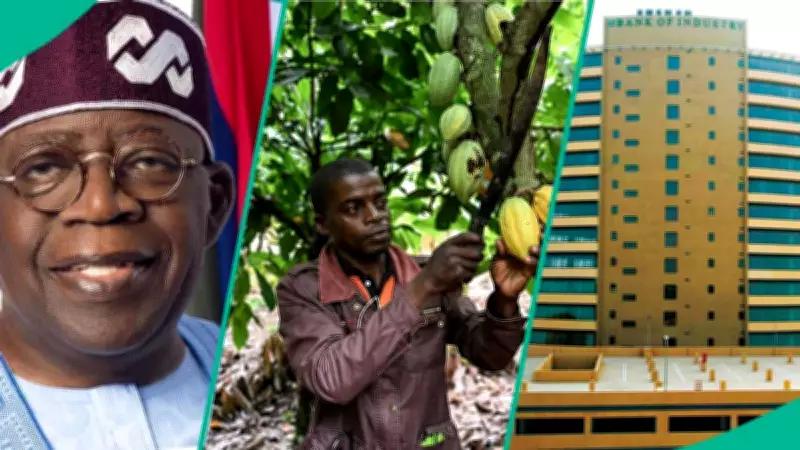
President Bola Tinubu has publicly praised the Bank of Industry for its significant financial support to Nigerian businesses, following the disbursement of N636 billion in loans during the 2025 fiscal year. In an official statement, the President highlighted that this substantial funding has effectively strengthened productive capacity across multiple critical sectors of the economy.
The President emphasized that expanding access to long-term capital, especially during a period of global credit tightening, clearly reflects the positive impact of the ongoing economic reforms implemented by his administration. He noted that the financing has specifically supported agro-processing expansion, strengthened manufacturing output, improved infrastructure delivery, and enabled thousands of enterprises to experience growth and stability.
Agribusiness Receives Largest Allocation of N202 Billion
Data released by the Bank of Industry reveals that agribusiness attracted the largest share of the loan disbursement, receiving N202 billion. This amount accounts for approximately 32% of the total N636 billion disbursed funds, underscoring a renewed and focused financing support for Nigeria's vital agriculture sector.

This record allocation represents a major milestone for Nigeria's foremost development finance institution as it actively seeks to drive national food security and industrial expansion despite prevailing macroeconomic pressures. The significant investment in agriculture aligns with broader governmental goals to enhance food production and reduce dependency on imports.
Other Sectors Benefit from Credit Expansion
Beyond agriculture, several other key sectors also benefited substantially from the Bank of Industry's credit expansion in 2025. Infrastructure projects received N100 billion, while the manufacturing sector accessed N79 billion. Additionally, the extractive industries secured N77 billion, and the services sector obtained N55 billion in funding.
The 2025 performance occurred amid challenging global financing constraints that widened funding gaps and increased pressure on development finance institutions worldwide. Demand for BOI facilities rose significantly during this period, largely due to the institution's relatively lower interest rates and longer repayment tenures, which provided much-needed relief to businesses.
Central Bank Restructures Agricultural Credit Guarantee Scheme
The renewed emphasis on agricultural financing aligns with recent policy adjustments at the Central Bank of Nigeria. In 2024, the apex bank restructured its Agricultural Credit Guarantee Scheme Fund by inaugurating a new board. This move followed the discontinuation of the Anchor Borrowers' Programme, which faced challenges with loan repayments.
Speaking at the inauguration ceremony in Abuja, CBN Governor Olayemi Cardoso described the ACGSF as a longstanding development finance mechanism that must adapt to meet the financing needs of modern agriculture. Cardoso clarified that strengthening this scheme does not signal a return to sector-specific interventions but rather reflects the CBN's statutory mandate, which recognizes the ACGSF as a core instrument for supporting agricultural development.
CBN Aims for More Inclusive Agricultural Financing
Governor Cardoso stated that the primary goal is to make agricultural credit more inclusive, ensuring that factors such as limited collateral or remote location no longer prevent farmers from accessing necessary financing. He highlighted that agriculture contributes over one-fifth of Nigeria's gross domestic product and employs nearly two-thirds of the workforce, yet it receives less than 5% of total bank lending in the country.
Recent data indicates a modest rebound in the agricultural sector. According to the National Bureau of Statistics, agriculture grew by 2.82% in the second quarter of 2025, up from 0.07% in the first quarter and slightly higher than the 2.6% recorded in the same period of 2024.

Positive Indicators from Purchasing Managers' Index
Further evidence of agricultural expansion came from the Central Bank's Purchasing Managers' Index for January, which showed the agriculture index at 54.2 points. This marks the eighteenth consecutive month of growth in the sector, demonstrating sustained improvement and resilience.
The sub-indices for farming activities, new orders, employment, and raw materials inventory stood at 55.8, 54.1, 52.8, and 54.3 points respectively, indicating consistent progress across the entire agricultural value chain. The CBN noted that all five agriculture subsectors expanded during the month, with livestock recording the strongest growth performance.
Federal Government's FarmerMoni Initiative
In related developments, the Federal Government of Nigeria has opened a portal for eligible farmers to apply for interest-free loans through the FarmerMoni program. This initiative aims to provide financial support to 22,000 farmers to enhance agricultural productivity across the nation.
Farmers can secure up to N300,000 without collateral requirements through FarmerMoni, which promotes economic stability in rural areas of the country. The Renewed Hope GEEP 3.0 program, under which FarmerMoni operates, seeks to enhance food security and reduce poverty through financial inclusion and targeted support for agriculture.