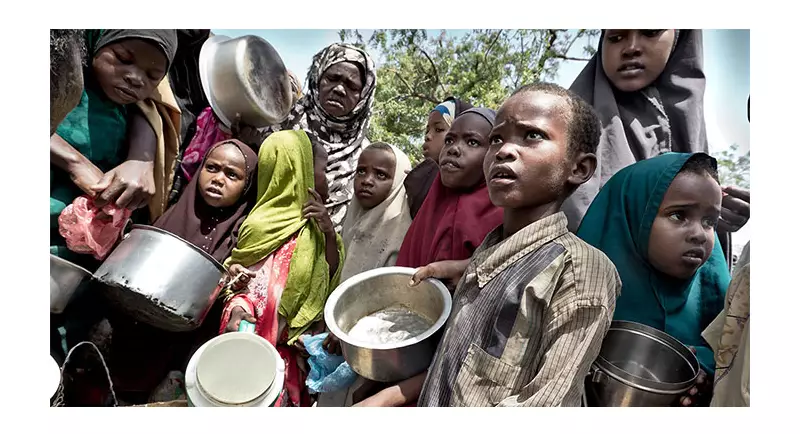
A stark warning from the United Nations World Food Programme (WFP) has highlighted a deepening emergency in Nigeria. The agency projects that a staggering 35 million Nigerians could fall into severe hunger during the 2026 lean season. This alarming forecast is not a distant threat but a reflection of the brutal reality already unfolding across the nation, driven by relentless insecurity, climate change, and economic hardship.
A Nation's Farmers Under Siege
For years, Nigerian governments have declared food security a top priority. However, the daily experience of farmers tells a different story. In many regions, those who grow the nation's food are being killed, kidnapped, or violently driven from their lands. Terrorists and armed groups now force farmers to pay "protection levies" just to access their own fields. This pervasive fear has transformed farming from a proud vocation into a deadly gamble, directly undermining every agricultural policy announced in the capital, Abuja.
David Stevenson, the WFP Country Director, detailed the crisis's severity, noting that Northern Nigeria is experiencing its worst hunger levels in ten years. A recent Cadre Harmonisé analysis reveals that nearly six million people in Borno, Adamawa, and Yobe states will face crisis-level hunger or worse between June and August 2026. The most dire projection indicates that at least 15,000 people in Borno could slip into catastrophic, famine-like conditions if current trends continue unchecked.

The Converging Crises: Climate and Conflict
Insecurity is not the only driver of this looming catastrophe. Climate change acts as a powerful multiplier of hunger and displacement. Erratic rainfall, scorching temperatures, and devastating floods have shattered traditional farming cycles. Vital water sources like rivers and lakes are drying up prematurely, particularly in the north.
This environmental stress fuels violent conflict. As the Lake Chad Basin recedes, pastoralists are forced to search further for grazing land, intensifying deadly clashes with farmers across the Middle Belt and southern states. These conflicts displace entire communities and deter any farming activity, threatening food production nationwide.
The consequences are most devastating for children. Malnutrition rates are critically high in states like Borno, Yobe, Sokoto, and Zamfara. The situation is worsened as funding shortforces force the scaling down of vital WFP nutrition programmes. With clinics closing and aid workers unable to reach many communities, severe acute malnutrition has escalated to "critical" levels in much of the North-East.
A Call for Urgent and Strategic Action
The UN warning is a clear indictment of systemic failure. A country that cannot protect its farmers cannot hope to feed its people. To avert a full-scale famine, Nigeria must implement bold, coordinated measures immediately:
First, the government must treat the protection of farmlands as a national security imperative. This requires deploying specialized security units to create safe corridors for planting, harvesting, and transporting food.
Second, intelligence operations must dismantle the terrorist networks that extort "farming levies," cutting off a key source of their funding and influence.
Third, Nigeria must climate-proof its agriculture by investing in irrigation, drought-resistant crops, and early-warning systems to help farmers adapt.
Fourth, a national policy to modernize livestock production through ranching and regulated grazing reserves is essential to resolve the herder-farmer conflict.
Fifth, humanitarian coordination and funding must be strengthened, and a professional national food reserve system must be established, free from political interference.
Finally, local governments need the resources and autonomy to manage community security and early-response mechanisms tailored to their specific challenges.

The window to prevent widespread suffering is closing fast. The projected hunger crisis is a direct result of intersecting failures in security, climate adaptation, and economic policy. Only decisive leadership, genuine political will, and a unwavering commitment to securing rural lives can steer Nigeria away from the brink and restore hope for millions.