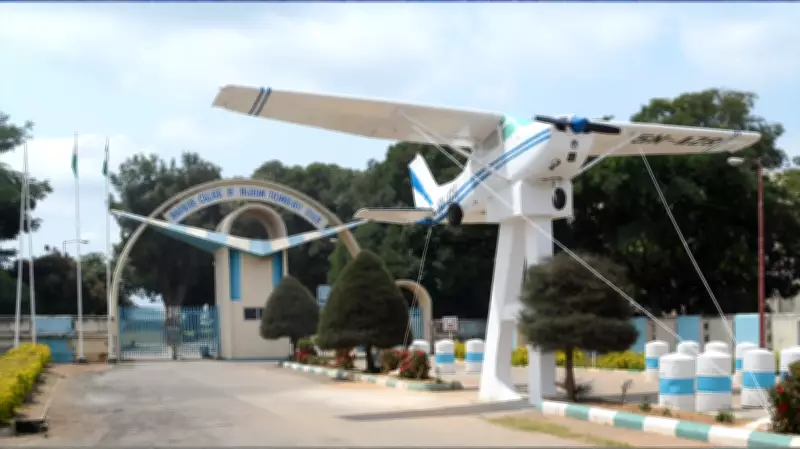
NCAT Accelerates Perimeter Fencing to Thwart Land Encroachment and Enhance Safety
The Nigerian College of Aviation Technology (NCAT) in Zaria has ramped up efforts to finalize its perimeter fencing initiative, a critical step aimed at curbing encroachment from adjacent communities and bolstering operational security. Dr. Danjuma Ismaila, the institution's rector, shared this development during an interview with aviation journalists in Lagos, highlighting the project's significance for the college's long-term stability.
Addressing Years of Encroachment Challenges
Ismaila explained that the fencing project, previously stalled at approximately 50% completion, had left the college's land vulnerable to unauthorized occupation over the years. This issue has led to persistent legal battles with neighboring communities, complicating the institution's operations. "We have been battling encroachment legally for years due to the incomplete fencing," he noted. Contractors have now been remobilized to the site, with the goal of fast-tracking the project's conclusion. Once finished, the fencing is expected to significantly improve security measures, particularly for flight training activities, ensuring a safer environment for students and staff.
Infrastructure Upgrades and Training Enhancements
In addition to the fencing efforts, NCAT has undertaken substantial upgrades to its core infrastructure. The college has enhanced its air traffic control simulator, expanding capacity for training personnel in air traffic management and surveillance. This move addresses prior concerns raised by the Nigerian Airspace Management Agency (NAMA) regarding the institution's ability to meet training demands. Ismaila further revealed ongoing plans to award a contract for runway renovation, alongside intensified staff training and license renewal programs. "We ensure our staff are up to date with industry standards through continuous training and capacity building," he emphasized, underscoring the college's commitment to maintaining high educational and operational benchmarks.

Funding Hurdles and Comparative Analysis
Despite these advancements, Ismaila identified funding as a major obstacle to NCAT's growth as a premier aviation training center in Africa. He contrasted the college with the Ethiopian Aviation University, which benefits from robust government support and operates over 30 trainer aircraft, compared to NCAT's fleet of nine. Increased financial backing from the Federal Government or National Assembly could facilitate the acquisition of additional trainer aircraft, thereby boosting training capacity. The rector lamented that resource constraints limit student admissions, with only about 25 out of over 100 applicants accepted into pilot training programs annually. Notably, NCAT's Commercial Pilot Licence (CPL) program, spanning 18 months, offers a cost-effective alternative at around N23 million, significantly lower than the approximate $75,000 charged in Ethiopia.
Revenue Growth and Future Prospects
On a positive note, Ismaila reported a 25-30% increase in internally generated revenue over the past year, attributing this growth to enhanced international visibility and stronger collaborations with key stakeholders. This financial improvement supports the college's ongoing initiatives, including the fencing project and infrastructure upgrades. As NCAT continues to navigate challenges, these efforts aim to solidify its position as a leading institution in aviation education, ensuring safety and efficiency in its operations for years to come.