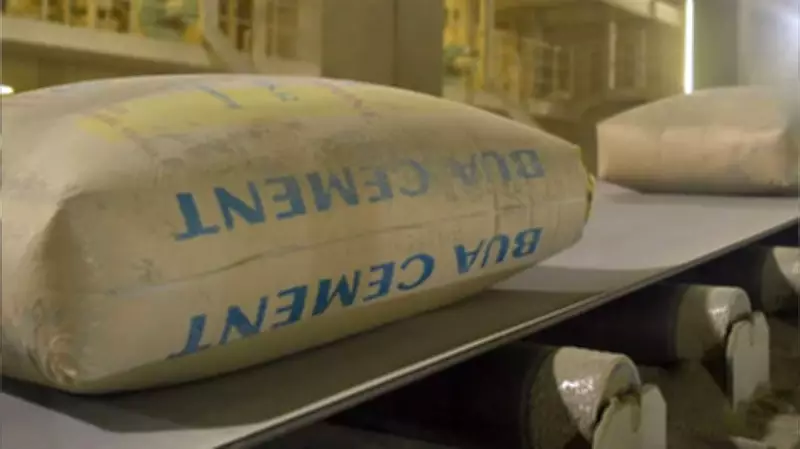
BUA Cement has attributed the sustained increase in cement prices over the past few months to heightened competition, driven by the entry of a new market player and the acquisition of another company. In the market risks section of its 2025 annual report and accounts, the company stated: “In the past year, competition intensified with the entry of a new player and the acquisition of another, thereby increasing pricing pressures and market share rivalry.”
Mitigation Strategies
To address these risks, BUA Cement implemented periodic price reviews, launched customer loyalty initiatives, secured supply contracts with major construction firms, and resumed exports of cement and clinker to neighboring countries. The company also noted that cement production in 2025 faced operational challenges, including shortages of dry quarry materials and recurring machinery downtime, which affected efficiency and output levels. The report was unveiled in Abuja by the company’s chairman, Abdulsamad Rabiu.
Operational Challenges and Responses
The report highlighted that spare parts shortages, employee turnover, workforce disruptions, and security concerns further compounded production difficulties. In response, BUA Cement introduced measures such as a more effective spare parts inventory and tracking system to reduce equipment downtime, recruitment of additional equipment operators, and engagement and upskilling of qualified host community members to enhance workforce stability. These interventions helped sustain production continuity and strengthened the company’s ability to navigate operational pressures.

Financial Performance
The resumption of cement exports to neighboring West African states boosted BUA Cement’s revenue to N1.2 trillion in 2025. Additionally, Rabiu revealed that the company entered the bulk cement distribution business to boost operations. “In 2025, the Board oversaw management’s entry into a new market segment – bulk cement distribution, along with the resumption of export activities to neighbouring West African markets. These steps further strengthened both the market and geographic diversification,” he said.
Strategic Initiatives
Beyond market expansion, the company pursued strategic initiatives to enhance operational self-sufficiency and customer experience. These included the development of a polypropylene production plant for local input substitution, expansion of LNG capacity at the Sokoto Plant to reinforce energy security and cost stability, and deployment of a 24-hour service centre to improve customer satisfaction and operational agility.
BUA Cement recorded revenue of N1.2 trillion, up from N876.5 billion in 2024. Profit before tax rose by 367 percent to N465.3 billion from N99.6 billion, while profit for the year increased by 381.7 percent to N356 billion from N73.9 billion in 2024.
Insights from Management
Providing further insight into the 2025 financial achievements, BUA Cement’s managing director, Yusuf Binji, explained that the launch of an app enables each dealer to operate a unique customer wallet, ensuring seamless order processing. He added: “This transformation continues to simplify the sales process, eliminate errors, and reinforce BUA Cement’s reputation for reliability and responsiveness. At the same time, thousands of our dealers and retailers experienced shorter delivery times and clearer communication through our newly established Customer Support and Market Intelligence Centre.” He also noted that BUA Cement delivered 500 bulk cement tankers to construction firms across the country.