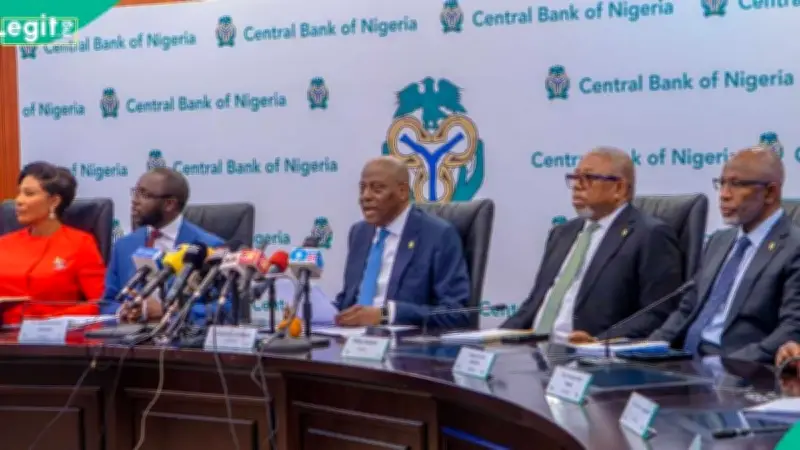
The Central Bank of Nigeria (CBN) has mandated that banks pay a N100 million penalty for processing foreign exchange (forex) transactions without the necessary documentation. This penalty was included in the fourth edition of the Forex Manual released by the CBN last week, marking the first major update of the framework since 2017.
New FX Penalty for Nigerian Banks
Under the revised framework, authorized dealers that conclude forex transactions without proper documentation will be fined N100 million per undocumented transaction and pay an additional N10 million penalty for every impacted transaction. This decision comes amidst ongoing reform efforts by the CBN to re-establish confidence in the Nigerian forex market following years of currency scarcity, parallel exchange rates, and lack of investor confidence.
The updated framework also introduces stronger penalties for banks that violate prescribed Net Open Position Limits. First-time violators will receive a warning letter, while a second infraction warrants a suspension from the forex market for 10 working days. A third breach leads to a suspension from forex market participation for 90 days.

In addition, banks are required to submit daily returns on forex transactions between 9:00 AM and 10:00 AM of the next working day, and weekly returns by the end of five working days after month-end. Failure to comply attracts a penalty of N500,000 and a minimum fine of N5 million, plus an additional penalty of N500,000 per day the violation persists.
Why the New FX Rules?
According to the CBN, the purpose of the revised framework is to bring transparency to inflows and outflows of forex, enforce improved documentation and reporting requirements, and ensure efficient channeling of forex resources to key sectors of the economy.
Importers and exporters are also affected by the revised forex regulations. Importers must present their Exchange Control Documents within 90 days of negotiation with their overseas correspondents. Exporters face restrictions from foreign exchange market participation for a minimum of 360 days, and any fourth infraction can result in indefinite exclusion from the forex market.
For exporters, all oil and gas-related earnings must be repatriated within 90 days of shipment, while non-oil export earnings must be repatriated within 180 days of shipment. Failure to do so incurs a penalty equivalent to 1% of the naira value of the amount un-repatriated.
Other aspects, such as advance payment for imports, have been revised to 30% of the invoice value of goods, up from 15% as previously stipulated. The Form NXP used in export transactions has been waived of processing fees, while additions have been made for service exports, technology-based payments, and transactions on the Pan African Payment and Settlement Systems.
It is expected that these changes will strengthen Nigeria's foreign exchange market through reduced transaction delays, better compliance, increased market confidence, and improved integrity.