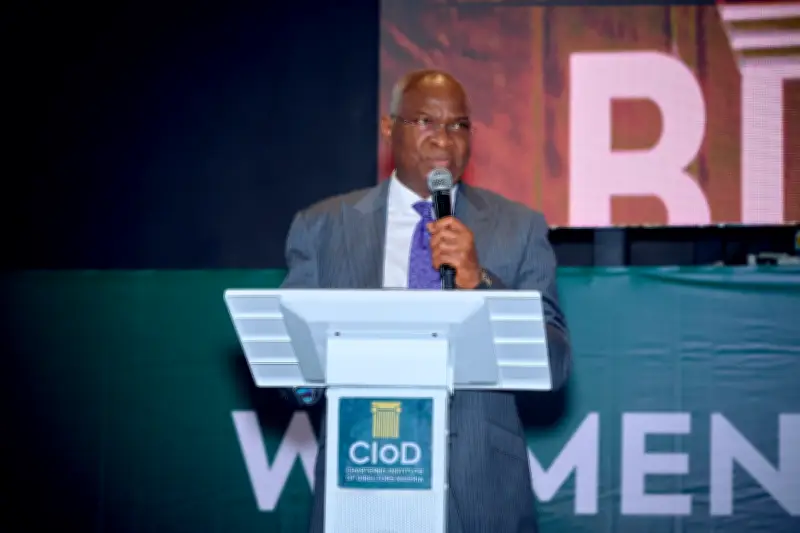
Former Lagos State Governor Babatunde Fashola has disclosed that the state government deliberately discounted land for the Dangote Refinery to secure the multi-billion-dollar investment. Speaking at a public event, Fashola explained that the decision was a strategic move to attract the $19 billion refinery project to the Lekki Free Trade Zone, which has since become a cornerstone of Nigeria's industrial transformation.
Strategic Land Discount to Attract Investment
Fashola, who governed Lagos from 2007 to 2015, revealed that the land allocated for the Dangote Refinery was offered at a discounted rate to ensure the project remained competitive. He noted that similar incentives are common globally for large-scale industrial projects. The refinery, which began operations in early 2024, has a capacity to process 650,000 barrels per day, making it one of the largest in Africa.
"We discounted the land because we understood the multiplier effects of such an investment," Fashola said. "The refinery has created thousands of jobs, boosted local refining capacity, and reduced Nigeria's dependence on imported fuel." He emphasized that the long-term economic gains far outweighed the initial revenue loss from the land sale.

Economic Impact of the Dangote Refinery
The Dangote Refinery, located in the Lekki Free Trade Zone, has been hailed as a game-changer for Nigeria's economy. According to the Lagos State Government, the project has attracted ancillary industries, including petrochemical plants and logistics firms, generating an estimated 100,000 direct and indirect jobs. The refinery also aims to eliminate Nigeria's fuel import bill, which once cost the country over $10 billion annually.
Fashola highlighted that the discounted land was part of a broader strategy to position Lagos as a hub for industrial investment. "We offered competitive terms to ensure that the refinery chose Lagos over other locations in Africa," he said. "The outcome has validated our approach, as the refinery is now a model for public-private partnerships."
Criticism and Defense of the Policy
The land discount has faced criticism from some quarters, with opponents arguing that the state lost substantial revenue. However, Fashola defended the policy, stating that the short-term sacrifice was necessary for long-term gains. "If we had insisted on market rates, the refinery might have located elsewhere, and Lagos would have missed out on the transformative benefits," he explained.
Economic analysts have largely supported the decision. Dr. Akin Oyebode, an economist at the University of Lagos, noted that "the discounted land was a catalyst for industrial development. The refinery has boosted local content, reduced foreign exchange pressure, and enhanced Nigeria's energy security." He added that similar incentives are used worldwide to attract anchor investments.
Broader Implications for Nigeria's Industrial Policy
The Dangote Refinery's success has prompted other states to consider similar land incentive policies. The Federal Government has also adopted the Lekki Free Trade Zone model for other industrial parks. Fashola called for a coordinated national approach to attract foreign direct investment, emphasizing that "strategic incentives are not giveaways but investments in future prosperity."
As Nigeria continues to grapple with economic challenges, the Dangote Refinery stands as a testament to the power of visionary policy. Fashola's revelation underscores the importance of bold decisions in driving industrial growth.