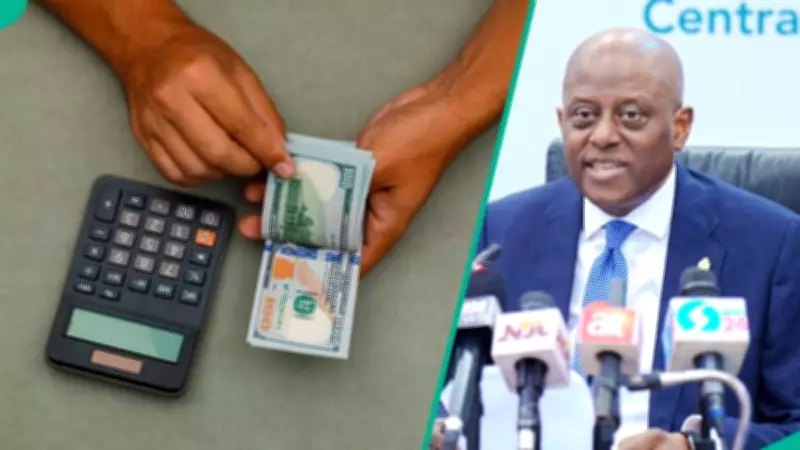
The Central Bank of Nigeria (CBN) has clarified that the recent stability of the naira against the US dollar is not a result of artificial support but rather a consequence of market-driven reforms and improved liquidity. This statement was made on Wednesday by CBN Governor Olayemi Cardoso during a press briefing in Abuja following the Monetary Policy Committee (MPC) meeting.
CBN's Minimal Intervention in FX Market
Governor Cardoso emphasized that the CBN's participation in the foreign exchange (FX) market is minimal, accounting for only about 1.2 to 1.3 percent of total market turnover in 2025. He dismissed claims that the bank has been defending the naira, stating, “The market is now largely working on its own. Our interventions are very marginal relative to total market turn.”
According to Cardoso, the FX market has become significantly more transparent and market-driven following two years of reforms. The average daily turnover has increased from $361.1 million to between $550 million and $1 billion, reflecting greater liquidity and market confidence.

Transparency and Market Reforms
The governor attributed the improved stability to enhanced transparency and information sharing between the CBN and market participants. The adoption of the “willing buyer, willing seller” principle and the use of an electronic trading platform have minimized distortions and speculative attacks that previously drove exchange rate volatility.
Cardoso also addressed concerns about the depletion of Nigeria's external reserves, clarifying that movements in reserves are due to routine obligations such as government requirements and loan repayments. He stated, “So to answer your question, no, what we have done and which is normal is that in the course of daily activities there may be need to meet the requirements of various arms of government or loans outstanding obligations due, they have to be paid.”
External Reserves and New FX Manual
Nigeria's external reserves stand at $49.49 billion, providing coverage for approximately 9.04 months of imports. Cardoso announced that a new foreign exchange manual, effective from June 1, will further improve transparency, standardize market participants, and ease access to foreign exchange. The reform is designed to discourage the diversion of foreign exchange proceeds out of the official market.
In related news, the naira weakened slightly against the US dollar on Tuesday, May 19, in the official Nigerian Foreign Exchange Market (NAFEM). Data from the CBN showed the local currency depreciated by 17 kobo, or 0.01 percent, closing at N1,373.87 per dollar, compared to N1,373.70 per dollar in the previous session.