CPPE Criticizes World Bank's Fuel and Food Import Advice for Nigeria
The Centre for the Promotion of Private Enterprise (CPPE) has issued a strong warning against the World Bank's recent call for Nigeria to increase imports of petroleum products and food. In a statement released yesterday, Dr Muda Yusuf, Chief Executive Officer of CPPE, described the proposal as deeply troubling and misaligned with Nigeria's current economic realities and reform direction.
Misalignment with Economic Progress
Yusuf highlighted that Nigeria is currently recording measurable improvements in key economic indicators, including foreign reserves, inflation moderation, and stability in the foreign exchange market. He argued that the policy focus should be on consolidating these gains rather than reversing them through increased importation. The World Bank's recommendation, contained in its now-removed Nigerian Development Update, urged Nigeria to issue more fuel import licenses to address price crises and potential inflation spikes, a move that has drawn widespread criticism.
Risks to Domestic Refining and Production
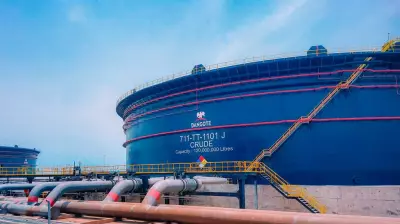
Encouraging increased importation of petroleum products at this stage risks reversing hard-won gains, according to Yusuf. He warned that such a policy could exacerbate foreign exchange pressures, weaken domestic refining investments, and heighten the economy's vulnerability to external shocks. Nigeria is gradually moving towards self-sufficiency in petroleum products, driven by private investments in domestic refining capacity, notably with the operationalisation of the Dangote Refinery. Yusuf stressed that sustainable economic transformation must be anchored on production and industrial capacity, not import dependence.

Structural Challenges and Unfair Competition
Yusuf pointed to the structural challenges facing domestic producers, including poor infrastructure, high energy costs, expensive financing, and multiple taxation. These conditions make competition with imports unfair, as many foreign producers benefit from subsidies, efficient infrastructure, and lower financing costs. He described the notion of market competition between imports and domestic production as misleading and inequitable, highlighting a structural asymmetry that disadvantages Nigerian firms operating in a high-cost environment.
Historical Lessons and Future Directions
Reflecting on Nigeria's past reliance on imported petroleum products, Yusuf noted that it led to the collapse of domestic refining, created a rent-seeking import regime, and imposed an annual import burden estimated at between $10 billion and $15 billion at its peak. He cautioned that excessive food imports could similarly depress farmgate prices, discourage agricultural investment, and weaken rural livelihoods. Heavy reliance on imports could worsen macroeconomic conditions by increasing demand for foreign exchange, putting pressure on the naira, depleting reserves, and exposing the economy to global shocks.
Call for Policy Refocus
Yusuf urged the World Bank to refocus its policy advice on industrialisation-driven reforms, including expanding refining capacity, reducing production costs, strengthening manufacturing ecosystems, and enhancing agricultural value chains. He emphasized that import liberalisation is not a sustainable solution to Nigeria's supply-side challenges and risks deepening structural vulnerabilities and accelerating de-industrialisation. Policymakers should prioritize reforms that promote domestic production, strengthen industrial capacity, and build a self-reliant economy anchored on a production-driven growth model.