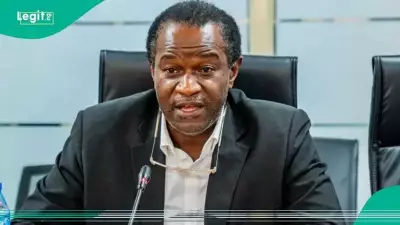
Dr. Tunde Lemo, a former Deputy Governor of the Central Bank of Nigeria (CBN), has declared that the Nigerian economy is on a path to gradual stabilization, crediting President Bola Tinubu's administration for preventing a total economic collapse through its difficult but necessary policy measures.
Seeing Light After a Difficult Year
Speaking on the current affairs program Frontline on Eagle 102.5 FM in Ilese-Ijebu, which was monitored by The Guardian, Lemo stated that the nation is now "seeing light at the end of the tunnel" after a challenging period of adjustment. He emphasized that the economy has shown remarkable resilience.
Lemo pointed to concrete data to support his optimism, highlighting declining inflation rates, improved stability in the foreign exchange market, and a noticeable easing of food price pressures as 2025 came to a close. While acknowledging that general price levels remain high, he stressed the consistent downward trend in both headline and food inflation.

December 2025: A Turning Point
The former banker identified December 2025 as a significant turning point. He revealed a tangible improvement in daily life, stating that for the first time, Nigerians did not have to endure long queues for essential food items.
"For the first time in December, we didn't need to queue up for food. Those who bought right will tell you prices were about 20 per cent cheaper than the previous year," Lemo said. He directly linked this positive development to the removal of the costly fuel subsidy, a cornerstone of Tinubu's reform agenda initiated on his inauguration day.
Lemo defended the reforms, arguing that despite the initial price shocks, the benefits are now becoming evident. "So you can see that the reform that Mr President started with on his day of inauguration, we are already reaping the benefits," he asserted. The subsidy removal, he explained, has led to a sufficient supply of petroleum products, eliminating scarcity and the associated panic buying.
Defending the New Tax Regime
Addressing criticism of the government's new tax measures, Lemo was unequivocal in his support. He dismissed arguments about poor timing,反问ing, "When will it be the right time to pay tax? It is only in Nigeria that people do not want to pay tax but want the government to provide everything."
He framed taxation as a fundamental pillar of governance and a necessary alternative to excessive borrowing or direct financing from the central bank, which he warned is a primary driver of inflation. "The government largely spends tax money on other crimes. If we don't pay tax, where do we expect funding to come from?" he asked.
Lemo also clarified a key protective measure within the tax law, noting that traders with an annual turnover below ₦100 million are fully exempt. He argued that this provision shields the poor and small businesses, while placing the burden on those with greater capacity.
"Would a woman selling pepper by the roadside make ₦100 million a year? The new tax law protects the poor more than the rich," Lemo stated. He concluded by suggesting that the loudest criticisms are coming from elite circles who are using the poor as mouthpieces, while the truly vulnerable are often excluded from such policy debates.