The International Labour Organisation (ILO) has issued a powerful declaration, asserting that jobs, rights, democracy, and social dialogue are not merely secondary considerations but critical and essential foundations for economic stability. This statement comes as governments worldwide grapple with conflict, uncertainty, and economic fragmentation, highlighting the need to connect growth to decent employment, protected rights, and stronger institutional dialogue.
Core Principles for Resilient Economies
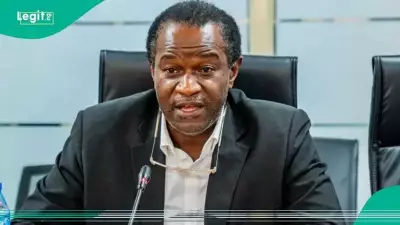
In a detailed statement titled 'Strengthening the Foundations: Jobs, Rights and Democratic Values Amid Global Conflict and Uncertainty,' ILO Director-General Gilbert Houngbo addressed the World Bank Group Development Committee. He emphasized that in a world marked by conflict, polarization, and fragility, labor rights and democratic participation are vital for strengthening social cohesion and institutional resilience.
According to Houngbo, these elements are crucial for policy coherence because durable macroeconomic stabilization ultimately depends on whether adjustment measures command legitimacy and protect the social foundations of growth. He stressed that the immediate priority for governments should be preserving fiscal space for social protection and investment, rather than allowing it to be eroded by inflation-driven austerity measures.

Essential Measures for Vulnerable Populations
The ILO chief outlined that effective social protection, support for livelihoods, and active labor-market policies are essential to prevent vulnerable workers and households from sliding further into insecurity. These measures also help sustain demand, preserve human capital, and reduce the risk that temporary shocks produce deeper fiscal and growth costs over time.
Houngbo warned that economic resilience cannot be built on weak labor-market foundations. He explained, "Where growth does not generate decent jobs, where informality remains pervasive, and where workers lack security, voice, and protection, societies become far more vulnerable to shocks. This is why the persistence of decent work deficits is not only an economic concern but also a rights concern."
Global Economic Vulnerabilities and Challenges
Noting that the global economy appeared more resilient than many had expected early in the year, with growth holding up, inflation easing, and labor markets broadly stable, Houngbo cautioned that beneath these aggregate indicators, vulnerabilities have been accumulating. The global unemployment rate remained steady at 4.9 percent, but this stability was largely driven by a slowdown in labor force growth rather than robust job creation.
Further alarming statistics reveal that the global jobs gap stands at 408 million, and the labor force participation rate continues its structural decline. The deeper challenge, however, lies in work quality. Approximately 284 million workers remain in extreme poverty, and 2.1 billion—nearly 58 percent of the global workforce—are in informal employment. The pace of structural transformation toward more productive and formal work has been roughly half that of the previous decade.
Policy Uncertainties and Fiscal Constraints
Houngbo highlighted that economic policy and trade uncertainty reached historic highs in late 2025, while rising sovereign debt threatens to further constrain the fiscal space governments need to invest in resilience. He reiterated that workers in informal and precarious employment are often the first to absorb a crisis and the least equipped to recover from it, underscoring the urgent need for comprehensive reforms.
The ongoing collaboration between the ILO and the World Bank Group on scorecard systems and jobs indicators aims to address these challenges by promoting policies that integrate decent work, rights, and democratic values into the core of economic planning and stability efforts.