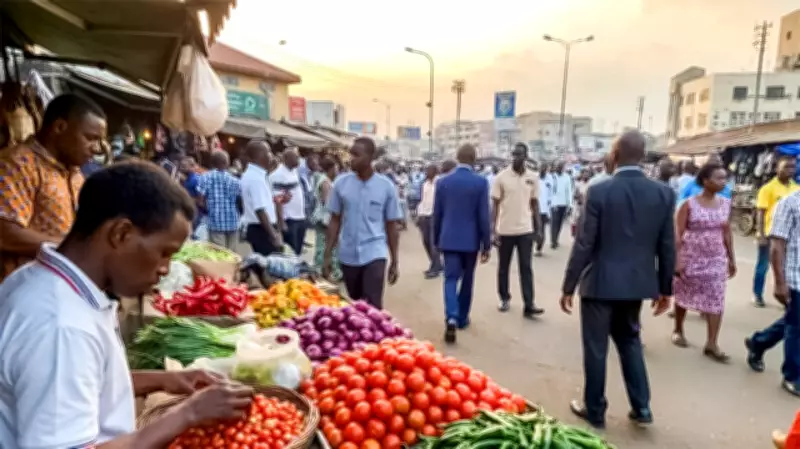
IMF Warns Rising Food Prices Could Push Over 20 Million Africans into Hunger
The International Monetary Fund (IMF) has issued a stark warning that food insecurity across sub-Saharan Africa is set to worsen dramatically, with more than 20 million people at risk of falling into hunger due to rising global food prices and inflation. This alarming forecast comes from the IMF's April 2026 Regional Economic Outlook for sub-Saharan Africa, titled "Hard-Won Gains Under Pressure." The report highlights that despite earlier economic progress, the region is facing renewed pressure on living standards, as higher food costs driven by global shocks rapidly erode purchasing power and deepen vulnerability among low-income households.
Economic Gains Under Threat from Global Disruptions
According to the report, sub-Saharan Africa entered 2026 with relatively strong economic momentum, following its fastest growth in a decade in 2025, supported by improved domestic policy management, easing inflation, and favourable global conditions. However, these gains are now under severe threat from renewed global disruptions, rising commodity prices, and tightening financial conditions. The IMF specifically noted that a 20 per cent increase in international food prices could push more than 20 million people into moderate or severe food insecurity across the region.
This warning is compounded by the IMF's recent revision of Nigeria's economic growth forecast for 2026, cutting it by 0.3 percentage points to 4.1 per cent from 4.4 per cent, citing mounting global and domestic pressures. This underscores the fragile outlook for one of the largest economies in the region, as poverty, food insecurity, and other social indicators, already weakened by the pandemic, face renewed headwinds from declining foreign aid and rising food prices.

Supply Shocks and Broader Economic Spillovers
The current crisis is fueled by a fresh supply shock triggered by the war in the Middle East, which is driving up the cost of essential commodities, including food, fuel, and fertiliser. The IMF noted that higher fertiliser prices are already posing risks to agricultural output, while rising shipping costs are increasing the price of imported food across many countries. Beyond commodity prices, the Fund highlighted broader spillover effects from the global crisis, including weakening trade relations, declining tourism and remittance inflows, and rising risk aversion among investors. All of these factors are tightening access to international financing and limiting fiscal buffers across the region.
These pressures are feeding into inflation, which is projected to rise to 5.0 per cent by the end of 2026 from 3.4 per cent in 2025, reversing earlier gains achieved through lower global food and oil prices and tighter monetary policies. The IMF also warned that prolonged global tensions could further worsen the outlook, increase inflationary pressures, and reduce overall economic output in the region.
Disproportionate Impact on Vulnerable Households
The burden of rising food prices is falling disproportionately on oil-importing and low-income countries, where households spend a larger share of their income on food. In these economies, worsening trade balances, higher import costs, and currency pressures are further amplifying the cost-of-living crisis, while performance remains uneven compared to resource-rich economies. The IMF warned that the situation could deteriorate further if the conflict persists, as prolonged disruptions are expected to push food, fertiliser, and energy prices even higher, with severe consequences for both growth and food access.
While sub-Saharan Africa recorded strong growth of about 4.5 per cent in 2025, the fastest in a decade, the IMF said those gains are now under threat, with growth projected to slow to 4.3 per cent in 2026 amid rising inflation, weakening external balances, and tighter financial markets. The report stressed that beyond macroeconomic indicators, the real concern lies in the impact on households, warning that declining incomes and rising prices are undermining food security and reversing progress made in recent years.

Policy Recommendations to Mitigate the Crisis
To cushion the impact, the IMF advised governments to prioritise targeted and time-bound support for vulnerable populations, particularly to protect access to food, while maintaining efforts to stabilise inflation. It added that protecting food security must remain central to policy responses, even as countries balance fiscal pressures and pursue broader economic reforms aimed at strengthening resilience and supporting long-term growth. This comprehensive approach is essential to address the immediate humanitarian crisis while building a more sustainable economic foundation for the future.