Nigeria's Inflation Rate Rises to 15.38% Amid Global Supply Chain Disruptions
The full impact of global supply chain disruptions, stemming from the Israel-United States-Iran war, is now evident in Nigeria's economy as headline inflation surged from 15.06 per cent in February to 15.38 per cent in March 2026. This increase highlights the ongoing economic challenges faced by the nation due to international conflicts affecting key trade routes.
Key Drivers of Inflation Increase
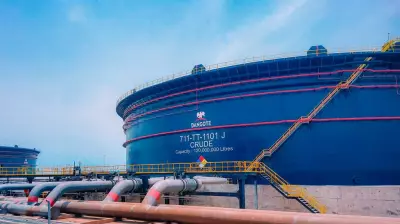
Before the conflict began on February 28, 2026, crude oil was trading at approximately $70 per barrel. However, with the Strait of Hormuz becoming impassable for oil cargoes, prices soared to around $120 per barrel in March 2026. This sharp rise in energy costs has significantly contributed to inflationary pressures across various sectors of the economy.
The National Bureau of Statistics (NBS) released the March 2026 consumer price index (CPI), revealing that the headline inflation rate on a month-on-month basis was 4.18 per cent. This represents a substantial increase of 2.17 percentage points from the 2.01 per cent recorded in February 2026, indicating a faster rate of price increases during March.

Food Inflation and State-Level Variations
Food inflation in March 2026 stood at 14.31 per cent year-on-year, a notable decrease from 25.22 per cent in March 2025. On a month-on-month basis, food inflation was 4.17 per cent, down by 0.52 percentage points from February's 4.69 per cent. This moderation can be attributed to changes in average prices of items such as yams, fresh ginger, cassava tubers, shelled groundnuts, Irish potatoes, and avenger (Ogbono/Apon).
State-level data shows significant disparities in inflation rates. Bayelsa state recorded the highest inflation figure at 27.37 per cent, followed by Sokoto at 26.03 per cent and Bauchi at 23.67 per cent. In contrast, Osun state had the lowest inflation rate at 5.25 per cent, with Kano and Kaduna recording 9.85 per cent and 10.38 per cent, respectively.
On a month-on-month basis, Zamfara state experienced the highest increase at 10.77 per cent, followed by Bauchi at 9.37 per cent and Sokoto at 9.05 per cent. Lagos, Akwa Ibom, and Rivers recorded the lowest rises at 1.54 per cent, 1.8 per cent, and 1.89 per cent, respectively.
Expert Analysis and Economic Implications
Dr Muda Yusuf, Chief Executive Officer of the Centre for the Promotion of Private Enterprise (CPPE), expressed concern over the March inflation figures, noting a worrying resurgence of inflationary pressures, particularly on a month-on-month basis. He highlighted that while year-on-year inflation had shown gradual moderation in recent months, the latest data indicates a steady rise, underscoring the fragility of the disinflation process.
Yusuf attributed the uptick to renewed energy price pressures, which continue to affect production, transportation, and distribution costs across the economy. He emphasized that energy remains a critical cost driver in Nigeria, given the persistent reliance on gas, diesel, and petrol for power generation, logistics, and industrial operations.
He warned that this inflation trend could lead to erosion of real incomes and purchasing power, increased cost of living pressures, rising poverty and vulnerability, and heightened inequality across regions and income groups. To mitigate these effects, he urged governments at all levels to prioritize interventions in agricultural productivity and public transportation infrastructure.
Long-Term Economic Outlook
The NBS report also indicated that the percentage change in the average CPI for the twelve months ending March 2026 was 20.05 per cent, representing a 1.48 per cent increase from the 18.58 per cent recorded in March 2025. This data points to ongoing inflationary trends that require sustained policy attention to ensure economic stability and growth.