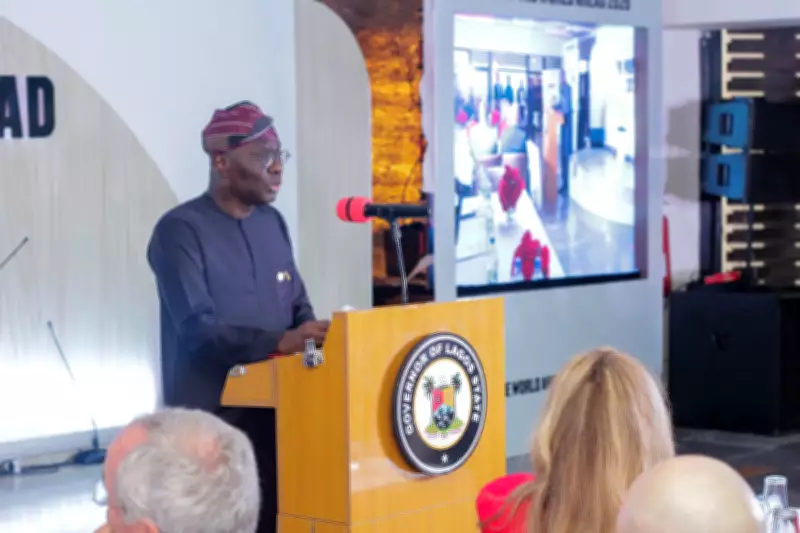
As global shocks from energy disruptions to supply chain breakdowns continue to test economies, countries are under pressure to rethink how they grow, produce and compete. The conversation in Nigeria is shifting from potential to preparedness, with increasing focus on innovation and sustainability. These issues were at the core of discussions at The World Ahead 2026 Nigeria, hosted by CT Productions under license from The Economist. The fifth edition of the annual event was held at Eko Hotel and Suites, Lagos, on Tuesday, April 21, bringing together policymakers, executives, investors and industry leaders.
Sanwo-Olu Calls for Preparedness
Speaking at the event, Lagos State Governor Babajide Sanwo-Olu described the platform as a space where ideas, capital, policy and entrepreneurs can meet in serious conversation about the future. He stressed that the future is not something governments should wait for, but one they must actively prepare for through policy, planning and investment. The world ahead is not merely an exercise in prediction; it is a discipline of preparation, he said, noting that cities like Lagos will play a decisive role in shaping Nigeria's economic direction.
Sanwo-Olu positioned Lagos as more than a sub-national entity. He described it as a living economic system where talent, enterprise, finance and culture intersect. According to him, the state's development strategy is centered on improving infrastructure and expanding access to opportunities. He added that sustainability has become a necessity for Lagos, given its coastal nature and exposure to climate risks such as flooding and urban pressure. As a result, the government is prioritizing climate resilience, cleaner mobility and better urban planning as part of its growth strategy.

In Lagos, we understand that the blue economy, the green transition and climate resilience are not distant aspirations; they are practical frontiers of our competitive edge, he said. On innovation, the governor highlighted the need for an enabling environment where ideas can grow into scalable businesses, supported by access to capital, infrastructure and favorable regulation.
Panel Sessions Explore Sustainable Growth
The event also featured panel sessions examining pathways to sustainable growth and the development of Nigeria's innovation ecosystem. The first session, moderated by Daniel J. Neilson, focused on building a smarter and more sustainable economy, with contributions from industry leaders including George Thorpe, Engr. Obi Nanna and Funmi Folorunso. In an interview on the sidelines, Neilson highlighted global shocks as a key risk facing businesses in 2026, noting that Nigeria's resilience will depend on its level of self-sufficiency.
The biggest question is how well Nigeria is prepared, he said. Countries need to be sovereign in energy and food production. The more self-sufficient they are, the less exposed they will be to global shocks. He also pointed to growing global interest in Nigeria's cultural influence, particularly in music, fashion and the arts, describing it as an opportunity the country must fully leverage. Nigeria's fashion and beauty industries remain underexplored by investors despite strong fundamentals. There is a hugely growing young population and a global diaspora market. Nigeria could be at the forefront of that industry, he said.
CT Productions on Event Growth
Speaking with the Managing Director of CT Productions, Camelia Oros Tsarouchis, she said the event has grown steadily over the past five years, reflecting changes in Nigeria's economic and business landscape. She described organizing the annual gathering as a process that requires both creativity and long-term commitment, driven by a belief in its impact. It is a mix of hard work and the belief that we can make a difference, she said.
Tsarouchis noted that one of the key objectives of the platform is to bridge gaps between large industry players, entrepreneurs and government, creating opportunities for collaboration. According to her, Nigeria is increasingly being seen as a mature and attractive market for investment, despite lingering concerns around misinformation and trust. Once that mistrust is removed and investors engage directly with the market, everything shifts, she said, adding that platforms like The World Ahead help reshape perceptions and open doors for partnerships.

Second Panel on Innovation Ecosystem
The second panel session, moderated by Mark Roberts of the University of Oxford's Saïd Business School, examined how Nigeria can build a stronger innovation ecosystem. Speakers including Harry Daskalakis, Dr Adeyinka Adeyemi, Ayoola Ogunyomi and Denise Eseimokumoh discussed the need for education, digital infrastructure and access to funding to support emerging businesses. Across both sessions, a recurring theme was the importance of collaboration between government, private sector, investors and innovators in driving sustainable growth.
Sanwo-Olu reiterated this point in his address, calling on investors and business leaders to see Lagos and Nigeria as a place for long-term value creation rather than short-term gains. We offer markets, we offer talent and we offer an administration that understands the importance of stable policies and institutional reforms, he said.