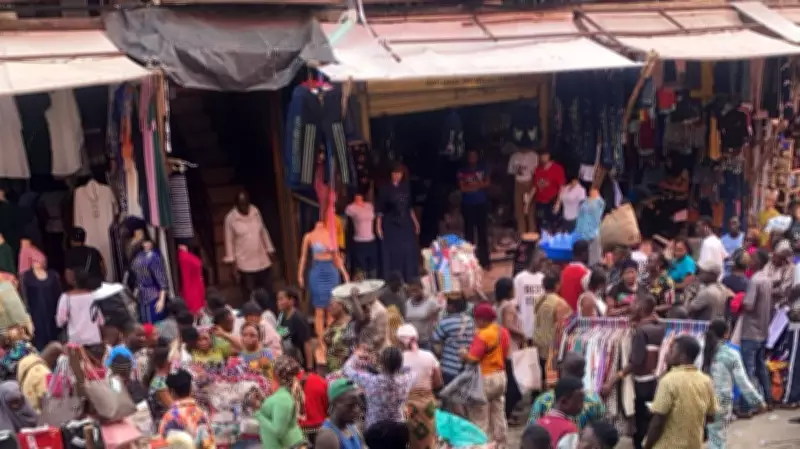
The Lagos State House of Assembly's initiative to harmonize taxes and levies across the state has sparked optimism among traders and business owners who have long suffered from multiple taxation and illegal collections in markets. The proposed Lagos State Harmonised Taxes and Levies Bill 2025 aims to reduce approved levies and eliminate unlawful collections by unauthorized individuals. The bill also introduces penalties for those caught collecting illegal taxes or erecting roadblocks for levies.
Current Challenges Faced by Traders
Investigations by The Guardian on Lagos Island reveal that many roadside traders and small business owners continue to make regular payments to various groups and officials to avoid harassment, confiscation of goods, or forced fines. These payments are often unofficial, made without receipts or tickets, and are demanded under various names, including "weekend money." Traders emphasize that the issue is not just the amount collected but the fear and uncertainty surrounding the process.
Mariam Adeoye, a trader, stated that operators by the roadside are frequently approached by officials known as CBD (Central Business District) officials. She explained, "We pay them N200 so that they will not carry our market. They don't give us a ticket for it. Sometimes they just come and collect money for the weekend, N200 or N500." Refusal to pay often leads to intimidation or confiscation of goods, forcing traders to pay higher amounts later.

Another trader, Micheal Udeh, noted that collections primarily target those displaying goods by the roadside, not shop owners. He said, "The money you pay is for them not to carry your market. But if they do, you have to bribe them N3,000 to N5,000 to avoid having your goods taken to their office." Once goods are confiscated, traders must pay official fines, sometimes N10,000 or N15,000, to recover them.
Daily Burden of Multiple Collections
Oyinkan Quadr, a trader on Lagos Island, described how different groups demand money at various times. "Some guys come to collect money for the weekend. They collect N1,000 every weekend. They come in the morning, while CBD collects in the evening. We are always paying," she lamented. The constant payments have become so regular that traders now factor them into daily business expenses, with some considering leaving the market altogether.
Despite the Lagos Assembly's assurance that the new bill would streamline tax administration and eliminate illegal collections, traders remain skeptical about enforcement. They argue that collections persist because many involved operate openly without fear of punishment. Traders often pay smaller amounts on the spot to avoid losing goods or missing sales, while fear of confiscation forces many to comply quietly.
Proposed Reforms and Penalties
The proposed Lagos State Harmonised Taxes and Levies Bill 2025 states that only approved taxes and levies will be recognized, and illegal collections or unauthorized revenue activities will attract sanctions. The bill proposes a fine of up to N5 million or a three-year jail term for offenders. During a public hearing, lawmakers emphasized that the reform was necessary due to persistent complaints about multiple taxation and arbitrary collections.
Femi Saheed, Chairman of the House Committee on Finance, stated that the legislation aims to address illegal collections, arbitrary ticketing, and the burden on businesses. Deputy Speaker Mojisola Meranda added that the bill would strengthen electronic payment systems and reduce cash transactions linked to illegal collections.
Doubts and Continued Struggles
Despite these assurances, traders expressed doubts about the reforms' impact. Oyinkan Quadr noted that different CBD officials can collect money up to three times daily, questioning whether the money goes to the government. Many traders have raised prices slightly to recover unofficial payments. As the Lagos Assembly continues consultations, traders await practical changes. Efforts to obtain a response from the Lagos State Ministry of Commerce were unsuccessful.