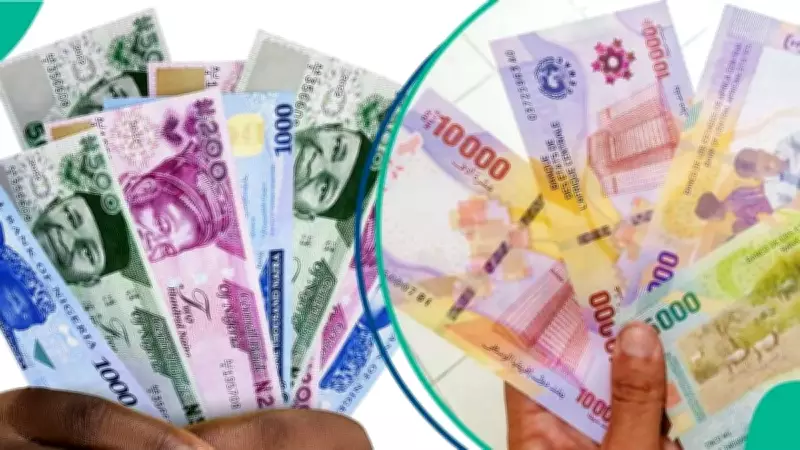
Nigeria and West African Nations Intensify Efforts for Eco Currency Launch
Nigeria, alongside eleven other West African nations, has significantly renewed its commitment to launching the long-anticipated Eco regional currency, marking a potential watershed moment in the economic trajectory of the subregion. Central bank governors from across West Africa recently convened in Monrovia, Liberia, under the auspices of the Economic Community of West African States (ECOWAS) to expedite preparations for this single currency initiative.
High-Level Meeting Focuses on Policy Harmonization
The crucial gathering in Monrovia concentrated on aligning monetary policies, reinforcing governance frameworks, and ensuring that all participating countries satisfy stringent macroeconomic convergence criteria essential for the currency's successful introduction. In a formal statement released on February 14, 2025, the Nigerian presidency characterized this engagement as a definitive stride toward finalizing the necessary policy alignments and institutional architectures required to bring the Eco project to fruition.
Nigeria's Pivotal Role in Shaping the Eco Initiative
As the undisputed economic powerhouse of the region, Nigeria is poised to assume a leadership position in sculpting the future of the proposed currency. The Governor of the Central Bank of Nigeria, Olayemi Cardoso, participated actively in the Monrovia discussions alongside his counterparts, highlighting Nigeria's steadfast dedication to the regional integration agenda.

The coalition of twelve nations championing the Eco comprises Nigeria, Ghana, Liberia, Sierra Leone, Guinea, The Gambia, Cape Verde, Guinea-Bissau, Senegal, Côte d’Ivoire, Togo, and Benin. However, the implementation strategy will adopt a phased methodology. The initial cohort is projected to include Liberia, Nigeria, Ghana, Sierra Leone, Guinea, and The Gambia, contingent upon their successful adherence to agreed fiscal and monetary convergence benchmarks.
Stringent Macroeconomic Benchmarks Are Non-Negotiable
These critical benchmarks encompass rigorous inflation control, maintenance of sustainable public debt levels, stabilization of exchange rates, and disciplined management of fiscal deficits. Officials have emphatically stated that compliance with these standards will be absolute and non-negotiable. According to the Nigerian presidency, the ultimate launch of the Eco currency is strictly dependent on unwavering adherence to these macroeconomic prerequisites and the establishment of robust, independent institutions capable of administering a shared monetary system effectively.
Overcoming Historical Delays and Economic Divergence
The Eco project has languished on the regional agenda for numerous years, repeatedly hindered by significant economic divergence among member states. Challenges such as inflationary spikes, widening fiscal deficits, volatile exchange rates, and uneven growth trajectories have persistently complicated convergence efforts. Certain nations have encountered difficulties in sustaining single-digit inflation rates or confining budget deficits within prescribed limits, while others have grappled with currency instability, thereby impeding the harmonization of monetary frameworks across national borders.
Despite these historical impediments, the recent high-level meeting signals a revitalized political resolve. Regional leaders contend that deeper monetary integration is indispensable for stimulating intra-African trade, attracting heightened foreign investment, and diminishing reliance on external currencies for cross-border commercial transactions.
Transformative Potential of the Eco for West Africa
If successfully launched, potentially by the target year of 2027, the Eco would stand as one of Africa's most ambitious monetary integration endeavors. A unified currency holds the promise of mitigating exchange rate risks, reducing transaction costs for businesses operating regionally, and invigorating trade within the subregion.

For enterprises conducting cross-border operations, the elimination of multiple currency conversions could streamline logistical processes and enhance price transparency significantly. Concurrently, governments across West Africa anticipate that the Eco would fortify overall economic stability and amplify the region's collective negotiating influence in global financial markets.
Persistent Challenges and the Path Forward
Nevertheless, substantial obstacles persist. Achieving and maintaining consistent macroeconomic discipline across a diverse array of economies will necessitate difficult policy decisions and sustained political commitment from all member states. The Monrovia summit has unequivocally repositioned the Eco initiative at the forefront of regional policy discussions. The ultimate transition from strategic blueprint to practical implementation will hinge critically on the seriousness with which participating nations pursue the comprehensive reforms required to make a single, functional currency a reality for West Africa.