Nigeria to Commence Sale of State-Owned Assets in 2026, Says Finance Minister
The Federal Government of Nigeria has officially announced its intention to initiate the sale of select state-owned assets to private investors starting in the year 2026. This strategic move is part of a comprehensive plan to bolster the national economy and attract fresh capital investment from both domestic and international sources.
Minister Edun Reveals Details at International Conference
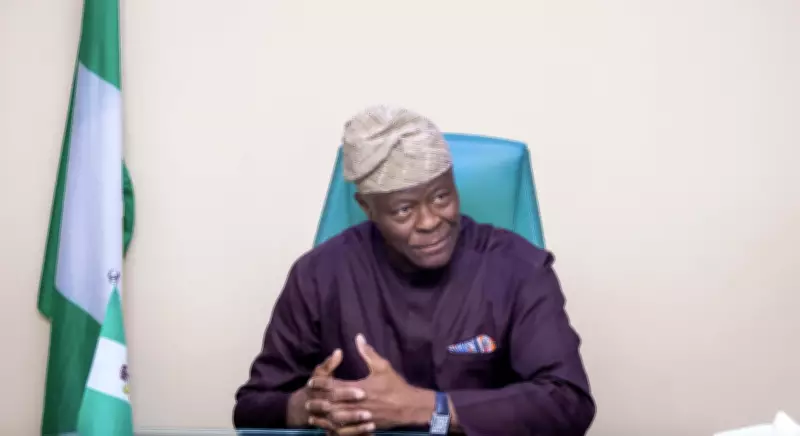
During an exclusive interview with Bloomberg on the sidelines of the AlUla Conference for Emerging Market Economies in Saudi Arabia, the Minister of Finance and Coordinating Minister of the Economy, Wale Edun, provided critical insights into the government's privatization agenda. Edun confirmed that the administration is currently in the process of identifying which public assets will be offered for sale and establishing a definitive timeline for these transactions.
"The plan is to offer some assets in 2026," Edun stated, emphasizing that this initiative is specifically designed to inject private sector capital and enhance the operational performance of government-owned enterprises. He further elaborated that recent economic reforms have significantly improved Nigeria's competitiveness and appeal to investors.

"What we have put in place has made Nigeria very competitive in terms of the economic conditions and very attractive in terms of the incentives for investors. I think investors are now more comfortable to invest in Nigeria," the minister added, highlighting the positive impact of ongoing policy adjustments.
Exploring Public-Private Partnerships and Asset Optimization
In addition to outright sales, the government is actively considering public-private partnerships as an alternative model. This approach would allow private investors to contribute funds, expertise, and efficiency to underperforming state assets, thereby optimizing their value and functionality.
"We are interested in private public partnerships, optimization of our assets by having others come in and invest," Edun explained, underscoring the administration's commitment to leveraging private sector capabilities for national development.
Broader Economic Reforms and Investor Confidence
The proposed asset sales are occurring within the context of extensive economic reforms aimed at restoring investor confidence, enhancing fiscal discipline, and strengthening public finances. Edun had previously articulated that Nigeria is pursuing job-rich and inclusive growth, with investment being a pivotal factor in boosting productivity and employment across various sectors.
Sources within the Presidency have indicated that the assets under review for potential sale or partnership include:
- Industrial and manufacturing facilities
- Energy infrastructure such as refineries
- Real estate holdings
- Equity stakes in specific companies
According to one insider, the government intends to dispose of assets "that are not doing well but have the potential to attract reasonable amounts running into billions of dollars."
Minister Bagudu Highlights Underperforming Assets
The Minister of Budget and Economic Planning, Abubakar Bagudu, also addressed the issue during an appearance on ARISE Television's Morning Show. He pointed out that the government currently holds too many assets that are failing to deliver value to Nigerian citizens.
"Government has held too many assets that are not generating value for Nigerians, and there are opportunities for investors to come in so those assets can contribute to national prosperity," Bagudu remarked, advocating for a more efficient utilization of national resources.
Using the oil sector as a prime example, Bagudu noted that Nigeria possesses the capacity to produce approximately three million barrels of crude oil per day but is currently producing less than 1.5 million barrels. He also highlighted that despite having an estimated 210 trillion cubic feet of natural gas, less than seven percent is being utilized effectively.

Bagudu cited specific concerns regarding the performance of government-owned refineries, referencing the Nigerian National Petroleum Company's admission that despite an investment of about $1.5 billion in rehabilitation efforts, the refineries are not operating profitably. "So why hold on to assets that are not delivering value? Bringing in investors can help put them to better use," he concluded.
Analysts Emphasize Transparency and Accountability
Economic analysts have long argued that well-managed asset sales or concessions can yield multiple benefits, including raising essential funds, reducing the financial burden of maintaining underperforming enterprises, and freeing up resources for priority sectors such as healthcare, education, and infrastructure development.
However, experts also stress the critical importance of ensuring transparency and accountability throughout the privatization process to safeguard public interest and prevent potential mismanagement. The success of this initiative will largely depend on the government's ability to implement these sales in a manner that maximizes economic gains while maintaining public trust.