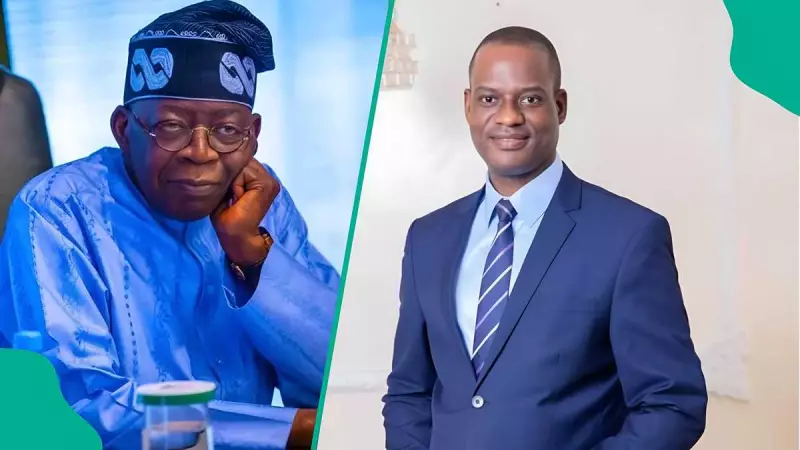
President Bola Ahmed Tinubu inherited a fragile economy upon taking office in May 2023, marked by persistent budget deficits and declining oil income. Nearly three years into his term, his administration's reliance on massive borrowing and expansive new taxation is placing intense pressure on Nigeria's economic stability and the welfare of its people.
The Rising Tide of Debt: From ₦87 Trillion to ₦149 Trillion
Borrowing has become a central feature of the Tinubu government's fiscal policy. While loans can fund vital infrastructure, the scale and pace of Nigeria's new debt have sparked serious concern. Despite promises to reduce dependency on credit, the nation's total public debt ballooned from ₦87.38 trillion in June 2023 to approximately ₦149.39 trillion by March 2025. This represents a staggering increase of about 71% in under two years.
This surge includes the securitization of Central Bank overdrafts, known as "Ways and Means" advances. Furthermore, between 2025 and 2026, the administration secured approval for new external loans worth roughly $24.14 billion, including funds from the World Bank. These loans are designated for power, agriculture, security, and infrastructure projects.

The consequence is clear: a growing portion of government revenue is now consumed by debt servicing, diverting funds away from healthcare, education, and security. Former Vice President Atiku Abubakar has warned that this approach risks "mortgaging Nigeria's future," potentially creating a debt spiral where new loans are taken just to pay old ones.
The 2026 Tax Reforms: Adding Burden Amid Economic Hardship
Parallel to its borrowing, the government has enacted sweeping tax reforms set to take effect from January 1, 2026. The stated goal is to broaden the tax base and reduce reliance on oil revenue. However, the timing is critical, as these measures hit citizens and businesses already grappling with high inflation, the aftermath of subsidy removal, and a weakened currency.
Critics argue that instead of stimulating growth, the new tax laws could suppress consumption, discourage investment, and stifle private sector activity. Small businesses face higher compliance costs, workers see their real income shrink further, and informal traders are brought into the tax net without corresponding benefits.
A Nation Under Dual Pressure: Debt Servicing and Public Perception
The combined effect of soaring debt obligations and increased taxation places Nigeria's economy under significant strain. The situation is exacerbated by exchange-rate risks; as the naira weakens, the cost of repaying foreign-denominated debt grows in local currency terms, tightening the fiscal vise.
Perhaps the most damaging outcome is the growing perception gap. Nigerians are bearing heavier fiscal burdens while seeing limited improvements in public services. Unreliable power, persistent security challenges, and infrastructure gaps continue, eroding the social contract. As communications strategist Kalu Okoronkwo analyses, when citizens feel overtaxed and underserved, compliance falls and public trust deteriorates.
The lesson from global examples is stark. Countries that combine heavy borrowing with rapid fiscal tightening often face recessions and social unrest. Nigeria now stands at a crossroads. The current path finances governance through borrowed billions and sustained by immediate tax burdens. The alternative requires a recalibration towards disciplined spending, productive debt investment, and reforms that deliver tangible benefits to the population bearing the weight.
The strain is evident, and the warning signs are clear. For Nigeria, the need is not just for reform, but for reform that remembers the people carrying its cost.