Nigeria's Debt Service Obligations Surge in Final Quarter of 2025
Nigeria's fiscal pressures intensified in the final quarter of 2025, as the country's debt service obligations climbed significantly, according to official data from the Debt Management Office. The figures reveal a substantial burden on government finances, with domestic debt servicing reaching N2.28 trillion and external debt service payments standing at $1.80 billion during the three-month period.
Domestic Debt Repayment Dominated by Interest Costs
The Debt Management Office's public debt report, released on Monday, April 13, highlights the growing fiscal challenges facing the Nigerian government. Interest payments continued to dominate debt servicing costs across both domestic and external obligations, creating significant pressure on national resources.
Domestic data shows that interest payments alone accounted for N2.17 trillion between October and December 2025, representing over 95% of total domestic debt service. In stark contrast, principal repayments were significantly lower at N108.88 billion, indicating the heavy burden of interest accumulation on government finances.

Breakdown of Domestic Debt Components
A detailed analysis reveals that Federal Government of Nigeria Naira Bonds remained the largest cost driver, with N1.32 trillion in interest payments during the quarter. Nigerian Treasury Bills followed closely at N742.34 billion, reflecting the government's heavy reliance on short-term borrowing instruments to meet its financial obligations.
Other significant components of interest payments included Sukuk bonds at N101.02 billion, FGN Savings Bonds at N3.99 billion, and Green Bonds at N5.59 billion recorded specifically in December 2025.
On a monthly basis, December recorded the highest debt service burden at N909.63 billion in interest payments, compared to N660.52 billion in October and N603.37 billion in November. This monthly variation indicates fluctuating financial pressures throughout the quarter.
External Debt Service Analysis
Nigeria's total external debt service payments reached $1.80 billion in the fourth quarter of 2025, driven largely by commercial debt obligations that dominated the repayment schedule. The breakdown of external debt service reveals significant concentration in specific creditor categories.
Commercial debt accounted for $1.39 billion of the total external payments, while multilateral debt stood at $350.14 million and bilateral debt at $60.27 million. This distribution highlights the substantial role of commercial creditors in Nigeria's external debt portfolio.
Major External Creditors and Payments
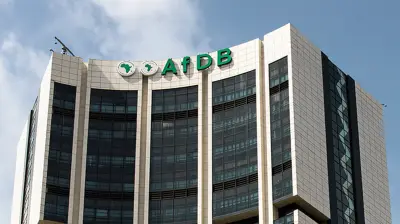
Commercial creditors accounted for the bulk of external payments, with Eurobond repayments alone totaling $1.38 billion during the quarter. Among multilateral lenders, the International Development Association led with $192.73 million in payments, followed by the African Development Bank at $93.45 million.
Other significant external creditors included the International Bank for Reconstruction and Development with $42.76 million, Agence Française de Développement at $37.97 million, and China Development Bank with $10.41 million. Additional multilateral creditors, including the African Development Fund and International Fund for Agricultural Development, recorded smaller payment volumes during the period.
Government's Stance on Future Borrowing
In related developments, Nigeria has indicated no immediate plans to seek financial assistance from the International Monetary Fund, according to Finance Minister Wale Edun. Speaking at a briefing of African finance ministers during the IMF and World Bank Annual Meetings in Washington on Friday, April 17, Edun stated that policy reforms implemented over the past two years had restored credibility and improved resilience against global economic shocks.
The Finance Minister noted that Nigeria had prioritized market-based adjustments, particularly in foreign exchange and petroleum pricing, while avoiding administrative controls that could distort the economy. This approach reflects the government's strategy to manage debt through domestic reforms rather than additional international borrowing.

Economic Implications and Future Outlook
The substantial debt service figures raise important questions about Nigeria's fiscal sustainability and economic management. With interest payments consuming such a large portion of debt servicing costs, the government faces ongoing challenges in balancing debt obligations with other critical national priorities.
The concentration of payments in commercial debt, particularly Eurobonds, indicates Nigeria's continued reliance on international capital markets for financing. Meanwhile, the dominance of interest over principal repayments in domestic debt suggests potential long-term implications for the country's debt profile and fiscal flexibility.
As Nigeria continues to navigate these financial challenges, the effectiveness of current economic reforms and debt management strategies will be crucial in determining the country's ability to maintain fiscal stability while supporting economic growth and development objectives.