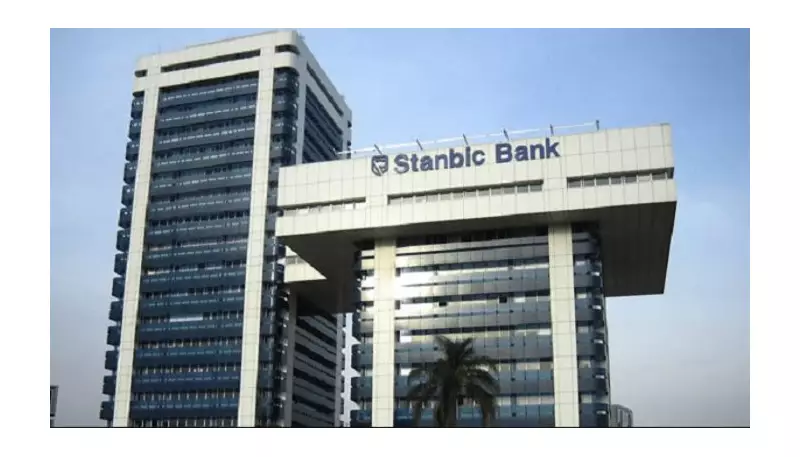
Nigeria's private sector concluded the year 2025 on a powerful note, demonstrating sustained expansion and rising optimism among businesses. The latest Stanbic IBTC Bank Nigeria Purchasing Managers' Index (PMI) survey, released on 5 January 2026, reveals that stronger customer demand fueled significant increases in output and new orders throughout December.
Solid Expansion Amidst Rising Demand
The headline PMI registered at 53.5 in December 2025, showing a marginal dip from November's 53.6. Crucially, the index remained firmly above the 50.0 threshold that separates growth from contraction. This marked the thirteenth consecutive month of improving business conditions, aligning with the average trend for the entire year and underscoring the economy's enduring momentum.
The primary engine for this growth was a notable improvement in customer demand. This surge translated into a sharp rise in new orders, extending a remarkable expansion streak that has now lasted for fourteen months. In response to this buoyant demand, companies ramped up their production output sharply. Growth was recorded across all four broad sectors monitored, with the agriculture sector leading the charge.

Employment, Challenges, and Price Pressures
Encouraged by the positive outlook, firms increased their purchasing activity and built up their inventory holdings as the year ended. Employment levels also saw an increase, although the pace of job creation was marginal and slowed to its weakest since June 2025. Businesses faced some operational hurdles, with backlogs of work rising slightly for the second month in a row. Companies cited material shortages and power supply issues as key reasons for delays in completing projects.
On a positive note, supplier delivery times improved, albeit at the slowest rate in six months. Some survey participants linked quicker deliveries to prompt payments and reduced traffic congestion.
Inflationary pressures, which had eased to near five-year lows in November, edged higher in December. Higher raw material costs drove up input prices, while staff costs also increased as firms compensated employees for additional work. Consequently, companies raised their selling prices, with the manufacturing sector recording the most significant hike. Despite this monthly pickup, the overall rate of inflation remained among the weakest observed in the past six years.
Business Confidence Reaches Six-Month High
The survey revealed a significant boost in business sentiment, with confidence climbing to a six-month high. Muyiwa Oni, Head of Equity Research West Africa at Stanbic IBTC Bank, commented on the data, noting the resilience in business activity despite a slight moderation in the PMI reading.
"The continued expansion in business activity reflects higher customer demand, which supported a marked monthly increase in new orders," Oni stated. He highlighted that this demand encouraged firms to expand purchasing and inventory activities.
Looking ahead, optimism is robust. Close to 59% of respondents forecast growth in the coming period. This positive outlook is underpinned by planned investments in business expansion, including the opening of new branches and strategies to boost product exports, signaling a forward-looking and ambitious private sector as Nigeria moves into 2026.