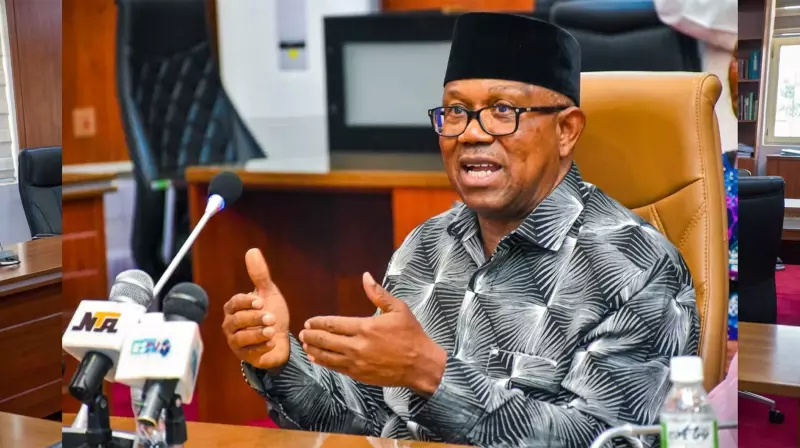
Former presidential candidate Peter Obi has issued a stark warning about Nigeria's escalating poverty levels, accusing the political class of being preoccupied with internal power battles while citizens suffer.
A Nation Left Behind
In a statement on his official X account, the former Anambra State governor and 2023 Labour Party flagbearer highlighted a disturbing contrast. He stated that as politicians intensely jostle for positions and control of party structures, the economic situation for ordinary Nigerians deteriorates rapidly.
Obi pointed out that approximately 141 million Nigerians, which is about 62% of the population, now live below the poverty line. This grim statistic is drawn from recent projections indicating the number will be reached by 2026.

The Drivers of Deepening Hardship
Citing the Nigeria Economic Outlook 2026 report titled 'Turning Macroeconomic Stability into Sustainable Growth', Obi identified the core issues. He listed weak growth in real incomes, persistently high costs of living, and insufficient social safety nets as primary catalysts for the crisis.
The situation is most severe for low-income families, who are forced to spend up to 70% of their earnings just on food. Even with a potential easing of headline inflation, households remain under severe pressure from rising energy prices, increased logistics costs, and ongoing fluctuations in the exchange rate.
World Bank data underscores the alarming trend. The number of Nigerians living in poverty jumped from 81 million in 2019 to around 139 million in 2025. A shocking 14 million people fell into poverty between just 2023 and 2024 alone.
Urgent Call for Structural Reform
Peter Obi, who recently aligned with the African Democratic Congress (ADC), contrasted Nigeria's path with nations like India and Indonesia. These countries have successfully reduced poverty over the last twenty years through deliberate investments in education, healthcare, and social protection.
In stark comparison, Nigeria's poverty rate has climbed from 40% in the year 2000 to the current 62%. Obi described this as a national failure that threatens the country's future, noting that children born in Nigeria today face one of the highest global risks of being born into poverty.
He warned that the rising tide of poverty cripples purchasing power, stifles small businesses, and endangers any prospect of broad economic recovery. Obi declared that urgent structural reforms are no longer optional but an absolute imperative.
His prescription includes significant investment in agriculture and food systems, logistics infrastructure, education, healthcare, and large-scale job creation initiatives. He concluded with a powerful plea for leadership that prioritises the welfare of the people over political maneuvering, affirming his belief that "A New Nigeria is Possible."