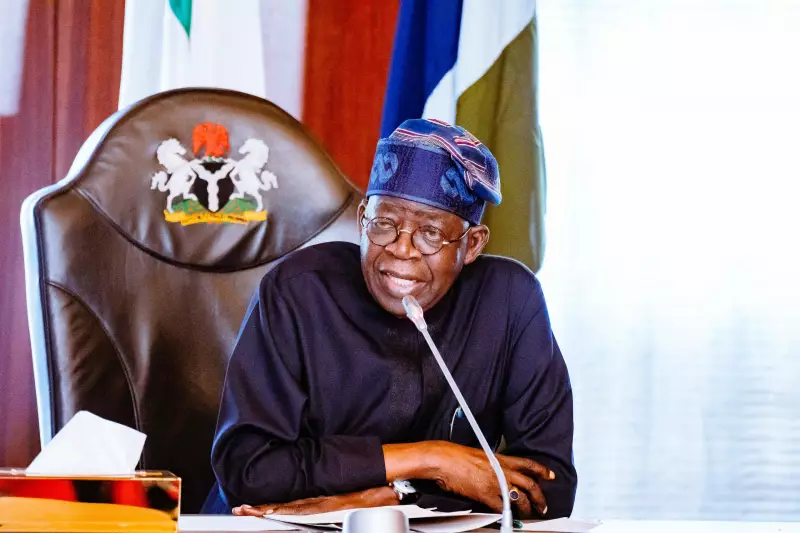
Senior government officials have come out strongly in defence of President Bola Ahmed Tinubu's economic policies, countering public criticism with detailed financial explanations and highlighting significant fiscal savings.
Budget Chief Dismisses "Theatrical Arithmetic" of Critics
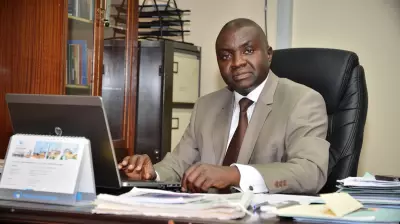
On 5 January 2026, the Director General of the Budget Office of the Federation, Tanimu Yakubu, issued a robust rebuttal to what he termed "theatrical arithmetic" in public critiques of the administration's economic strategy, often referred to as Tinubunomics. He argued that much of the public outrage is rooted in a fundamental misunderstanding of basic public finance principles.
In a statement delivered to State House correspondents, Yakubu clarified that circulating large headline figures purporting to show massive government revenues often involves the improper lumping together of unrelated items. These items include tax collections, oil receipts, borrowing, and savings from subsidy reforms.

"Such presentations amount to an arithmetic illusion rather than serious economic analysis," Yakubu stated emphatically.
Clarifying Revenue, Cash, and Financing
The Budget Office DG took pains to explain critical distinctions that he says many critics overlook. "Revenue is not the same as cash available to the Federal Government. Borrowing is not income; it is financing that creates future obligations. Federation receipts are not equivalent to what the Federal Government can spend," he elaborated.
He pointed out a common pattern in critiques: citing aggregate tax collections in gross terms, adding oil revenues without clarifying if they are net or gross figures, and including customs receipts that may already be part of non-oil revenue numbers. Furthermore, borrowing is often misleadingly presented as free income, while savings from subsidy reform are portrayed as vast pools of idle cash.
On the specific issue of fuel subsidy removal, Yakubu explained that the policy's primary benefit is not to instantly create a discretionary cash reserve. Instead, its value lies in closing long-standing fiscal leaks that previously drained resources through payment arrears, opaque accounting arrangements, and quasi-fiscal obligations.
Senator Yayi Hails Policies, Reveals N10 Trillion Annual Savings
Adding his voice to the defence, Senator Olamilekan Yayi, representing the Ogun West Senatorial District, commended President Tinubu's economic direction. He provided a striking figure to underscore the policy's impact, revealing that the developments have enabled the country to save over N10 trillion annually.
Senator Yayi disclosed the staggering cost of the old subsidy regime, stating that before its removal, Nigeria was borrowing between seven and eight billion naira every single month solely to sustain fuel subsidies. This monthly burden accumulated to no less than N10 trillion on a yearly basis.
"Nigeria was now on the right track," Yayi affirmed, pointing to a more predictable economy, a thriving micro-economy, and concerted efforts to improve the broader macro-economic environment as evidence of progress.
The Path Forward for Nigeria's Economy
The coordinated statements from both the budget office and the legislature signal a concerted effort by the administration to reshape the public narrative around its tough economic reforms. By addressing technical criticisms of "Tinubunomics" head-on and quantifying the savings from subsidy removal, officials aim to build a case for the policies' long-term necessity despite short-term hardships.
The defence hinges on the argument that proper public finance management requires distinguishing between different types of government inflows and that the reforms are fundamentally about correcting structural imbalances rather than merely generating cash.