The question "What ethnicity is Nigerian?" sounds simple but carries profound depth. After months of research into Nigerian identity politics, census history, and cultural anthropology, the answer reveals one of Africa's most fascinating demographic tapestries. Let me set something straight from the outset: Nigerian is not an ethnicity. It never has been. It is a nationality, a civic identity, a passport designation. The ethnicities of Nigerian people are something altogether richer, more numerous, and more complicated than a single label could ever convey.
What Is My Ethnicity If I Am a Nigerian?
This question often arises among Nigerians abroad filling out forms that ask for ethnicity. The honest answer is that your ethnicity is your specific ethnic group, not your nationality. If you are Yoruba, your ethnicity is Yoruba. If you are Igbo, your ethnicity is Igbo. If your family comes from the Efik people of Cross River State, your ethnicity is Efik. Nigeria is home to 371 officially recognised ethnic groups speaking over 500 languages, each with its own history, linguistic identity, cultural practices, and territorial homeland.
When Western forms offer categories like "Black African" or "Black or Black British: African," those are racial categories, not ethnic ones. Your ethnicity is far more specific. A postgraduate student from Ondo State once expressed frustration at a scholarship application listing only "African" as her ethnicity option. She was Yoruba, more specifically Ondo Yoruba, a distinction that mattered deeply to her family and community.

Nigeria's Three Largest Ethnic Groups
The Hausa-Fulani, though technically two distinct groups merged through centuries of intermarriage and political alignment, represent approximately 29% of the population and predominantly occupy the northern states from Sokoto to Maiduguri. The Yoruba, at roughly 21%, concentrate in the south-western states and are renowned for cultural exports like Afrobeats, Nollywood, and fashion. The Igbo, at around 18%, are concentrated in the south-east and celebrated for an extraordinary entrepreneurial tradition and republican social values tracing back to pre-colonial village democracy.
However, the remaining 32% to 40% of Nigeria's population, between 70 and 90 million people, belongs to 368 other ethnic groups. The Ijaw in the Niger Delta count over 14 million people. The Tiv of Benue State number more than five million. The Kanuri of the north-east, the Ibibio and Annang of Akwa Ibom, the Nupe of Niger State, the Edo of Edo State, and the Igala of Kogi State each have populations that would make them significant nations in their own right. Treating them as footnotes is not just statistically careless but culturally disrespectful.
During fieldwork in Plateau State, I encountered seven distinct ethnic groups within a single local government area, each with its own language, traditional governance structure, and cultural calendar. Linguistic shifts occurred every twenty kilometres. This experience, multiplied across 36 states and a Federal Capital Territory, captures the reality of Nigerian ethnicity.
Is Nigeria an Ethnicity or a Nationality?
Nigeria is unambiguously a nationality. It became one in 1914 when British colonial administrator Frederick Lugard amalgamated the Northern and Southern Protectorates into a single entity, creating a country out of hundreds of previously independent kingdoms, caliphates, emirates, chieftancies, and stateless societies. These communities did not choose to be Nigerian; they were grouped together by a colonial power drawing boundaries across a map. The result is a nation-state containing dozens of language families, centuries of separate historical development, radically different governance traditions, and pre-existing identities that predate Nigeria by thousands of years.

A Fulani pastoralist whose ancestors migrated across West Africa long before European contact was not Nigerian. A Benin Kingdom bronzesmith working in the 15th century was not Nigerian. They became "Nigerian" only through the accident of colonial boundary-drawing. This history explains why Nigerians typically identify by ethnicity first and nationality second. In everyday life, you are Yoruba before you are Nigerian, Igbo before you are Nigerian, Kanuri or Tiv or Ijaw before you are Nigerian. This reflects the actual order of cultural inheritance.
That said, a genuinely Nigerian identity has been forming over the 65 years since independence. It is most visible in diaspora communities, where shared experience creates pan-Nigerian solidarity. It appears in Nollywood films mixing Yoruba, Igbo, Hausa, and Pidgin English, and in Afrobeats music drawing on Yoruba rhythms, Igbo aesthetics, and pan-Nigerian urban experience. Young Nigerians born after the civil war increasingly see themselves as Nigerian first while remaining proud of their specific ethnic heritage.
How to Understand Nigerian Ethnic Identity: A Step-by-Step Guide
Start by distinguishing race, ethnicity, and nationality. Race is the broadest category; Nigeria is broadly 99.8% Black African. Ethnicity is the specific cultural, linguistic, and ancestral group. Nationality is legal citizenship. Learn the three major groups first: Hausa-Fulani (north), Yoruba (south-west), and Igbo (south-east). Then expand to medium-sized groups like Ijaw, Tiv, Kanuri, Ibibio, Edo, Nupe, and Igala, each numbering in the millions. Understand language families: Niger-Congo (most southern languages), Afroasiatic (Hausa and related), and Nilo-Saharan (Kanuri). Study geographic distribution on a map: north is predominantly Hausa-Fulani and Kanuri, south-west is Yoruba, south-east is Igbo, and the Middle Belt holds the greatest diversity. Understand the principle of federal character, which ensures ethnic representation in government. Engage with culture directly by reading Chinua Achebe, Wole Soyinka, and Zaynab Alkali, or attending festivals like Durbar in Kano, Osun-Osogbo, or New Yam Festival.
Ethnic Group Comparison Across Nigeria's Six Geopolitical Zones
Nigeria's 36 states are divided into six geopolitical zones. The North-West is dominated by Hausa-Fulani (~22% of national population), speaking Hausa and Fulfulde, primarily Islam. The North-East includes Hausa-Fulani and Kanuri (~13%), speaking Hausa and Kanuri, primarily Islam. The North-Central (Middle Belt) has Tiv, Nupe, Igala, Gwari, and others (~13%), speaking multiple languages, with mixed Islam and Christianity. The South-West is Yoruba (~21%), speaking Yoruba, with mixed Islam and Christianity. The South-East is Igbo (~18%), speaking Igbo, predominantly Christianity. The South-South includes Ijaw, Edo, Urhobo, Efik, Ibibio (~13%), speaking multiple languages, predominantly Christianity. This table shows no single ethnic group holds demographic dominance across all zones.
What Ethnicity Is Nigerian? The Direct Answer
There is no single Nigerian ethnicity. Nigeria is a multinational state containing multiple distinct nations. If you are Nigerian, your ethnicity is the specific group you belong to by descent and cultural upbringing. The most commonly cited groups with approximate percentages of Nigeria's 230 million population include: Hausa-Fulani (29%), Yoruba (21%), Igbo (18%), Ijaw (4-6%), Kanuri (4%), Ibibio (3.5%), Tiv (2.5%), Edo (2%), Nupe (1.5%), Igala (1%), and 358 other officially recognised groups. When Western surveys offer only "Black African," those are racial categories. Your genuine ethnicity is one of these specific groups, shaping your name, language, marriage customs, food, community, historical memory, and sense of self.
Which City Never Sleeps in Nigeria?
Lagos is the city that never sleeps. Africa's most populous city, with over 20 million people, operates on its own rhythm. Establishments like Quilox on Victoria Island host international DJs and celebrities until sunrise. But Lagos's sleeplessness is also economic necessity: many residents work multiple jobs, night shifts begin as day shifts end, and traffic congestion compresses rest time. The round-the-clock activity at ports, night markets like Oshodi and Mile 12, and music studios running sessions through the night all contribute. The phrase "Lagos never sleeps" signals ambition, resilience, and hustle culture.
What Sells Very Fast in Nigeria?
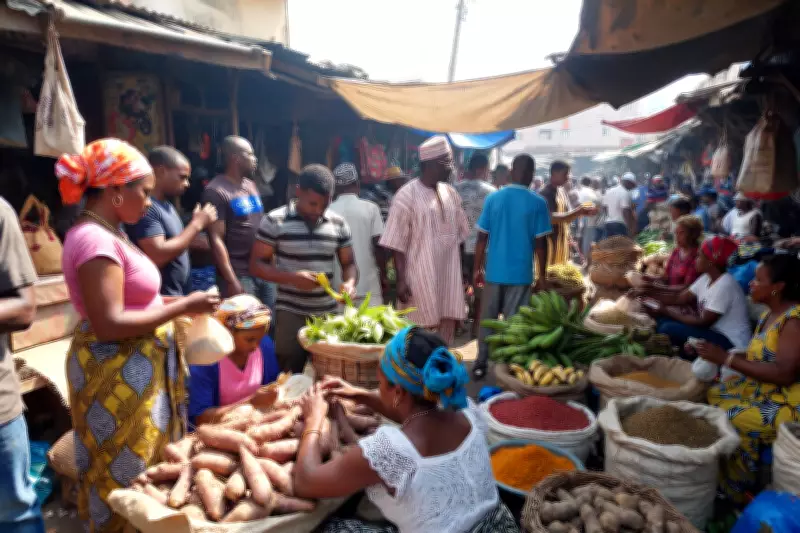
Nigeria's consumer market is enormous and competitive. Food staples like rice, palm oil, garri, beans, tomatoes, onions, and cooking gas sell continuously. Mobile telecommunications products and airtime move at extraordinary velocity, with over 200 million active SIM cards. Personal care and beauty products, especially skincare, hair extensions and wigs, and body oils, sell remarkably quickly. Affordable clothing in the ₦2,000 to ₦15,000 range sells through markets like Balogun and Onitsha Main Market. Second-hand electronics (tokunbo goods), particularly smartphones and generators, are also fast-moving.
Understanding Nigerian Ethnicity: Final Thoughts
The question "what ethnicity is Nigerian" invites understanding of one of the world's most beautifully complex nations. Nigeria is not one ethnicity but 371 living together under one flag, negotiating differences, celebrating diversity, and building a shared national identity that layers on top of ancient ethnic identities. As a Nigerian, your ethnicity is your specific group; your nationality is Nigerian. Both matter. When filling out international forms, write your specific ethnic group in free-text fields. Use the six geopolitical zones as a mental map. Take pride in whichever ethnic identity you carry, as Nigeria's strength comes from the extraordinary creativity, resilience, and cultural richness of its 371 peoples.
Frequently Asked Questions About Nigerian Ethnicity
What ethnicity is Nigerian?
There is no single Nigerian ethnicity. Nigeria has 371 officially recognised ethnic groups, with Hausa-Fulani, Yoruba, and Igbo as the three largest.
What is my ethnicity if I am Nigerian?
Your ethnicity is your specific group, such as Yoruba, Igbo, Hausa, Ijaw, Efik, Nupe, Tiv, or any of the 371 groups.
Is Nigeria an ethnicity or a nationality?
Nigeria is a nationality, not an ethnicity, referring to citizenship in the Federal Republic of Nigeria.
What are the main ethnic groups in Nigeria?
The three largest are Hausa-Fulani (29%), Yoruba (21%), and Igbo (18%), with medium-sized groups like Ijaw, Kanuri, Tiv, Ibibio, and Edo.
How many ethnic groups does Nigeria have?
Nigeria has 371 officially recognised ethnic groups speaking over 500 indigenous languages.
What is Nigerian ethnicity called in the UK and USA?
On forms, Nigerians are classified under racial categories like "Black or Black British: African" or "Black or African American." Many now write their specific ethnic group in free-text fields.
Are Yoruba, Igbo, and Hausa the same ethnicity?
No, they are three distinct ethnicities with different languages, cultural practices, and geographic homelands.
Which city never sleeps in Nigeria?
Lagos, with its 24-hour markets, entertainment industry, and round-the-clock commerce.
What sells very fast in Nigeria?
Food staples, airtime and mobile data, beauty products, affordable fashion, and second-hand electronics.
Do Nigerians identify more with their ethnicity or nationality?
Most identify by ethnicity first, but younger urban Nigerians increasingly hold both identities simultaneously.
Why did Nigeria end up with so many ethnic groups?
Due to millennia of migration, varied ecological zones, ancient empires, and the 1914 colonial amalgamation.
Can Nigerians from different ethnic groups understand each other?
Not linguistically in most cases; English and Nigerian Pidgin serve as bridges.