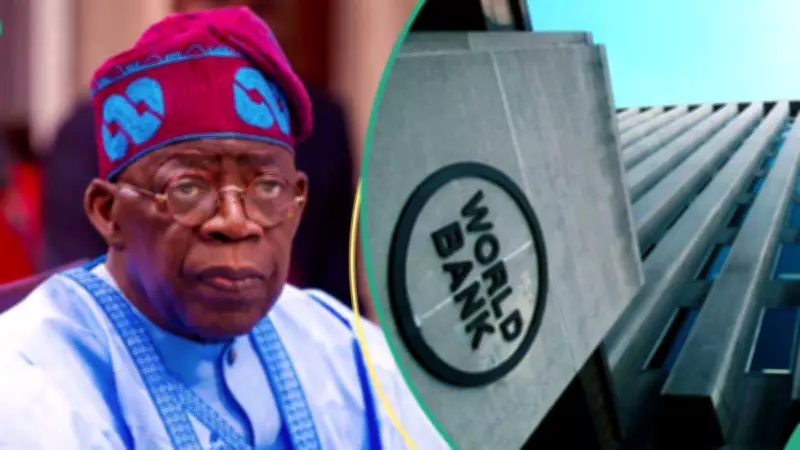
The Nigerian government and the World Bank have jointly cancelled $717.7 million in undisbursed funds originally allocated for electricity sector reforms, dealing a significant blow to the country's struggling power industry. The cancellation comes as millions of Nigerians continue to endure frequent blackouts, rising tariffs, and inadequate electricity supply.
Details of the Cancelled Funding
The cancelled amount was part of the $1.52 billion Power Sector Recovery Programme (PSRP), a major initiative aimed at strengthening Nigeria's electricity industry, improving revenue collection, and stabilising the national grid. According to a restructuring paper released by the World Bank, significant changes in Nigeria's economic and power sector environment made it difficult for the programme to achieve its original objectives.
The Bank explained that since the programme was approved in 2023, worsening macroeconomic conditions have widened the gap between revenue generated by the electricity sector and the amount needed to sustain operations and reforms. As a result, the scale of financial support required to revive the sector increased substantially, affecting the pace and sequence of planned reforms.

Reasons for the Cancellation
The World Bank said the cancellation was a practical decision taken jointly with the Federal Government to redirect resources toward projects that are more realistic and capable of delivering measurable improvements within a defined period. According to the institution, future interventions will focus on programmes that can boost operational efficiency, improve revenue recovery, and reduce long-standing imbalances within the power sector while maintaining support for ongoing reform efforts.
The decision also means that the programme, initially expected to run until June 2027, will now end much earlier than planned, according to a BusinessDay report.
Expert Criticisms
Reacting to the development, energy expert Yakubu Usman argued that the programme failed to deliver expected outcomes because of weak policy coordination and poor implementation within Nigeria's electricity industry. According to him, reforms in the sector have often focused heavily on legislation while neglecting the practical realities of electricity generation, transmission, and distribution. He noted that despite several policy changes and reforms over the years, many of the industry's biggest challenges remain unresolved.
"These are the same problems we discussed years ago," Usman said, pointing to persistent generation shortages, gas supply constraints, transmission bottlenecks, distribution inefficiencies, and liquidity crises. He further maintained that implementation remains one of the sector's biggest obstacles, arguing that some of those responsible for designing electricity laws lack sufficient technical understanding of how the industry operates.
Concerns Over Future Power Supply
Also speaking on the development, BudgIT Deputy Director Vahyala Kwaga warned that the withdrawal of such a significant funding package could slow efforts to expand electricity infrastructure and improve power availability. According to him, Nigeria already struggles to meet growing energy demand, and losing access to the investment could further delay improvements needed across the value chain.
Kwaga said inadequate investment in transmission networks, distribution systems, and metering infrastructure would continue to affect electricity access while keeping energy costs high for households and businesses. He stressed that achieving lower electricity prices would require stronger distribution companies, greater efficiency, and large-scale investments capable of delivering more power to consumers.
Implications for Nigerians
The cancellation of the $717.7 million facility highlights the deep-rooted challenges facing Nigeria's electricity sector. While the World Bank insists the move will allow resources to be redirected toward more effective projects, industry stakeholders fear it could slow the pace of much-needed reforms. For millions of Nigerians already struggling with unreliable power supply and rising energy costs, the development underscores the urgent need for practical solutions, stronger policy implementation, and sustained investment to finally address the country's long-running electricity crisis.