Nigeria's Power Sector Receives Major Boost as Eight Generation Companies Join Debt Settlement Plan
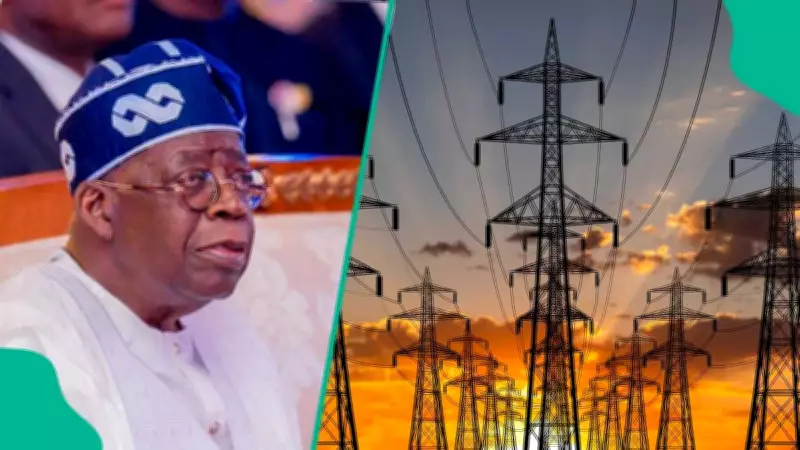
In a significant development for Nigeria's beleaguered electricity industry, eight major power generation companies have formally signed onto President Bola Tinubu's ambitious N3.3 trillion debt settlement program. This initiative represents a crucial government effort to address the longstanding liquidity challenges that have plagued the power sector for over a decade, hindering investment and operational efficiency across the entire electricity value chain.
Key Power Generation Firms Commit to Agreement
The comprehensive settlement agreement encompasses fifteen generation plants operated by six private sector firms and two public entities. Among the most prominent participants are Transcorp Power, Egbin Power Plc, and Geregu Power Plc. Egbin Power Plc, Nigeria's largest power plant with an installed capacity of 1,320 megawatts located in Ikorodu, Lagos, represents a particularly significant addition to the program.
Geregu Power Plc, which operates in Ajaokuta, Kogi State and is listed on the Nigerian Exchange, has also formally committed to the agreement. Two Transcorp-linked entities - Transcorp Delta in Ughelli and Afam Power in Rivers State - are included under the Transnational Corporation group associated with prominent businessman Tony Elumelu.

Other private sector participants include First Independent Power Limited, which operates multiple gas turbine plants in Rivers State, and Mabon Limited, a hydropower concessionaire based in Gombe State. On the public sector side, the Niger Delta Power Holding Company (NDPHC) is participating with nine plants across strategic locations including Olorunsogo, Omotosho, Ihovbor, Alaoji, Calabar, and Sapele.
Ibom Power Company, owned by the Akwa Ibom State Government and operating a 190-megawatt facility in Ikot Abasi, stands as the only state-owned firm among the signatories to this landmark agreement.
Industry Questions Debt Calculation Methodology
Despite this positive development, industry representatives have raised serious concerns about the accuracy and transparency of the N3.3 trillion figure being referenced. Joy Ogaji, Chief Executive Officer of the Association of Power Generation Companies, has publicly questioned how this specific amount was computed, noting that it does not align with figures agreed during the latest reconciliation process between power companies and government agencies, which concluded in March 2025.
"We need to understand how this N3.3 trillion was computed," Ogaji emphasized, highlighting uncertainties around whether the figure comprehensively covers all outstanding invoices, gas supply obligations, and the specific time period involved in the calculations. This lack of clarity has created apprehension among industry stakeholders about the program's implementation.
Persistent Liquidity Crisis in Power Sector
Since the privatization of Nigeria's power assets in 2013, the sector has faced persistent and worsening liquidity challenges, primarily driven by revenue shortfalls across the entire electricity value chain. Distribution companies frequently collect significantly less than the actual cost of electricity supplied to consumers, leaving generation companies unable to meet their financial obligations to gas suppliers, thereby creating a vicious cycle of accumulating debt.
According to Ogaji, outstanding claims include unpaid invoices for electricity already generated and supplied, capacity payments, foreign exchange differentials, and additional operational costs linked to frequent plant start-ups and shutdowns caused by grid instability. She further explained that this operational instability has accelerated equipment wear and tear, substantially raising maintenance costs that are not adequately captured under current tariff structures.
Government Insists on Verified Claims Framework
A senior government official involved in the negotiations has defended the N3.3 trillion figure, asserting that it represents verified and audited liabilities following rigorous scrutiny of higher claims that reportedly reached up to N7 trillion. The official explained that the program is specifically designed to stabilize the power sector while ensuring accountability and fairness to both operators and the Nigerian public.

Disbursement of settlement funds, according to the official, will be strictly tied to performance conditions including settling debts owed to gas suppliers, investing in critical infrastructure upgrades, and expanding generation capacity to meet Nigeria's growing electricity demands. This conditional approach aims to ensure that the substantial financial commitment translates into tangible improvements in power supply.
Experts Emphasize Need for Transparency
Power sector analyst Ade Olaniyi has stressed the urgent need for clarity and consistency in the figures presented to all stakeholders. He emphasized that a transparent and mutually agreed framework is absolutely necessary to ensure the success of the repayment plan and restore investor confidence in Nigeria's power sector.
Nigeria currently generates between 4,000 and 5,000 megawatts of electricity for a population exceeding 220 million people, highlighting the enormous gap between supply and demand. Resolving the sector's substantial debt burden is widely recognized as critical to attracting much-needed investment and improving electricity supply nationwide.
In a related development, power generation companies have reportedly not yet received any payments from the federal government despite the N501 billion bond issued earlier to clear approximately N4 trillion owed to GenCos. Industry stakeholders warn that further delays in implementation could exacerbate financial pressures on power operators and undermine the program's objectives.