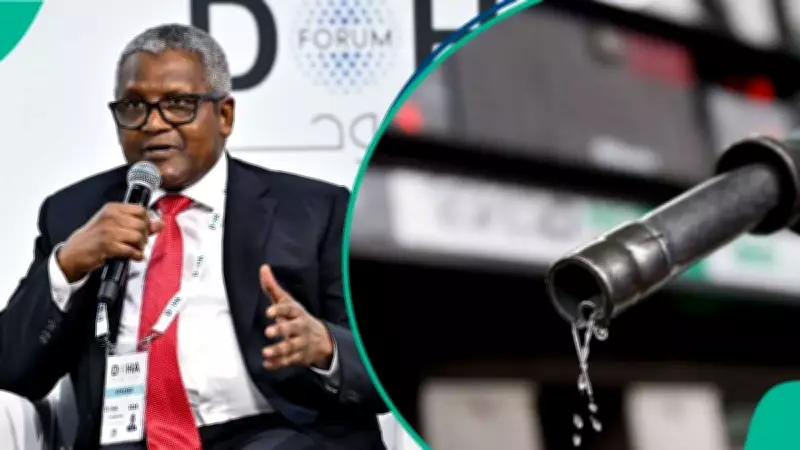
Dangote Refinery Issues Stark Warning on Potential Petrol Price Surge to N1,000 per Litre
Dangote Petroleum Refinery has issued a significant warning to Nigerian consumers and policymakers, stating that Premium Motor Spirit (PMS), commonly known as petrol, could rise close to N1,000 per litre if the country maintains its heavy reliance on coastal fuel evacuation methods. This alert comes as the refinery emphasizes the critical impact of logistics decisions on final pump prices, consumer welfare, and broader economic stability.
The Costly Impact of Coastal Fuel Delivery on Petrol Prices
In a detailed statement released recently, the refinery explained that coastal delivery of petroleum products introduces multiple additional charges that provide no tangible value to end consumers. The company estimates these extra costs could add approximately N75 per litre to the price of petrol. If these expenses are fully passed on to motorists, pump prices could indeed approach the alarming N1,000 threshold.
The refinery stressed that inefficient evacuation methods threaten to undermine the substantial benefits achieved through domestic refining capabilities. By highlighting these logistics challenges, Dangote aims to draw attention to how distribution decisions directly affect everyday Nigerians and the national economy.

Gantry Evacuation Presented as More Efficient Alternative
Dangote Refinery strongly advocates for gantry evacuation as the most cost-effective solution, particularly for markets in Lagos and surrounding regions. The facility operates an impressive infrastructure with 91 loading bays functioning around the clock. This system enables the loading of up to 2,900 trucks daily, with capacity to evacuate over 50 million litres of PMS and approximately 14 million litres of diesel each day, alongside other refined products.
The company maintains that gantry loading eliminates numerous expenses associated with coastal methods, including port charges, maritime levies, and vessel-related costs. These savings contribute directly to more stable and affordable fuel prices for consumers.
Substantial Economic Burden of Current Practices
Based on Nigeria's estimated daily consumption of 50 million litres of petrol and 14 million litres of diesel, Dangote Refinery warns that continued dependence on coastal evacuation could impose an additional annual cost of about N1.75 trillion on the national economy. This staggering financial burden would ultimately fall on either consumers through higher prices or producers through reduced margins.
While acknowledging that marketers remain free to choose their preferred evacuation methods, the refinery emphasizes that its products are available at competitive gantry prices. The company's position is clear: optimizing logistics represents a crucial pathway to maintaining affordable fuel for Nigerian households and businesses.
Broader Context of Domestic Refining Benefits
Dangote Refinery also highlighted the tangible benefits already realized through increased domestic refining capacity. The company reported that diesel prices have decreased significantly from approximately N1,700 per litre to around N1,100, with current trading between N980 and N990. Similarly, PMS prices have declined from about N1,250 per litre to between N839 and N900.
These price reductions stem from enhanced domestic supply, which has reduced Nigeria's dependence on fuel imports, eased pressure on foreign exchange reserves, and contributed to improved market stability. The refinery noted these developments have supported a stronger naira, which recently traded around N1,385 to the US dollar.
Call for Infrastructure Investment and Policy Support
The refinery renewed its call for nationwide investment in pipeline infrastructure, emphasizing that functional pipelines connecting refineries to depots would substantially reduce distribution costs while improving supply reliability and strengthening national energy security.
Addressing recent claims about product imports, Dangote clarified that it only imports intermediate feedstock during routine maintenance of processing units, dismissing suggestions of importing finished petroleum products as misleading information.

Dangote Refinery reaffirmed its commitment to affordable pricing and efficient logistics, urging regulators, marketers, and policymakers to support fuel distribution strategies that protect consumers and sustain the hard-won benefits of domestic refining. The company's comprehensive analysis presents a clear case for reevaluating Nigeria's fuel distribution framework to prevent unnecessary price increases that would burden millions of Nigerians.