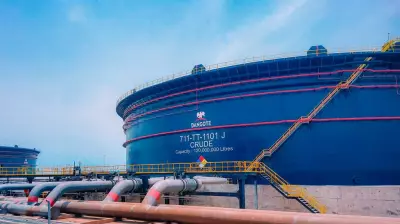
Dangote Refinery Stabilizes Domestic Fuel Market Amid Global Crude Rally
Nigerian motorists received welcome relief on Monday, April 13, 2026, as depot owners maintained steady prices for Premium Motor Spirit (PMS) and Automotive Gas Oil (AGO) despite significant increases in global crude oil markets. This price stability occurred while Brent crude surged to $100.4 per barrel, representing a 5.45% increase, and West Texas Intermediate reached $101.6 per barrel, climbing 5.22% by mid-afternoon trading.
Market Stability Through Strategic Pricing
Downstream operators adopted a cautious wait-and-see approach, heavily influenced by pricing signals from the Dangote Refinery. According to comprehensive mid-day reports from Petroleumprice.ng covering major fuel hubs in Lagos, Port Harcourt, Warri, and Calabar, most marketers maintained last week's pricing levels. This strategic restraint reflects the refinery's dominant position in domestic PMS supply and its deliberate decision not to pass immediate cost increases to consumers.
Regional Price Movements and Variations
In Lagos, Africa's busiest fuel distribution hub, PMS experienced marginal relief at select depots. The Dangote Refinery adjusted its ex-depot PMS price downward from ₦1,210 to ₦1,208 per litre, while AGO eased from ₦1,758 to ₦1,751 per litre. Rainoil trimmed PMS slightly to ₦1,212, and Ascon dropped to ₦1,210, with A.A Rano holding firm at ₦1,210.

Diesel movements presented a mixed picture across different regions:
- Lagos: Ibeto, Integrated, and Swift edged upward to ₦1,845 from ₦1,840, while Nipco remained unchanged at ₦1,850
- Port Harcourt: Bulk Strategic raised PMS slightly to ₦1,225, while Sigmund lowered it to ₦1,218. AGO showed wider volatility with Bulk Strategic dropping to ₦1,920 from ₦1,938, but Sigmund hiking sharply to ₦2,000 from ₦1,950
- Calabar and Warri: Mostly stable with minor PMS increases at Jenny and Wabeco to ₦1,228 in Calabar, while Matrix, Prudent, and Rainoil maintained PMS at ₦1,235 in Warri
Dangote's Market Influence and Future Outlook
Industry analysts attribute the broad price discipline directly to the Dangote Refinery's market influence. As Nigeria's largest single supplier of petrol, the refinery has resisted upward price reviews, effectively anchoring the entire market and discouraging independent price hikes by private depot operators. Marketers remain reluctant to increase prices ahead of any potential move by Dangote, fearing they could be undercut in the competitive marketplace.
Market sentiment remains guarded despite current stability. Sources close to the refinery indicate continuous monitoring of global crude trends, suggesting that should the current rally persist, a delayed but inevitable price adjustment may follow. The downstream sector currently exists in a delicate balance—stable yet fragile—offering Nigerian consumers temporary relief from the pressures of soaring international oil prices.
Border Communities Face Different Reality
While most of Nigeria experiences relative price stability, border communities face a contrasting situation. As of early April 2026, residents in remote frontier towns confront significantly higher fuel costs, with petrol selling between ₦1,300 and ₦1,400 per litre. This disparity highlights the uneven distribution of fuel pricing benefits across different regions of the country.
The coming days will test whether current price discipline can withstand the unrelenting pressure from crude oil trading above $100 per barrel. Dangote Refinery's growing power to shape domestic fuel costs continues to demonstrate significant influence even as global economic headwinds intensify, creating a complex dynamic between international market forces and domestic pricing strategies.