Residents in several parts of Lagos are facing severe disruptions to their electricity supply after the Eko Electricity Distribution Company (EKEDC) announced a significant downgrade for multiple power feeders. The move has effectively reduced daily supply for some customers to a mere four hours, sparking widespread frustration.
Service Downgrade Sparks Consumer Anger
Over the weekend of January 10-11, 2026, EKEDC confirmed via its official X (formerly Twitter) account that it had downgraded seven key feeders from the premium Band A category to lower service bands. Under the Service-Based Tariff (SBT) system enforced by the Nigerian Electricity Regulatory Commission (NERC), Band A is supposed to guarantee a minimum of 20 hours of electricity daily. The downgrade means some customers have been moved to Band E, which promises only four hours of power per day.
The announcement triggered an immediate and angry response from affected consumers on social media platforms. Many questioned the fairness of the banding system, arguing that they are being charged higher tariffs without receiving the corresponding guaranteed hours of service. The sentiment of betrayal was palpable, with calls for a comprehensive review of customer classifications across EKEDC's network.

Affected Areas and Specific Downgrades
According to the detailed list published by EKEDC, the downgrades were not uniform. The most severe impact was felt by customers on the Palace Road feeder on Lagos Island and the Army Resettlement feeder in Mushin. These two locations were moved directly from Band A down to Band E.
Other areas experienced a slightly less severe, but still significant, reduction in their service band. The following feeders were downgraded from Band A to Band C:
- Badore (Ajah)
- Beecham (Agbara)
- Chevy View (Lekki)
- New Yaba (Akoka)
- Old Niger (Ajele District)
- NAFDAC Isolo
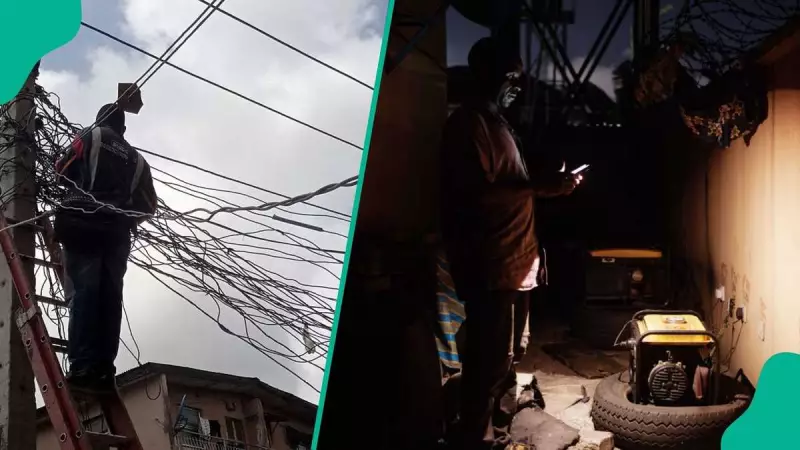
This reclassification directly impacts the daily lives and businesses operating in these communities, forcing them to rely more heavily on expensive alternative power sources like generators.
Sector Challenges and EKEDC's Performance
The downgrade comes amidst ongoing sector-wide challenges highlighted by NERC. The regulator has consistently pointed to major liquidity issues, aging infrastructure, energy theft, and billing inefficiencies as crippling problems for Nigeria's power sector. Despite these hurdles, recent data reveals a complex picture for EKEDC.
NERC's report for the third quarter of 2025 showed that EKEDC recorded an impressive revenue collection efficiency of 88.74%. Nationally, electricity distribution companies collected a total of N1.13 trillion from customers in Q2 and Q3 of 2025. However, this was offset by a combined revenue shortfall of N314.35 billion for the same period, underscoring the financial strain on the system.
EKEDC continues to grapple with service delivery problems in areas including Epe, Surulere, Lekki, Ibeju-Lekki, and Agbara. In a related development, the Chief Executive Officer of EKEDC, Rekhiat Momoh, recently raised alarms about widespread electricity theft, particularly by high-income residents and major hotels. She cited cases of four-star hotels illegally bypassing meters, a practice that exacerbates financial losses on the distribution network.
The current situation highlights the persistent gap between tariff collection and reliable service delivery in Nigeria's electricity market, leaving consumers to bear the brunt of systemic failures.