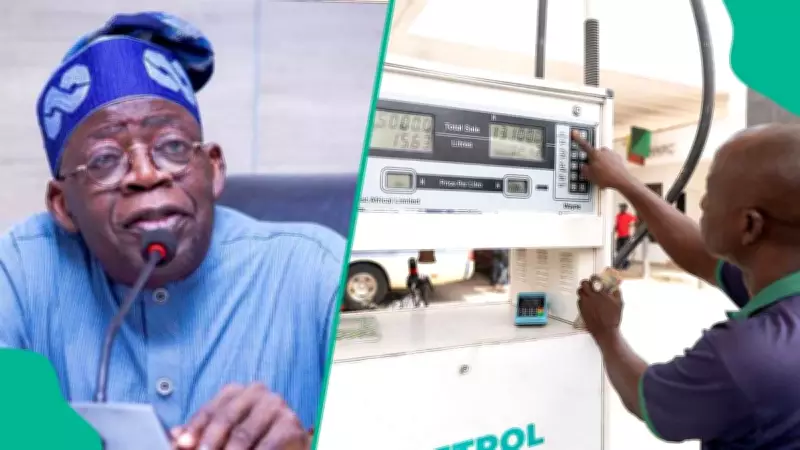
Federal Government Justifies Nigeria's Petrol Price, Claims It's 50% Lower Than Global Average
The Federal Government has asserted that Nigeria's petrol price remains significantly lower than the global average, attributing this to economic reforms implemented under President Bola Tinubu's administration. This statement was made by Zacch Adedeji, the Executive Chairman of the Nigeria Revenue Service (NRS), during the commissioning of the agency's headquarters in Abuja on Tuesday.
Petrol Price Comparison and Global Context
Adedeji revealed that Nigeria's petrol price currently stands at about $0.88 per litre, which he described as substantially lower than rates in many other countries. For instance, petrol costs approximately $1.70 per litre in the United States, with higher prices also observed in nations like India and South Africa. He emphasized that, on average, petrol prices in Nigeria are about 50% lower globally, crediting this gap to policies that support local refining and economic adjustments.
Impact of Reforms and Subsidy Removal
The government official linked the current pricing structure to reforms introduced by the Tinubu administration, including the removal of the petrol subsidy shortly after inauguration. This policy ended a long-standing subsidy regime, leading to a sharp increase in pump prices from below N200 per litre to around N1,000, with further increases recorded in recent months due to global oil market pressures. Reports indicate that prices have exceeded N1,200 per litre in some locations following international market developments.

Supply Stability and Local Refining Advancements
Adedeji highlighted that the reforms have helped stabilize fuel supply across Nigeria, noting that the country would have faced severe shortages without these policy changes. He pointed to increased output from the Dangote Petroleum Refinery as a key factor in improving supply reliability. According to him, the availability of locally refined products has reduced dependence on imports and eased distribution challenges, contributing to more consistent fuel availability nationwide.
Naira-for-Crude Policy and Export Claims
The NRS chairman also underscored the federal government's Naira-for-crude policy, describing it as a major shift in Nigeria's oil sector. He stated that this policy has repositioned the country from being a net importer to a net exporter of petroleum products. Adedeji added that the initiative has enabled local transactions in naira and supported domestic refining, citing reports that businessman Aliko Dangote has supplied multiple cargoes of refined products to other African countries, enhancing Nigeria's export capabilities.
Market Calls for Import Licences
In related developments, the Petroleum Products Retail Outlets Owners Association of Nigeria (PETROAN) has called on the federal government to reinstate petrol import licences. The association argues that this move would promote competition and stabilize fuel prices in the country, aligning with a similar recommendation from the World Bank to prevent inflation. PETROAN maintains that this recommendation supports its long-standing advocacy for a liberalized downstream petroleum sector, aiming to foster a more competitive market environment.