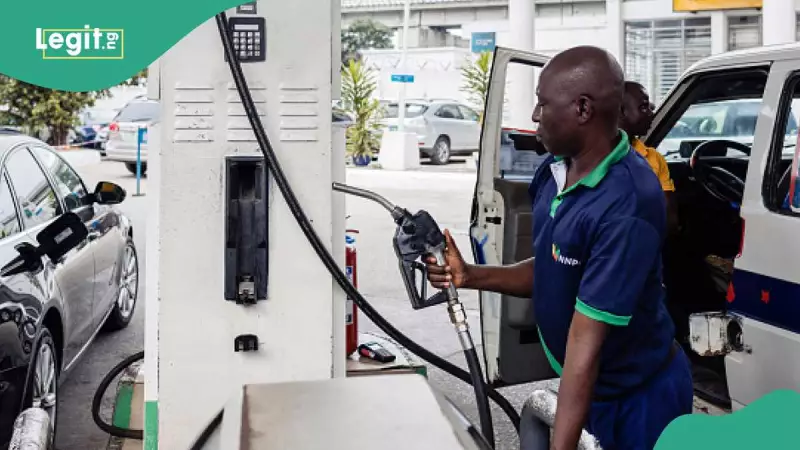
Nigerian consumers and businesses are breathing a sigh of relief following a significant drop in the price of Premium Motor Spirit (PMS), commonly known as petrol. According to the latest data from the National Bureau of Statistics (NBS), the average retail price fell by a substantial N153 per litre between November 2024 and November 2025.
Market Recalibration Brings Downward Trend
The NBS Petrol Price Watch Report for November 2025 shows the average price now stands at N1,061.35 per litre, a notable decrease from the N1,214.17 recorded in the same month the previous year. This represents a 12.59% year-on-year decline. Analysts link this positive shift to improved market dynamics, including enhanced supply and increased competition, notably from the Dangote Petroleum Refinery and the Nigerian National Petroleum Company Limited (NNPC).
This development marks a gradual stabilisation in the downstream petroleum sector, which has experienced considerable volatility since the removal of the fuel subsidy. The entry of large-scale local refining capacity has reduced reliance on imported petrol, improving availability and applying downward pressure on prices.

State-by-State Disparities Highlight Logistics Challenges
Despite the nationwide average drop, a deep dive into the data reveals stark differences in pump prices across the country's 36 states and the Federal Capital Territory. The report identifies Borno State as the most expensive place to buy fuel, with an average price of N1,133.86 per litre. It is followed by Sokoto State at N1,118.83 and Kogi State at N1,111.00.
On the other end of the spectrum, Oyo State emerged as the cheapest, with petrol selling at an average of N997.39 per litre. Nasarawa State recorded N1,015.12, while the commercial nerve centre, Lagos, had an average price of N1,021.14. These variations underscore the continued impact of factors like transportation logistics, security conditions, and proximity to major depots and refineries on final consumer prices.
Regional Price Analysis and Cautious Optimism
On a zonal basis, the North-East region retained its position as the costliest, with an average petrol price of N1,084.04 per litre. Conversely, the South-West zone maintained the lowest average nationwide at N1,036.12 per litre, a reflection of its more robust distribution infrastructure and network.
However, experts urge cautious optimism. The report notes a slight 0.86% month-on-month increase from October 2025 (N1,052.31) to November 2025 (N1,061.35), highlighting the market's lingering fragility. Prices remain historically high, and analysts warn that exchange rate fluctuations, supply chain disruptions, or logistical hiccups could swiftly reverse the gains.
The relief, however modest, is being felt by millions of Nigerians for whom petrol is essential for transportation, powering generators, and running small businesses. The price reduction has contributed to stabilised transport fares in some urban areas and slightly lower operational costs for enterprises.
Sustaining this downward trend will require continued investment in refining capacity, distribution logistics, and foreign exchange stability. For now, the N153 reduction offers a welcome respite at the pumps across Africa's most populous nation.