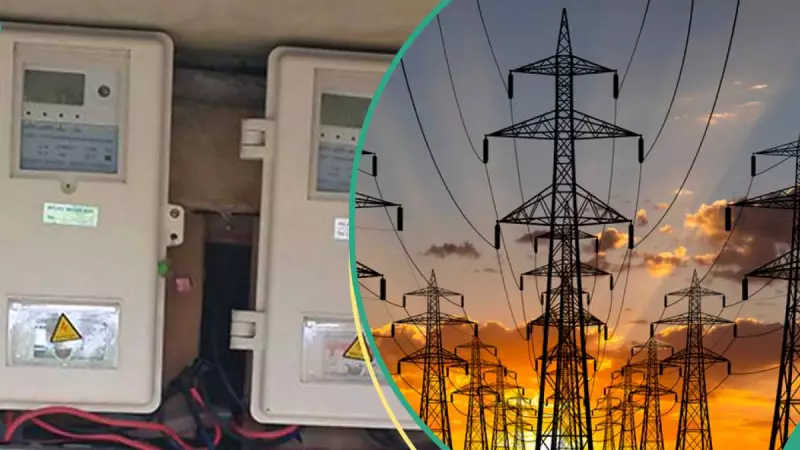
In a significant move to tackle the longstanding issue of estimated billing, electricity distribution companies (DisCos) across Nigeria have commenced a nationwide rollout of prepaid meters to customers at zero upfront cost. This initiative follows intense pressure and financial backing from the Nigerian Electricity Regulatory Commission (NERCNERC).
Mounting Pressure and Massive Deployment
The deployment, which targets between 600,000 and 700,000 meters, is being prioritized for customers on Band A and some Band B tariff classifications. This action comes directly after sharp criticism from NERCNERC Chairman, Musiliu Oseni, who accused DisCos of unnecessary delays despite having meters already procured under federal schemes.
At the recent 4th Nigerian Electricity Supply Industry meeting in Abuja, Oseni revealed that hundreds of thousands of meters were lying idle while millions remained on estimated bills. He challenged the DisCos to enhance their publicity efforts and accelerate installations, insisting that government investments must yield tangible relief for consumers.

Adding to the pressure, NERCNERC Commissioner for Corporate Services, Nathan Shatti, issued a stern warning. He told DisCos to stop behaving as if metering customers was an act of favour, highlighting that some utilities had a mere two per cent compliance rate in refunding customers who had paid for meters under the old Meter Asset Provider (MAP) scheme.
Are the Meters Truly Free and How to Get One
Confirming the rollout, the Chief Executive of the Association of Nigerian Electricity Distributors, Sunday Oduntan, stated that meters are indeed being distributed across the country at no immediate cost to customers. However, he clarified a crucial point: while customers pay nothing upfront, the meters are not absolutely "free."
The Federal Government procured the meters, and DisCos are obligated to repay the cost over a ten-year period. Oduntan emphasized that this initiative remains a vital step in closing Nigeria's massive metering gap, even though the current batch cannot immediately cover all unmetered users.
For customers wondering how to benefit, the process is straightforward. Eligible customers do not need to pay or register through third parties. Distribution is being handled directly by the DisCos based on factors like feeder classification, transformer readiness, and tariff band. Consumers are advised to monitor official announcements from their local DisCo, participate in verification exercises, and ensure their premises have safe wiring and accessible meter points.
Addressing MAP Refunds and NERCNERC's N28bn Boost
A major point of contention has been the fate of customers who previously paid for meters under the MAP scheme. Oduntan explained that these customers are entitled to refunds, which are typically issued as energy credits over time during electricity vending. He admitted that poor communication has bred mistrust, as many customers are unaware that extra units received during vending often constitute these refunds. DisCos have now been directed to clearly educate customers on the refund process.
To accelerate the metering drive, NERCNERC has approved the disbursement of N28 billion under Tranche B of the Meter Acquisition Fund (MAF). This fund is dedicated to metering all outstanding Band A customers and speeding up installations for Band B customers at no cost. DisCos face strict deadlines, with all installations under this tranche mandated for completion by December 31, 2025. Penalties await any DisCo that causes delays due to internal failures.
Recent NERCNERC data shows some progress, with 187,765 new customers metered between September and October 2025, raising the national metering rate from 55.37% to 56.07%. DisCos like Ikeja Electric (85.59%), Eko Electric (84.75%), and Abuja Electric (75.82%) lead the pack. However, DisCos in Yola, Jos, Kaduna, and Kano still languish below a 35% metering rate, and a staggering over 5.3 million customers remain on estimated billing nationwide.

With this sustained rollout, tighter regulations, and significant funding, Nigeria's electricity sector is inching closer to its goal of eliminating the unjust estimated billing system. Regulators maintain that metering is now a non-negotiable cornerstone for improving service quality, protecting revenue, and rebuilding consumer trust in the power sector.