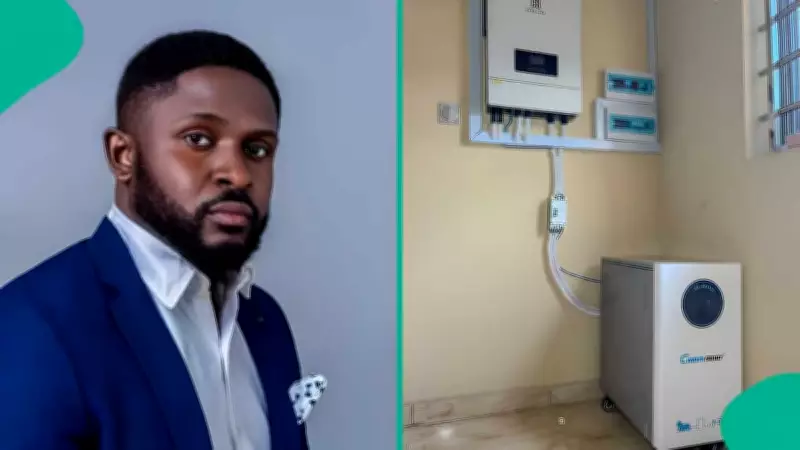
Nigerian Man Details One-Month Experience with 15kVA Solar Inverter System
A Nigerian man has taken to social media to share his comprehensive experience after installing a 15kVA solar inverter system in his home one month ago. The individual, identified as @KelOnovo on Twitter, provided detailed insights about the system's performance, cost, and practical implications for daily living.
Complete Off-Grid Transition and System Performance
In his social media post, @KelOnovo announced that he had officially gone off-grid for a full month and expressed no regrets about his decision. He revealed that he lives in a full duplex residence in Enugu, Nigeria, and confirmed that the 15kVA solar inverter system adequately powers his entire home for a complete day when fully charged.
"Today makes it one month since I officially went off-grid, and I have never regretted this decision," he wrote. "As a Nigerian living in Enugu, Nigeria if you can afford this, please do."

Total Cost Revelation and Technical Specifications
When questioned by social media users about the financial investment required for such a system, @KelOnovo disclosed that the total cost amounted to 6 million naira. This comprehensive figure includes all components and installation expenses associated with the solar setup.
The man shared photographic evidence of his solar inverter installation and engaged in detailed discussions with other users about technical aspects. He confirmed that the 15kVA system specifically powers his full duplex residence effectively throughout daylight hours when properly charged.
Social Media Reactions and Expert Commentary
The post generated significant engagement from other social media users, with many expressing both support and practical concerns about solar energy systems in Nigeria.
User @Ossanaquest inquired about battery specifications and longevity, asking: "The most expensive component in the solar system should be the batteries. How large are the batteries for this and how long will they last before needing replacement? Can the batteries be replaced?"
Another user, @ALordsday, offered maintenance advice: "Best Choice. Just avoid loading it over 50% of its capacity for long to protect your battery. You can go 25 years with no maintenance and no extra cost."
Some users expressed caution about potential challenges. @realvictorstan commented: "Hope you come back to tell us when you start experiencing the challenges peculiar to using solar. Everything is sweet in the beginning."
Weather considerations were also raised, with @Dun1214700 asking: "U dey think of rainy season at all? Dont disconnect NEPA for now oh!"
Industry Professionals Share Alternative Options
Solar energy professionals joined the conversation, offering comparative pricing and alternative system configurations. @AliokeSolarNG provided detailed alternatives:
- 6.2kVA system paired with 15kWh battery and 10 panels for 3.8 million naira
- 10kVA hybrid inverter with Deye 16kWh battery and panels for 5.2 million naira
- Entry-level packages starting from 1.2 million naira
The professional confirmed that all mentioned systems utilize lithium batteries, which generally offer longer lifespans and better performance than traditional lead-acid alternatives.
Another industry expert, @Anacom_Global, shared: "I installed a similar setup for a client (10Kva, 15Kwh, 120amp C/c 12 panels), and since then, he has referred me to two of his friends. The future is renewable, be intentional about it."
Related Solar Energy Stories in Nigeria
The discussion about @KelOnovo's experience comes amid growing interest in alternative energy solutions across Nigeria. In a related development, another Nigerian man recently shared his experience with a smaller-scale solar setup, revealing he spent approximately 33,000 naira for a temporary solution using just two solar panels.

Separately, another individual documented his installation of a 6kW solar inverter system with lithium batteries and solar panels, showing payment receipts totaling approximately 1.44 million naira. After completing his installation, he similarly sent a message to the Power Holding Company of Nigeria (PHCN), indicating his transition away from reliance on the national grid.
These stories collectively highlight a growing trend among Nigerians seeking energy independence through renewable solutions, particularly as many continue to face challenges with inconsistent power supply from the national grid. The detailed cost breakdowns and performance reports provide valuable insights for others considering similar investments in solar energy infrastructure.