Nigerian Man's 1500VA Solar System Malfunctions at 1 AM, Triggers Online Discussion
A young Nigerian man has publicly voiced his frustrations regarding the performance of his 1500VA solar power system, which he installed several months ago. Taking to social media, he detailed a recurring issue where the system unexpectedly shuts down at precisely 1 AM, leaving him in the dark and seeking solutions from the online community.
Technical Specifications and Installation Details
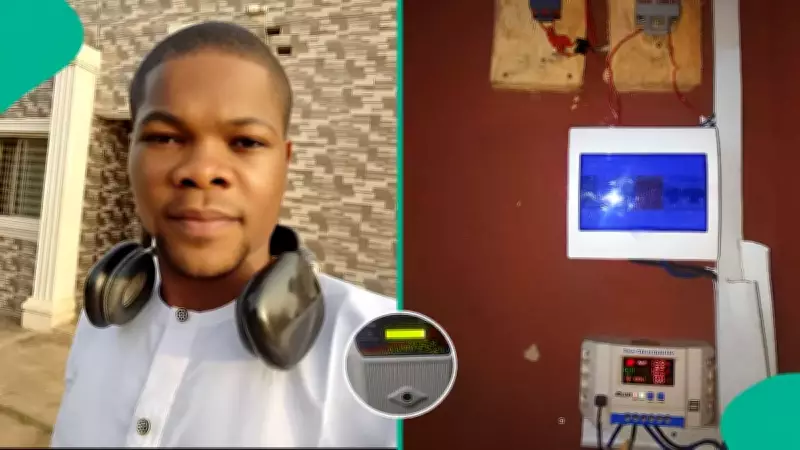
The individual, identified as Sonde Victor Daniel, shared that he purchased and installed the solar system in December 2024. His setup consists of four solar panels, each rated at 12V and 200W, paired with a single tubular battery of 12V 220Ah capacity. The inverter is a 1500VA model designed to convert the stored solar energy into usable electricity for his household.
In his online post, Daniel explained his typical usage pattern: "When I want to sleep at night, just 2 or 3 bulbs are on till the next morning and the light radiation continues charging it in the morning." Despite this modest consumption, he encountered a perplexing problem that has persisted over time.

The Midnight Shutdown Phenomenon
Daniel described the specific issue: "One day I just discovered that once it is 1am in the midnight, the inverter would make a sound and the light will go off, so I studied to see that once the solar inverter reaches 12.4V, it will drain down." This consistent shutdown at 1 AM, triggered when the system voltage drops to 12.4V, has raised concerns about the reliability and efficiency of his solar investment.
He appealed for help, asking: "What could be the cause, sir?" His query has since attracted significant attention, with many Nigerians offering technical advice and sharing similar experiences.
Community Responses and Expert Suggestions
The comment section of his post became a hub for troubleshooting, with various users proposing potential causes and solutions:
- Emmy-delight Solar Energy suggested that the battery's lifespan may have reduced due to frequent discharges below 50% capacity.
- Forcados E J Benjamin pointed to the charge controller as a possible culprit, sharing a personal anecdote about performance degradation after switching controllers.
- Akinbola Akinniyi Ola Festus recommended consulting an engineer to replace the battery.
- Engr Onu Joseph Ugochukwu advised upgrading to an MPPT charge controller and replacing the battery.
- Chinonso Celestine Greatsaidhated attributed the issue to potentially counterfeit or low-quality batteries.
- Usman Bala emphasized the importance of using standard-quality batteries, citing his own positive experience with a Sukam battery installed in 2024.
- Christian Chukwuka proposed reconfiguring the panels to a 2S2P setup and investing in an MPPT controller.
- Chuks Godwin Ukpai Pdf noted that insufficient sunshine on certain days could exacerbate the problem, and highlighted the need to monitor panel orientation as the sun's position changes.
Broader Context of Solar Energy Challenges in Nigeria
This incident reflects a growing trend among Nigerians turning to solar power as an alternative to the unreliable national grid. However, it also underscores common challenges, such as equipment quality, proper installation, and maintenance. In a related report, another Nigerian man using a 2kVA hybrid solar inverter with a tubular battery complained about rapid drainage, where his system lasted only about 1 hour and 20 minutes under a 340-watt load after 30 minutes of charging.
Meanwhile, a separate installation story highlighted a more successful case: a Nigerian man installed a 6.2kW solar system for a client, capable of powering a 3-bedroom apartment and other appliances, with a total cost ranging between N2.9 million and N3 million. This contrast illustrates the variability in solar system performance based on design, components, and expertise.
As solar adoption increases in Nigeria, stories like Daniel's serve as cautionary tales, emphasizing the need for quality components, professional installation, and ongoing maintenance to ensure reliable and sustainable energy solutions.