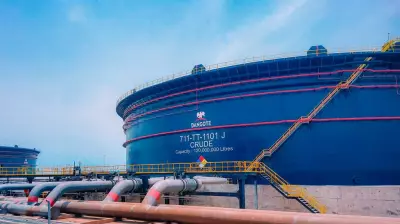
Petroleum Marketers Association Backs World Bank on Import Licence Restoration
The Petroleum Products Retail Outlets Owners Association of Nigeria (PETROAN) has publicly endorsed the World Bank's recent recommendation for the Federal Government to reinstate petrol import licences. According to the association, this critical move is essential for fostering healthy competition, stabilising volatile fuel prices, and ensuring a reliable supply of Premium Motor Spirit (PMS) across the nation.
Association Aligns with Advocacy for Liberalised Downstream Sector
In an official statement signed by its National Public Relations Officer, Dr Joseph Obele, PETROAN emphasised that the World Bank's position directly aligns with its long-standing advocacy for a fully liberalised downstream petroleum sector. The association argues that introducing multiple supply sources through restored import licences would effectively reduce monopolistic tendencies and shield consumers from exorbitant price hikes.
PETROAN National President, Billy Gillis-Harry, stated: "Competition remains the cornerstone for achieving price stability and long-term energy security in Nigeria. Reintroducing these licences is a necessary step toward a more resilient market."

World Bank Warns of Inflation Risks from Supply Constraints
The World Bank's urging comes amid concerns over limited competition and persistent supply constraints, which have contributed to PMS selling above import parity levels. The institution specifically warned that continued supply rigidity, coupled with increasing global oil prices, could exacerbate inflationary pressures within the Nigerian economy, impacting households and businesses alike.
Call for Refinery Reforms and Privatisation
PETROAN further stressed that sustainable competition requires not only fuel importation but also comprehensive reforms of state-owned refineries in Port Harcourt, Warri, and Kaduna. The association advocates for either full privatisation or a significant restructuring of these facilities to improve operational efficiency, eliminate bottlenecks, and create a more competitive national supply system.
Drawing a parallel with Nigeria's telecommunications sector, PETROAN noted that liberalisation led to markedly improved services, wider coverage, and reduced costs for consumers. The association believes similar reforms in the petroleum sector could yield comparable benefits, enhancing affordability and accessibility.
Dangote Refinery Announces New Pricing Amid Market Adjustments
This advocacy from PETROAN emerges just days after the Dangote Petroleum Refinery adjusted its ex-depot PMS price downward from N1,210 to N1,208 per litre. Simultaneously, Automotive Gas Oil (AGO), commonly known as diesel, saw a reduction from N1,758 to N1,751 per litre. Other major depots, including Rainoil and Ascon, also implemented slight price reductions, while A.A Rano maintained its rate at N1,210.
However, diesel price movements displayed a mixed pattern. Ibeto, Integrated, and Swift increased their rates slightly to N1,845 from N1,840, whereas Nipco held steady at N1,850. Other market players like Matrix and Sahara issued no fresh updates at the time of reporting.
Private Investments and Market Concentration Concerns
While acknowledging the Dangote Petroleum Refinery as a monumental milestone in Nigeria's energy landscape, PETROAN maintained that competition must be actively encouraged to prevent excessive market concentration. The association emphasised that healthy competition would complement, rather than undermine, local refining capacity, ensuring long-term sustainability and consumer protection.
Key Recommendations to Government and Regulatory Bodies
PETROAN outlined several crucial recommendations directed at the Federal Government, the Nigerian Midstream and Downstream Petroleum Regulatory Authority (NMDPRA), and the Nigerian National Petroleum Company Limited (NNPCL). These include:

- The immediate reinstatement of petrol import licences to diversify supply sources.
- Full privatisation or restructuring of state-owned refineries to enhance efficiency.
- Commencement of production at the Port Harcourt Refinery to bolster local capacity.
- Creation of a fully deregulated market environment that promotes open participation.
The association urged authorities to implement policies that remove existing supply constraints and ensure fair competition across the entire petroleum sector.
Potential Export Threat from Dangote Refinery
In a related development, sources within the Dangote Refinery have indicated that management is considering exporting all petroleum products to international markets if Nigerian authorities continue to grant import licences to other players. Experts caution that such a move could lead to reduced local supply, resulting in fuel shortages, long queues at filling stations, and renewed upward pressure on pump prices, potentially reversing recent stability in the downstream sector.