Modular Refineries Contribute Minimal Share to Nigeria's Diesel Supply
According to recent data from the Nigerian Midstream and Downstream Petroleum Regulatory Authority (NMDPRA), modular refineries in Nigeria supplied an average of just 2.37% of the country's diesel demand between November 2025 and January 2026. This marginal contribution highlights the ongoing challenges faced by smaller domestic refiners in competing with larger facilities and imports.
Operational Refineries and Output Details
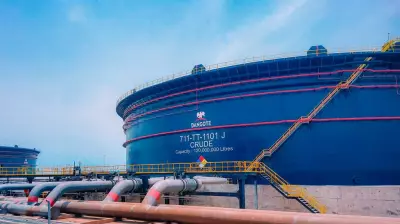
During the three-month period, only three out of five listed modular refineries were operational: Waltersmith Refinery, Edo Refinery, and Aradel Refinery. OPAC Refinery and Duport Refinery remained non-operational. The combined average daily supply of automotive gas oil (AGO), commonly known as diesel, from these active plants was approximately 393,000 litres per day.
Monthly breakdowns show that modular refineries supplied 489,000 litres per day in November 2025, 392,000 litres per day in December 2025, and 297,000 litres per day in January 2026. In stark contrast, national diesel consumption, measured by truck-out volumes into the domestic market, averaged about 17 million litres per day over the same period. Specifically, consumption was 15.4 million litres per day in November, 16.4 million in December, and surged to 19.2 million litres per day in January.

Based on these figures, modular refineries accounted for 3.18% of diesel demand in November, 2.39% in December, and 1.55% in January, resulting in the three-month average of 2.37%.
Capacity Utilisation and Performance Variations
Capacity utilisation among the operational plants varied significantly. Waltersmith Refinery averaged about 61.66% utilisation, supplying 124,000 litres of diesel daily. Edo Refinery recorded the highest utilisation rate at 63.23%, with an output of roughly 55,000 litres per day. Aradel Refinery posted the lowest utilisation at 29.09% in January but still delivered about 118,000 litres per day. In earlier months, Aradel's utilisation exceeded 62%, and it led in output volumes in November and December.
Overall, average capacity utilisation across the three functioning modular refineries was approximately 51.33%, indicating potential for increased output if operational hurdles are addressed.
Dominance of Dangote Refinery and Import Reliance
Despite efforts to enhance domestic refining, larger facilities like the Dangote Petroleum Refinery continue to dominate diesel supply. The Dangote refinery supplied 5.6 million litres per day in November, 5.8 million litres per day in December, and 10.9 million litres per day in January 2026, significantly outpacing the combined output of modular refineries.
Nigeria also relied heavily on diesel imports during this period. Average daily imports stood at 14.1 million litres in November, 10.8 million in December, and 8.1 million in January. This reliance underscores the country's continued dependence on foreign sources, even though diesel is the primary product of modular refineries. Notably, none of the modular plants currently produces petrol.
Consumption Exceeds Regulatory Benchmarks
The NMDPRA fact sheet set 2026 daily consumption benchmarks for major petroleum products: 50 million litres for petrol, 14 million litres for diesel, 3 million litres for aviation fuel, and 3.9 million tonnes for cooking gas. However, actual consumption in January 2026 exceeded these benchmarks across all categories.
Petrol truck-out averaged 60.2 million litres per day, while diesel consumption reached 19.2 million litres per day—37.1% above the benchmark. Aviation fuel averaged 3.5 million litres per day, and cooking gas consumption rose to 4.86 million metric tonnes per day. The regulator noted that these figures reflect volumes distributed into the domestic market.
CORAN Advocates for Enhanced Support
The Crude Oil Refiners Association of Nigeria (CORAN) has repeatedly urged the federal government to improve access to crude supplies and funding for modular refiners. CORAN's publicity secretary, Eche Idoko, highlighted that Nigeria has multiple operational and developing refineries, including Aradel in Rivers, Waltersmith in Imo, OPAC in Delta, Clairgold in Delta, and Azikel in Bayelsa.

Idoko argued that while large players can secure crude through private arrangements, smaller refiners struggle with feedstock access. He called for the enforcement of the Domestic Crude Supply Obligation to ensure fair allocation. Additionally, he advocated for the creation of a Midstream Refinery Development Fund to finance critical equipment such as catalytic reformers and desulphurisation units needed for petrol production and cleaner fuels.
According to him, broader policy support, including pro-competition laws and infrastructure sharing, would help strengthen the sector and reduce concerns about monopolies.
Trends in Fuel Imports and Domestic Refining
Recent reports indicate that Nigeria has seen a significant drop in fuel imports as domestic refining output rises, signalling progress toward energy self-sufficiency. Data from the NMDPRA's January fact sheet showed that the total daily supply of Premium Motor Spirit (PMS), also known as petrol, declined to 64.9 million litres in January from 74.2 million litres in December 2025. Despite this overall decline, local refining accounted for a larger portion of the volume, reflecting positive strides in the country's refining capacity.