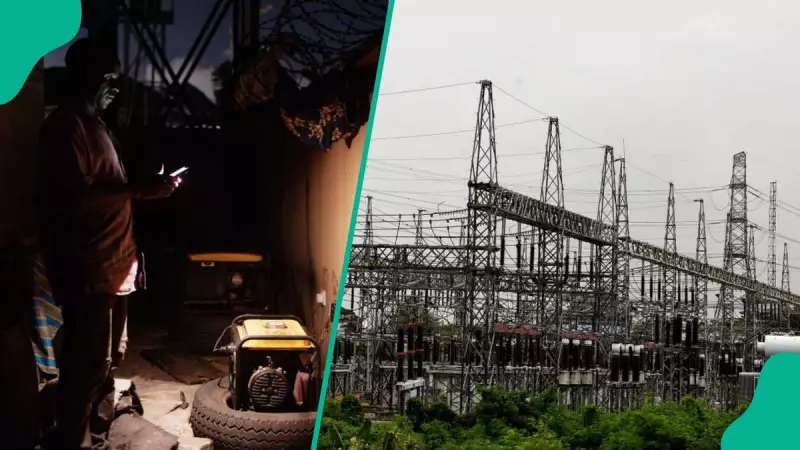
Nigeria was plunged into darkness on Monday afternoon as the country's national electricity grid suffered a major system failure. The collapse, which occurred on December 29, 2025, saw power supply across most regions drop to near zero, triggering a widespread blackout.
Grid Failure Leaves Nation in the Dark
Data released by the Distribution Companies (DisCos) at 3:12 pm confirmed the catastrophic failure. Load figures revealed that the total electricity distributed nationwide at the time of the collapse stood at a mere 50 megawatts (MW). This amount is drastically below normal operational levels and is completely insufficient to power homes, businesses, and essential services across Africa's most populous nation.
Only Two DisCos Receive Minimal Supply
The distribution data painted a stark picture of the outage's extent. At the moment of the grid collapse, only two out of the eleven electricity distribution operators recorded any received load. Ibadan Electricity Distribution Company (IBEDC) managed to get 30 MW, while Abuja Electricity Distribution Company (AEDC) received 20 MW.

All other DisCos were allocated zero megawatts, confirming a total blackout in their regions. The affected companies include:
- Benin Electricity Distribution Company (BEDC)
- Eko Electricity Distribution Company (EKEDC)
- Enugu Electricity Distribution Company (EEDC)
- Ikeja Electric (IE)
- Jos Electricity Distribution Company (JEDC)
- Kaduna Electric (KAEDCO)
- Kano Electricity Distribution Company (KEDCO)
- Port Harcourt Electricity Distribution Company (PHEDC)
- Yola Electricity Distribution Company (YEDC)
This indicates that major cities like Lagos, Port Harcourt, Kano, Kaduna, and Enugu were among those left without power.
A Recurring National Crisis
This incident marks another episode in a series of repeated national grid collapses that have plagued Nigeria in recent years. Each collapse typically results in prolonged nationwide blackouts and complex, time-consuming restoration efforts that can last for hours or even days.
As of the time of reporting, no official statement had been released by the Transmission Company of Nigeria (TCN) or the Federal Ministry of Power. The authorities have not provided information on the root cause of this latest system failure or offered a clear timeline for when full power supply might be restored to the nation.
However, the Nigerian National Grid (NNG) operator indicated that restoration work is currently in progress. Nigerians across the country are now waiting anxiously for the grid to be stabilized and for electricity to return to their communities, a familiar and frustrating wait in the face of the country's persistent power challenges.