Nigeria's Petrol Depot Prices Approach N1,000 Per Litre Threshold
Petrol depot prices across Nigeria have surged dramatically, approaching the N1,000 per litre mark, creating fresh concerns for motorists and businesses already grappling with escalating costs. This significant increase follows a recent price adjustment by the Dangote Petroleum Refinery and is further exacerbated by rising global crude oil prices driven by Middle East geopolitical tensions.
Dangote Refinery Triggers Price Chain Reaction
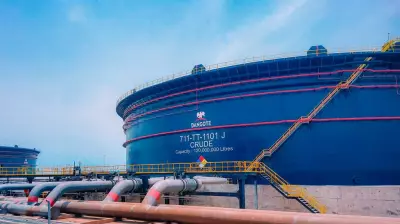
On Monday, March 2, 2026, the Dangote Petroleum Refinery announced a substantial ex-depot price increase of N100, moving from N774 to N874 per litre. This adjustment immediately cascaded through Nigeria's fuel distribution network, with private depots across the country responding by raising their own prices within days.
According to findings from PetroleumPriceNG on Tuesday, March 3, 2026, private depot prices have shifted from the N800 range to above N900 per litre. Specific examples include BONO depot in Lagos selling at N900 per litre, Matrix Lagos quoting N900, TSL pushing its rate to N910 per litre, and Matrix Port Harcourt selling at N940 per litre.

Retail Stations Implement Immediate Price Increases
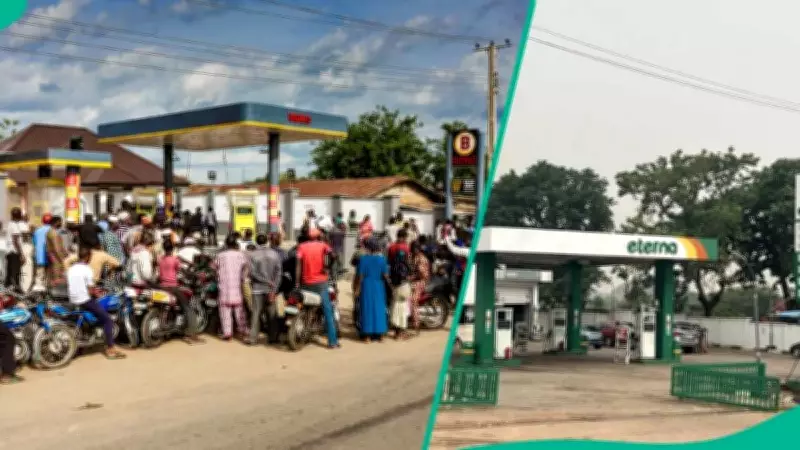
The steady rise at depot levels has rapidly filtered through to filling stations nationwide, where pump prices are climbing sharply. In Abuja, some stations operated by the Nigerian National Petroleum Company Limited have adjusted prices from N875 to N960 per litre.
In Lagos, independent marketers have been particularly quick to revise their prices. Along Ogunnusi Road, checks revealed that while NNPC retail stations were not dispensing fuel at the time of inspection, independent operators had already implemented significant increases. A Bovas filling station, for instance, raised its pump price from N835 to N935 per litre.
Industry analysts warn that with depot prices inching toward N1,000 per litre, retail pump prices could soon cross that threshold if global market conditions remain unstable.
Middle East Tensions Drive Global Oil Price Surge
Energy analysts attribute the latest price spike to escalating geopolitical tensions in the Middle East involving the United States, Israel, and Iran. This crisis has disrupted global supply chains and driven up crude oil benchmarks significantly.
Brent Crude climbed above $80 per barrel on Monday and was trading around $84.2 per barrel at the time of reporting. Market experts caution that prices could potentially exceed $100 per barrel if supply disruptions persist.
While higher crude prices may theoretically boost Nigeria's oil revenue, the immediate impact on consumers is negative. Since the deregulation of Nigeria's downstream petroleum sector, petrol prices have become largely influenced by global crude rates and foreign exchange movements. Any sustained increase in crude prices translates directly to higher domestic pump prices.
PETROAN Raises Inflation and Vulnerability Concerns
The Petroleum Products Retail Outlets Owners Association of Nigeria has expressed serious concern over the growing crisis, warning that Nigeria remains highly vulnerable due to its continued reliance on imported refined petroleum products.
In a statement signed by its National Public Relations Officer, Dr. Joseph Obele, the association's National President, Dr. Billy Gillis-Harry, described the Middle East conflict as a significant threat to energy-importing nations. He specifically noted that instability around the Strait of Hormuz, a critical oil transit route through which approximately 20 percent of the world's crude oil shipments pass daily, poses serious risks to global supply chains.
According to PETROAN, prolonged tension could intensify pressure on Nigeria's foreign exchange reserves, drive up transportation costs across all sectors, and worsen the country's already challenging inflation situation.
Calls for Policy Stability and Local Refining Capacity
To cushion the impact of these price increases, petroleum marketers are urging the federal government to sustain and strengthen the Naira-for-Crude policy to reduce dependence on foreign exchange for petroleum imports. They have also called for accelerated rehabilitation and full operationalisation of Nigeria's four state-owned refineries.

Strengthening local refining capacity, industry stakeholders argue, would significantly reduce import dependence and better shield the Nigerian economy from external shocks and global market volatility.
For now, motorists across Lagos, Abuja, and other major Nigerian cities are bracing for further price increases as uncertainty continues to dominate the global oil market. If tensions in the Middle East persist, industry observers suggest that the era of sub-N900 petrol may soon become a distant memory for Nigerian consumers.