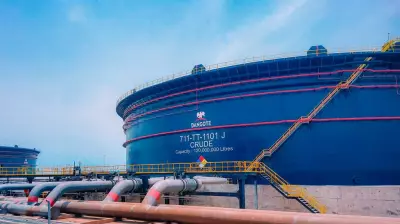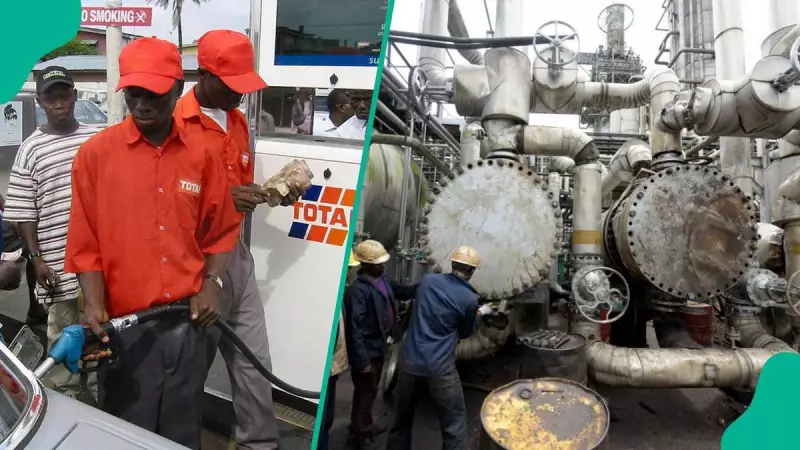
Nigeria's fuel supply landscape witnessed a significant boost in December 2025, with average daily petrol availability climbing to 74.2 million litres. This positive shift, reported by the Nigerian Midstream and Downstream Petroleum Regulatory Authority (NMDPRA), marks an increase from the 71.5 million litres recorded in November and is largely credited to the soaring output from the Dangote Petroleum Refinery.
Dangote Refinery Drives National Fuel Security
The latest data reveals a dramatic leap in production from the Lagos-based Dangote facility. Its daily petrol output jumped from 19.47 million litres in November to 32.01 million litres in December 2025. This massive contribution was instrumental in raising the total monthly petrol supply to approximately 960 million litres, a substantial rise from about 584 million litres the previous month.
Consequently, the nation's petrol stock sufficiency strengthened considerably, expanding from 16.65 days to 29.20 days. This enhanced buffer provides critical security against supply disruptions, especially during peak demand periods like the festive season. The NMDPRA noted that the refinery operated at an average capacity utilisation of about 63% for the month, supplying the domestic market while also delivering an average of 5.78 million litres of Automotive Gas Oil (diesel) per day.

State Refineries Remain Dormant Amid Shifting Supply Dynamics
In stark contrast to the Dangote Refinery's activity, government-owned refineries in Port Harcourt, Warri, and Kaduna remained inactive throughout December. The regulator confirmed that only minimal volumes of previously stored diesel were evacuated from the Port Harcourt facility, with no new production recorded.
This situation underscores Nigeria's growing reliance on private sector refining to meet domestic fuel needs. The NMDPRA explained that the supply figures include products delivered into coastal depots and volumes distributed directly from local refineries, with Dangote's output actively reshaping national fuel distribution patterns.
Contrasting Trends in Diesel and Gas Supply
While petrol supply strengthened, the market for diesel told a different story. Domestic supply of Automotive Gas Oil actually declined from 20.4 million litres per day in November to 17.9 million litres per day in December. This drop occurred even as daily consumption rose from 15.4 million litres to 16.4 million litres.
In the gas sector, Liquefied Petroleum Gas (LPG) supply averaged 5.2 metric tonnes per day, aligning with national efforts to promote cleaner cooking and industrial energy use. The midstream segment also saw a modest improvement, with domestic gas supply increasing from 4.684 billion to 4.787 billion standard cubic feet per day between November and December.
The regulator also provided updates on other refinery projects, disclosing that Train 2 of the Waltersmith Refinery in Imo State has completed pre-commissioning, with hydrocarbon introduction anticipated by January 2026. Furthermore, the NMDPRA issued one Licence to Establish and one Licence to Construct in December, maintaining the previous month's pace.
The authority cautioned that all figures are subject to final reconciliation with operators but emphasized that sustained reforms under the Petroleum Industry Act continue to focus on boosting domestic refining capacity, improving data accuracy, and strengthening Nigeria's long-term fuel security.