Private Depot Owners Launch Competitive Pricing Strategy Against Dangote Refinery
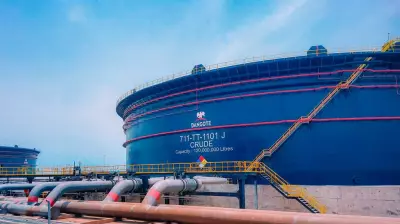
In a bold move to capture market share, private depot owners across Nigeria have implemented strategic price adjustments for Premium Motor Spirit (PMS), directly challenging the pricing dominance of the Dangote Refinery. This development comes as the Nigerian fuel market experiences significant shifts in supply dynamics and consumer preferences.
Price Competition Intensifies Across Major Supply Centers
Following Dangote Refinery's recent decision to increase its ex-depot petrol price by N100 per litre, private depot operators have responded with competitive pricing strategies designed to attract customers. The refinery had raised its price from N699 to N799 per litre, creating an opportunity for alternative suppliers to offer more attractive rates to fuel marketers and distributors.
Industry reports indicate that many private depots are now selling petrol below Dangote's established rates, making their offerings particularly appealing to cost-conscious buyers. This pricing advantage has reportedly led to increased customer traffic at private facilities, with some marketers describing the Dangote Refinery as experiencing reduced activity compared to previous periods.

Regional Price Variations and Market Impact
The competitive pricing landscape varies across Nigeria's major petroleum supply centers, with private depots implementing location-specific strategies:
- Lagos Region: Several private depots in Lagos are offering petrol below the N800 per litre threshold, with Aiteo selling at N797 per litre and Wosbab and Shellplux offering PMS at N798 per litre.
- Warri Area: Multiple depots including Danmarna, Optima, Nepal, and Salbas have established a competitive price point of N817 per litre for petrol in this region.
- Port Harcourt and Calabar: The most favorable prices in these areas stand at N830 per litre, offered by Masters and Alkanes respectively, representing an improvement over previous average rates of N850 per litre.
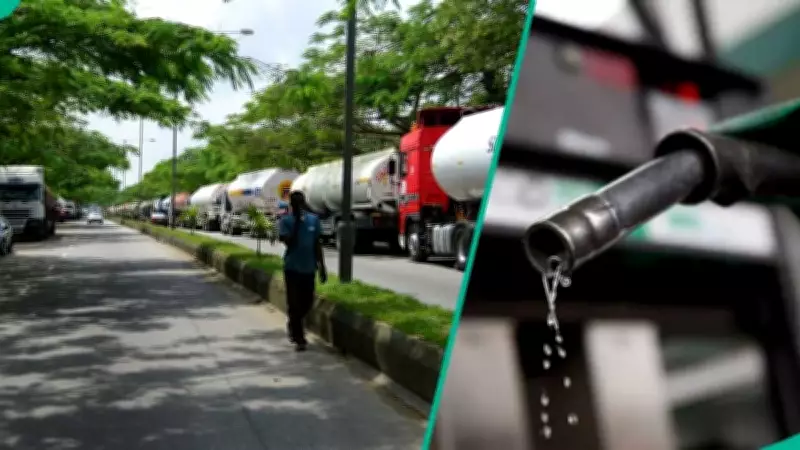
This decentralized pricing approach has reduced the incentive for marketers to travel long distances to lift products from the Dangote Refinery, leading to renewed activity at depots across multiple regions and signaling a potential shift toward more distributed fuel supply networks.
Market Dynamics and Customer Response
Industry sources report that customer confidence in the Dangote Refinery weakened following the refinery's request that customers who had purchased PMS at the previous N699 rate pay the N100 difference after the price increase. This development created an opening for private depots to attract buyers seeking both cost savings and reduced transportation expenses.
"Dangote refinery is now deserted. It is dry," one marketer was quoted as saying. "People now prefer to deal with private depots because of the distance and the price difference."
The strategic pricing adjustments by private depot owners have effectively created a more competitive marketplace, offering marketers greater flexibility in sourcing decisions and potentially reducing overall logistics costs throughout the petroleum distribution chain.
Parallel Trends in Diesel Market
A similar competitive dynamic has emerged in the diesel market, where private depots have previously sold Automotive Gas Oil (AGO) below Dangote's ex-depot prices. Although AGO prices across private facilities have since aligned more closely with Dangote's levels, supply is no longer concentrated at a single source.
Market participants are reportedly spreading their lifting activities across multiple depots to benefit from pricing flexibility and reduced logistics costs, further decentralizing Nigeria's fuel supply infrastructure and creating more options for petroleum product procurement.
NNPC's Pricing Position and Market Implications
Meanwhile, the Nigerian National Petroleum Corporation (NNPC) Limited has implemented its own price adjustments, increasing petrol pump prices just 48 hours after an initial increase. Recent surveys indicate that petrol prices, which recently increased to N835 per litre in Lagos, have jumped by N57 to reach N892 at some filling stations in the commercial capital.

NNPC's latest pricing move means the corporation is now selling petrol at N53 above the rate offered by Dangote Refinery partners such as MRS, creating a complex three-tier pricing structure in the Nigerian fuel market involving NNPC, Dangote Refinery, and private depot operators.
This evolving competitive landscape suggests potential long-term changes in how petroleum products are distributed and priced across Nigeria, with implications for fuel accessibility, transportation costs, and overall market efficiency in the nation's critical energy sector.