House Committee Issues 24-Hour Ultimatum to REA Managing Director Over Billions in Funds
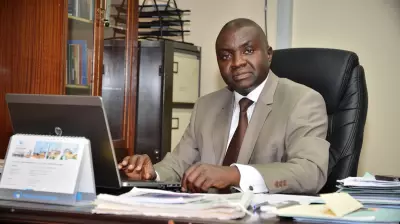
The House of Representatives Committee on Renewable Energy has issued a strict 24-hour ultimatum to the Managing Director of the Rural Electrification Agency, Abba Aliyu, demanding his immediate appearance to provide a detailed explanation of how the agency has utilized substantial loans and grants under its management.
Lawmakers Threaten Police Arrest for Non-Compliance
During a public hearing held in Abuja on Tuesday, lawmakers explicitly warned that they would request the Nigeria Police Force, through the Inspector-General of Police, to arrest the managing director if he fails to honor the summons. The directive followed a motion moved by Representative Paul Kalejaiye, highlighting the committee's growing frustration with the agency's lack of cooperation.
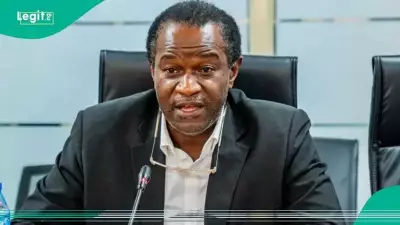
Representative Shina Oyedeji, speaking at the session, revealed that this decision came after multiple previous invitations extended to Aliyu were allegedly ignored. He emphasized that the latest hearing presented yet another opportunity for the agency's chief executive to appear, but neither Aliyu nor any official representative was present, prompting the committee to take decisive action.

Billions in Government Funds and International Grants Under Scrutiny
Oyedeji disclosed comprehensive financial details, stating that the Rural Electrification Agency received approximately N151 billion from government appropriations between 2015 and 2024. These funds were allocated for critical projects including solar hybrid mini-grids, solar home systems, and street lighting initiatives aimed at improving electricity access across Nigeria.
Furthermore, he outlined that between 2018 and 2024, the agency secured an impressive $550 million in grants from major international organizations such as the World Bank and the African Development Bank. These grants were specifically intended to support solar mini-grid development, energy-efficient equipment, and productive appliances to enhance power supply to universities and teaching hospitals nationwide.
Additional financial inflows included N13 billion contributed to the Rural Electrification Fund between 2015 and 2024 to support off-grid power projects, and an $8 million grant from the German government and the European Union in 2022 to expand reliable electricity services for millions of Nigerians.
Committee Demands Full Accountability and Transparency
The lawmaker stressed that the committee's primary objective is to thoroughly review how these substantial funds were managed, identify the actual beneficiaries of the projects, and assess the tangible impact of the interventions. Many of these projects were expected to significantly boost productivity, agriculture, and investment while strengthening electricity access in underserved communities.
Oyedeji specifically noted that several of the funds originated from international donors, warning that failure to properly account for these resources could seriously damage Nigeria's reputation and credibility with global partners. The committee emphasized that transparent management of these funds is crucial for maintaining international trust and securing future development assistance.
Multiple Invitations Ignored According to Committee Chairman
In his official ruling, the committee chairman, Representative Afam Ogene, revealed that no fewer than five formal letters of invitation had been sent to the agency and duly acknowledged, yet the managing director consistently failed to appear. Ogene described the Rural Electrification Agency as a key institution responsible for managing foreign-supported electricity projects and stated that it owes Nigerians a clear and comprehensive account of its activities and expenditures.
Ogene directed that the managing director must appear before the committee by 11 a.m. on Wednesday or face the consequence of being compelled to appear by security agencies. This firm stance reflects the committee's determination to ensure proper oversight and accountability for public funds.

Background on Recent REA Grant Activities
In related developments, the Rural Electrification Agency recently secured a $700,000 grant from the ECOWAS Commission to install solar systems in 15 public institutions, including schools and health centers. This funding followed the signing of a Memorandum of Understanding between the REA and the ECOWAS Commission under the Regional Off-Grid Electricity Access Project.
Meanwhile, Nigeria has begun its pilot phase under the Regional Off-Grid Electricity Access Project, supported by the World Bank. This initiative aims to improve energy reliability, reduce diesel consumption, and promote clean energy adoption in rural areas, highlighting the ongoing importance of transparent fund management for successful energy sector development.