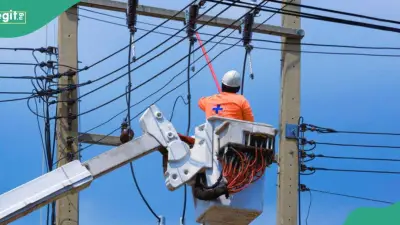
Rockefeller and Partners Surpass $100 Million in Push to Electrify Africa
The Rockefeller Foundation, in collaboration with the Global Energy Alliance for People and Planet, has significantly escalated its financial commitment to improving electricity access across Africa, now exceeding the $100 million threshold. This funding boost supports the World Bank and African Development Bank (AfDB)-backed Mission 300 initiative, which aims to connect 300 million Africans to reliable power by the end of this decade.
Expanding Commitment to Combat Energy Poverty
Originally pledging $10 million 19 months ago, the latest investment marks a more than tenfold increase, highlighting a growing global consensus on the critical role of electricity in alleviating poverty. Sub-Saharan Africa is home to approximately 85 percent of the world's 730 million people without electricity, making this initiative particularly vital for regional development.
Announced at the Powering Africa Summit in Washington, Rockefeller President Rajiv Shah emphasized the foundation's deepened involvement, calling it a defining investment in global development. He stated, The Rockefeller Foundation has made its biggest-ever bet on connecting people to electricity as the single best pathway out of large-scale poverty.

Structured Funding and Broad Geographic Reach
The $100 million funding is jointly structured, with about 47 percent contributed by the Rockefeller Foundation and its public charity arm, RF Catalytic Capital, while the remaining 53 percent comes from the Global Energy Alliance. This capital is being deployed across 23 countries, including major nations such as Nigeria, Ethiopia, the Democratic Republic of Congo, Kenya, and Mozambique.
Mission 300, launched in April 2024, has already secured National Energy Compacts with 30 countries, outlining necessary investment priorities and policy reforms. Since its inception, approximately 44 million people across the continent have gained electricity access, with projections suggesting tens of millions more could be connected by 2026.
Addressing Health and Environmental Challenges
In sub-Saharan Africa, about 70 percent of households still rely on charcoal or firewood for cooking, practices linked to respiratory illnesses and deforestation. To combat this, the alliance has launched the Clean Cooking Accelerator Initiative and is piloting a dedicated Clean Cooking Delivery Unit in Kenya. This pilot could serve as a continental model for scaling access to cleaner, healthier alternatives.
Catalyzing Larger Capital Flows
For development finance stakeholders, the $100 million figure is seen less as a standalone investment and more as a catalyst to attract larger flows of capital. Kevin Kariuki, Vice President at the African Development Bank, noted that philanthropic funding is deliberately structured to mobilize much larger public and private finance.
The initiative has already begun leveraging additional capital through programs such as the World Bank's DARES initiative in West and Central Africa and the African Development Bank's Sustainable Energy Fund for Africa, both focused on scaling renewable energy and grid expansion projects.
Economic Benefits of Electrification
Woochong Um, Chief Executive Officer of the Global Energy Alliance, highlighted the economic dimension of electrification, stating that access to power is directly linked to income generation and productivity. New electricity connections translate into durable economic opportunities for people and communities, he said, pointing to productive-use programs as key to transforming infrastructure investments into sustainable livelihoods.